Erdoğan Says Türkiye’s Return to F-35 Program Is Vital for NATO Security
 erdogan
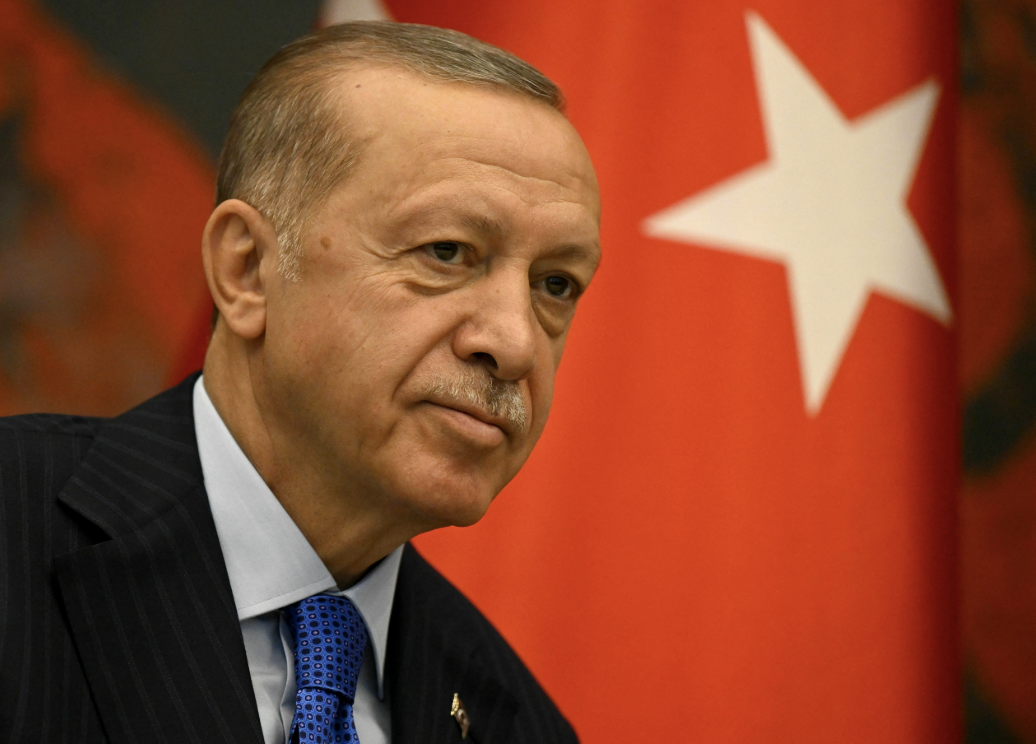
President Recep Tayyip Erdoğan, speaking to Bloomberg News, said Türkiye’s return to the F-35 fighter jet program is essential not only for bilateral relations with the United States but also for NATO’s broader security architecture. Erdoğan described Türkiye’s removal from the program as “unjust” and emphasized that the issue directly affects alliance cohesion and strategic balance.
Responding in writing to Bloomberg’s questions on global affairs, Erdoğan expressed optimism that the start of a new Trump administration could open a more constructive chapter in Turkish-American relations. He highlighted Türkiye’s role as a balancing and strategic actor, particularly in defense, energy security, and regional diplomacy.
“Türkiye’s Exclusion Was Unjust”
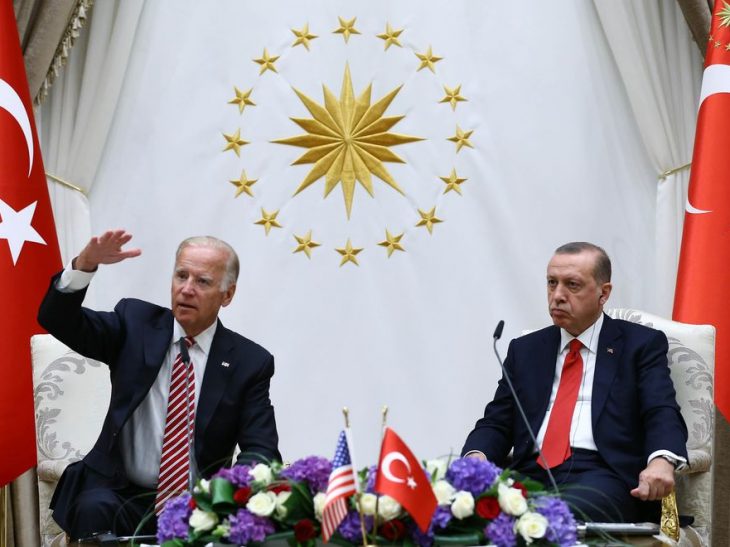
Erdoğan stated that he personally raised the F-35 issue during his meeting with former U.S. President Donald Trump at the White House in September. Türkiye was removed from the F-35 program following its purchase of Russian-made military equipment, a decision Ankara has long criticized.
According to Erdoğan, the exclusion undermined both fairness and alliance principles. He reiterated that Türkiye had already paid for the aircraft and fulfilled its obligations under the program.
“With Mr. Trump resuming office, an opportunity has emerged to move Turkish-U.S. relations onto a more reasonable and positive footing. Türkiye’s delivery of the F-35 aircraft it has paid for and its reintegration into the program are important and necessary not only for the two strategic partners, Türkiye and the U.S., but also for NATO’s security.”
This statement underscores Ankara’s argument that the F-35 dispute should be viewed through the lens of collective defense rather than bilateral disagreement.
S-400 Issue and Financial Disputes
Addressing questions related to the S-400 missile system, Erdoğan said Türkiye views the measures taken against it as unfair and damaging to national credibility. He stressed that Ankara’s core concern is the protection of Türkiye’s reputation and the avoidance of unjust financial penalties.
“What matters to us is the protection of Türkiye’s reputation and ensuring that our bank is not unfairly punished. Talks are continuing within this framework. Our hope is to reach a fair outcome that is both lawful and proportionate to the strategic partnership between our two countries.”
Erdoğan’s remarks indicate that negotiations remain ongoing and that Ankara is seeking a resolution aligned with international law and alliance norms.
Energy Security and U.S. LNG Supplies
Beyond defense issues, Erdoğan highlighted energy security as a key pillar of Türkiye–U.S. relations. He noted that Türkiye has significantly increased its imports of U.S.-sourced liquefied natural gas (LNG), positioning the United States as a major player in Türkiye’s energy supply chain.
“We have significantly increased our supply of U.S.-origin LNG.”
Erdoğan emphasized that Türkiye’s energy policy is driven by national interests and strategic caution, particularly given its reliance on imported hydrocarbons.
“Türkiye’s stance is very clear; we act in line with our national interests and energy security. As a country that meets most of its hydrocarbon needs through imports, we must act carefully and in a balanced manner on every issue that could affect our energy security.”
These comments reflect Ankara’s efforts to diversify its supplier base while maintaining stable partnerships.
Türkiye’s Role in Regional Diplomacy
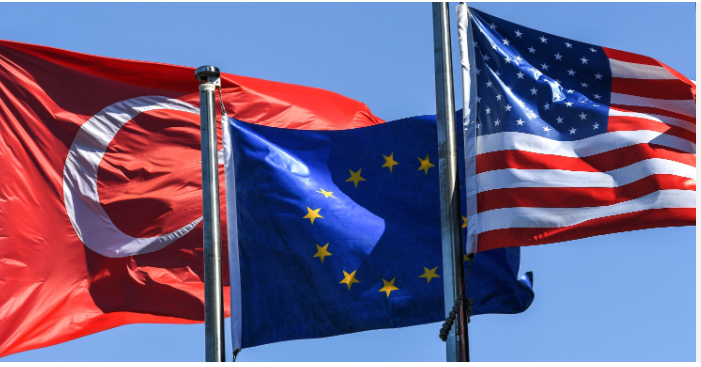
On regional and global conflicts, Erdoğan portrayed Türkiye as a uniquely positioned diplomatic actor capable of engaging with all sides simultaneously. He pointed to Türkiye’s ability to maintain direct communication with both Russian President Vladimir Putin and Ukrainian President Volodymyr Zelensky, while also engaging with Washington, Brussels, NATO, and the United Nations.
“As Türkiye, we are the only actor that can speak directly with both Mr. Putin and Mr. Zelensky, while simultaneously conducting strong and balanced diplomatic engagements along the Washington and Brussels lines, within NATO and at the United Nations.”
This positioning reinforces Türkiye’s self-described role as a mediator and stabilizing force amid ongoing global tensions.
Gaza and the International Stability Force
Erdoğan also addressed the situation in Gaza, arguing that any proposed International Stability Force would succeed only if it includes actors with on-the-ground legitimacy. He stressed that Türkiye’s participation is critical to gaining trust among the Palestinian people.
“The success of an International Stability Force to be deployed in Gaza depends on the inclusion of actors that have legitimacy on the ground. It should be known that the countries party to the Sharm el-Sheikh Declaration, including Türkiye, are the most legitimate actors in this process.”
He added that Türkiye’s historical ties with Palestinians, past diplomatic and security channels with Israel, and its status as a NATO member make it a key country for such missions.
“You will appreciate that a mechanism without Türkiye would struggle to gain the trust of the Palestinian people.”
Strategic Message to the West
Taken together, Erdoğan’s remarks send a clear message: Türkiye sees itself as indispensable to NATO security, energy stability, and regional conflict management. From the F-35 dispute to LNG supplies and Middle East diplomacy, Ankara is signaling readiness for renewed engagement—provided its strategic interests and alliance status are fully respected.