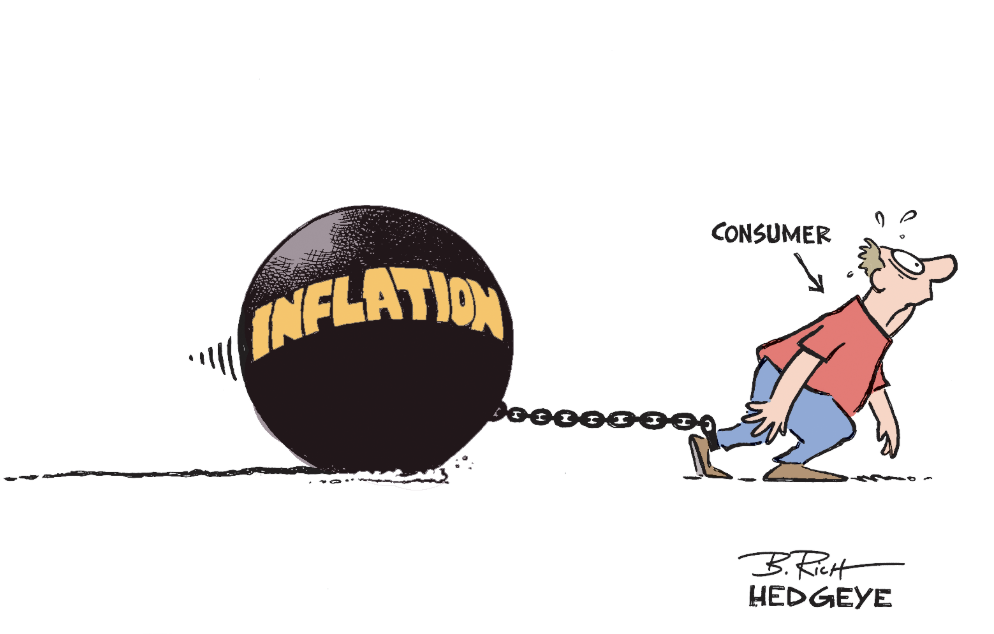
Economists React to CBRT Inflation Report: “Revision Bad, But Optimism Persists”
 enflasyon raporu
The Central Bank of the Republic of Türkiye (CBRT) kept its medium-term inflation targets unchanged for 2026 and 2027, while raising the midpoint of its 2026 year-end forecast. The Bank also provided a detailed accounting of the 2025 target overshoot. Market institutions offered mixed reactions: some view the revision as limited and technically driven, while others question the realism of assumptions—particularly on food inflation and oil prices. Expectations for a 100-basis-point rate cut in March remain alive.
Targets Preserved, Forecast Band Adjusted
The CBRT maintained its previously announced medium-term targets:
-
2026: 16%
-
2027: 9%
-
2028: 8%
However, the midpoint of the 2026 year-end forecast band was revised upward from 16% to 18%. The uncertainty range was widened by 2 percentage points to 15%–21% (previously 13%–19%), while preserving a 6-point spread.
For 2027, the forecast range was left unchanged at 6%–12%.
Accounting for the 2025 Overshoot
The CBRT had previously pledged to provide a transparent breakdown if inflation deviated from interim targets. In this report, it detailed the reasons why 2025 year-end inflation of 30.9% exceeded the 24% interim target.
The 6.9 percentage-point deviation was attributed to:
-
2.1 pp: TL-denominated import prices
-
1.9 pp: Underlying inflation and inertia
-
1.1 pp: Administered and regulated prices
-
0.9 pp: Output gap
-
0.9 pp: Food inflation
Stronger-than-expected global growth, higher oil prices, USD-denominated import prices, and food inflation all played a role.
Institutional Reactions
Akbank Research: “Limited Effective Revision, But Band Remains Ambitious”
Akbank Research emphasized that 1 percentage point of the 2-point upward revision for 2026 stemmed from changes in CPI weights.
“In practical terms, the effective revision is only 1 percentage point. This implies a tighter internal policy stance compared to the previous report.”
However, the institution expressed concerns about communication and feasibility:
“Even the upper bound of the forecast band remains quite ambitious. Reaching it may not be possible merely by reducing the size of rate cuts.”
Akbank also questioned the credibility of output gap estimates, noting repeated upward revisions over the past year.
Global Source Partners: “100 bps Cut in March Still Likely”
Global Source Partners interprets the report as a signal that the CBRT is preparing for another 100-basis-point cut in March, with subsequent easing dependent on inflation prints and expectations.
“The CBRT/MPC appears to be gearing up for another 100 bps cut at the March meeting. The pace thereafter will depend on how actual inflation and expectations evolve.”
The firm continues to forecast year-end inflation at around 25%, with the policy rate finishing markedly above consensus, which currently stands near 28%.
İş Investment: “Markets Are Too Optimistic”
İş Investment argues that markets are more optimistic than warranted and lists several reasons for caution:
-
Structurally low food inflation assumptions
-
Risk of seasonal shocks beyond drought
-
Food prices rising more than 12% in the first two months
-
A downward revision in oil price assumptions
The bank questioned the CBRT’s oil forecast:
“With Brent spot at $69 and futures at $66–68, a $60.9 average oil assumption is difficult to justify.”
İş Investment maintains its 24.5% year-end inflation forecast and a 30% policy rate projection.
“We agree that disinflation will continue, but not at the pace suggested by the CBRT.”
Gedik Investment: “High February, Improvement from March”
Gedik Investment expects February inflation to come in elevated—around 3%—but sees room for improvement starting in March, particularly if food prices (notably vegetables) correct.
“If we see a normalization in food prices from March onward, annual inflation could decline by nearly 4 percentage points in the March–April period.”
The firm interprets Governor Fatih Karahan’s statement—that the threshold for increasing the size of rate cuts is high—as a signal that easing will likely continue in 100 bps or smaller increments.
Gedik suggests that improved inflation dynamics could strengthen expectations for 150–200 bps cuts in April and/or June.
Market Reaction: Dovish Tone Welcomed
Markets reacted positively to what was broadly perceived as a dovish tone:
-
Bank stocks led gains in equities
-
Medium- and long-term government bonds saw buying interest
-
The swap curve showed limited disruption
Investors who had expected the policy rate to end the year near 32% began revising their expectations downward following Governor Karahan’s remarks.
Related articles
CBRT Signals Long-Term Commitment to Tight Policy and Stronger Reserves
Mehmet Şimşek Signals No New Tax Hikes as Türkiye’s ‘Disinflation Gains Ground’
Turkey’s Central Bank Delivers Surprise Rate Cut