Economic Analysis: Turkey Facing Regional Instability and Inflationary Pressure
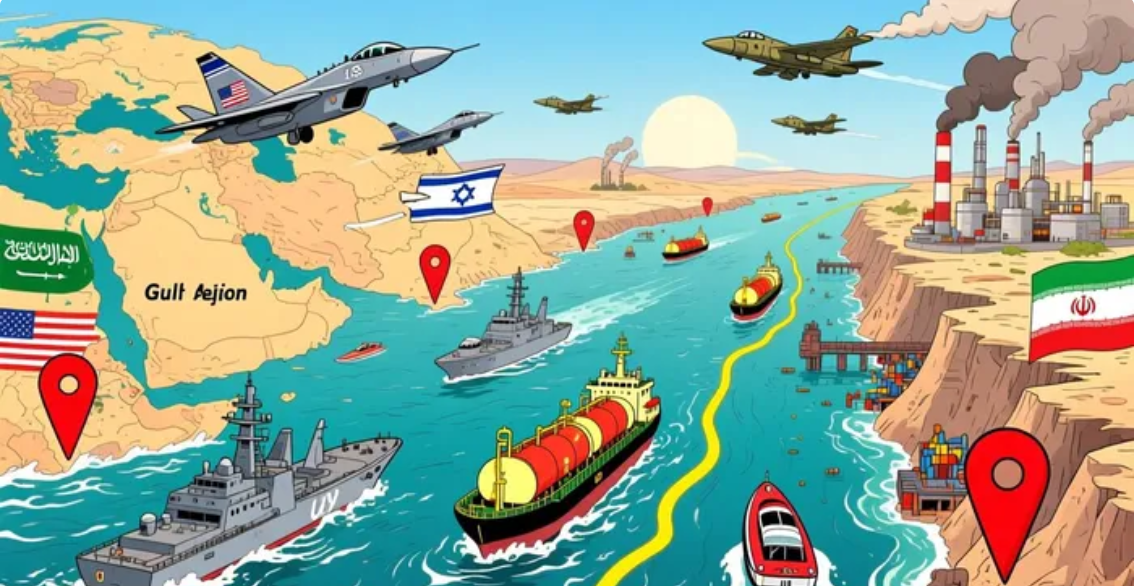 hurnuz oil
In a recent analysis by Erdal Sağlam for Mesele Ekonomi, the potential economic fallout from rising tensions between Iran, the United States, and Israel is examined, focusing specifically on how regional conflict is exacerbating Turkey’s domestic economic issues, particularly inflation and interest rate policy.
Journalist Erdal Saglam

Rising Geopolitical Risk and Oil Prices
Sağlam highlights that the escalating tension in the Middle East has brought the potential for conflict closer, heavily influencing global commodity markets. Brent crude prices passed the $72 mark just prior to the analysis, and there is significant concern that continued instability could lead to a rapid spike in energy costs [02:56]. Turkey, being a heavy energy importer, is directly vulnerable to these fluctuations. The analysis emphasizes that if a full-scale conflict disrupts the Strait of Hormuz, oil prices could surge dramatically, placing immense pressure on the Turkish Lira and exacerbating the cost-of-living crisis.
Inflationary Pressures and Structural Issues
The inflationary outlook in Turkey remains bleak. Sağlam notes that February inflation data is expected to be high, likely between 3% and 3.4% monthly, driven by food price volatility and fuel price hikes [03:55]. He argues that these are not merely transitory seasonal effects but are compounded by structural issues in Turkish agriculture, such as inadequate water management leading to floods and droughts [05:04]. Consequently, annual inflation is expected to rise again, potentially challenging the 32% mark, despite the Central Bank’s prior, more optimistic projections [04:34].
Erdal Saglam’s You Tube video in Turkish
Interest Rate Policy and Bank Manager Intervention
A central theme of the analysis is the brewing debate over interest rate cuts. Despite high inflation figures, there appears to be political pressure on the Central Bank to lower interest rates to stimulate the economy [14:49]. Sağlam finds it alarming that bank general managers, who previously argued against rate cuts, are now publicly signaling expectations for a reduction in interest rates [16:15]. He suggests that these managers are likely being mobilized by economic management to prepare the market for a potential 0.5 to 1 percentage point cut in the upcoming meeting [16:24]. Sağlam cautions that cutting rates in an environment of high inflation, global war risks, and a four-point risk premium on Turkey is reckless and signals a surrender in the fight against inflation [19:32].
Foreign Trade and External Balance
The analysis also addresses the rise in Turkey’s foreign trade deficit, which increased by 11% in January [06:51]. While the Ministry of Trade dismissed this as a temporary phenomenon typical for the start of the year, Sağlam expresses skepticism, suggesting that structural challenges in global trade—including shifting logistics and competition from India—are contributing factors [07:55]. However, he notes that the global devaluation of the US Dollar has eased pressure on Turkish exporters, reducing their complaints regarding the exchange rate [09:25].
Real Sector Debt and Banking Risks
A critical vulnerability identified is the foreign exchange (FX) open position of the Turkish real sector, which has risen to $188.5 billion [09:36]. While economic management argues that this is manageable due to the growth of the economy relative to national income, Sağlam views this high level of short-term debt ($225 billion to be repaid in the next year) as a significant risk [11:20]. He predicts that the government will not implement restrictive measures on these loans before the election, as they help sustain growth and artificially support Central Bank reserves [12:44].
Banking Sector Interference: The Halkbank Case
Finally, the analysis touches upon the Halkbank case in the US, with a hearing scheduled for March 3rd [03:16]. Sağlam links the timing of this hearing to Turkey’s diplomatic stance regarding Iran, noting that diplomatic analyst Zeynep Gürcanlı suggests the US may be applying pressure on Turkey due to its reluctance to support strikes against Iran [22:01]. This adds a complex layer of political risk to Turkey’s financial stability.