



Early Election Scenarios and Polls: Gap Widens Between Parties, Surprise Outcomes in Presidential Race
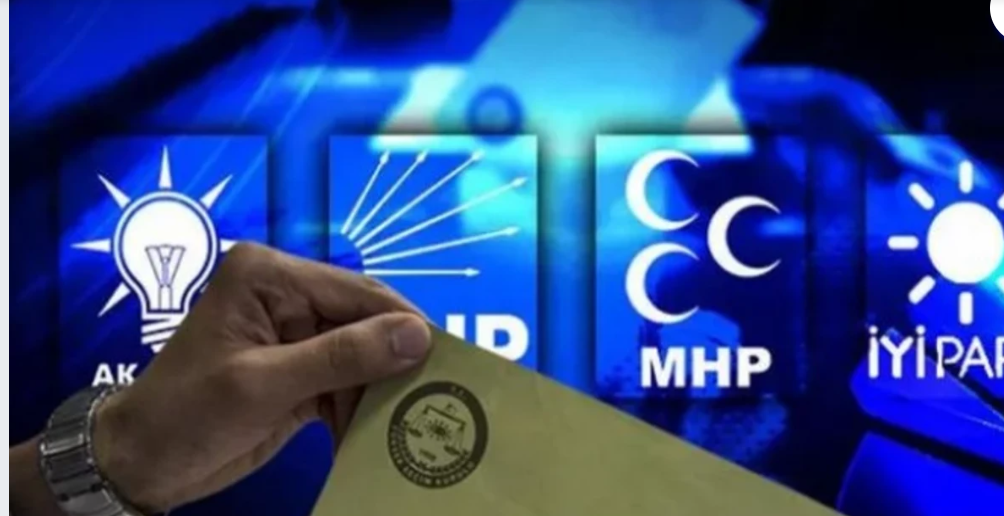 anket
anket
Early election debates continue to dominate Türkiye’s political agenda as constitutional calculations over President Erdoğan’s potential re-candidacy intersect with shifting public opinion. While the opposition calls for snap elections, the ruling bloc officially resists. Recent polling data suggest widening gaps between parties and unexpected dynamics in potential presidential matchups. Economic dissatisfaction remains the central driver of voter sentiment.
Erdoğan’s Candidacy: Two Legal Pathways
Under the presidential system introduced in 2018, a president may serve a maximum of two terms. For Recep Tayyip Erdoğan to run again, two legal routes are available:
-
A constitutional amendment removing the two-term limit.
-
A parliamentary decision to renew elections under Article 116 of the Constitution.
A constitutional amendment requires at least 360 votes to go to referendum or 400 votes for direct adoption. The ruling Justice and Development Party (AKP) and its allies currently do not have sufficient seats to reach those thresholds on their own.
The second option — parliament voting to renew elections during the president’s second term — would open the door for a third candidacy.
Opposition leader Özgür Özel has repeatedly stated that if 360 votes are secured for early elections, his party would support the move.
Parliamentary Arithmetic: The 360 Vote Calculation
The current distribution of seats suggests the ruling bloc falls short of the 360 required for an early election decision.
-
AKP: 275
-
Nationalist Movement Party (MHP): 47
-
HÜDAPAR: 4
-
DSP: 1
Total: 337 seats.
This means at least 23 additional votes would be needed. Political observers suggest negotiations or potential defections from smaller parties and independents could become central to the strategy.
Officially, elections are scheduled for May 2028, but political circles increasingly discuss November 2027 as a possible alternative date.
Gündemar Survey: Nationalist Vote Seen as Decisive, Majority Opposes Political Role for Öcalan
What Do the Polls Say?
As early election speculation intensifies, polling firms are publishing diverging but revealing data.
Genar Poll
According to research by Genar:
-
AKP: 34.8%
-
Republican People’s Party (CHP): 31.5%
-
Peoples’ Equality and Democracy Party (DEM Party): 9.3%
-
MHP: 8%
-
Good Party (İYİ Party): 4.7%
The survey also highlighted ideological self-identification patterns, showing distinct voter bases across parties.
GÜNDEMAR: Opposition Leads in Presidential Matchups
Another survey by GÜNDEMAR, after distributing undecided voters, found:
-
CHP: 33.33%
-
AKP: 28.56%
-
DEM Party: 9.38%
-
Victory Party: 5.95%
-
Anahtar Party: 5.82%
-
MHP: 5.35%
-
İYİ Party: 4.54%
In potential presidential runoffs, the results show notable margins:
-
Mansur Yavaş: 58.64% vs. Erdoğan: 41.36%
-
Ekrem İmamoğlu: 58.07% vs. Erdoğan: 41.93%
-
Özgür Özel: 54.39% vs. Erdoğan: 45.61%
The survey also tested Selçuk Bayraktar as a potential candidate. Bayraktar polled between 38% and 42% against leading opposition figures.
Optimar: AKP Maintains Lead
Optimar Research presents a different picture:
-
AKP: 35.2%
-
CHP: 27.3%
-
DEM Party: 12.8%
-
MHP: 9.6%
-
İYİ Party: 7.6%
The divergence between polling firms underscores fluid voter behavior and methodological variation.
Economy Drives Voter Sentiment
ASAL Research’s January 2026 survey found:
-
54.4% support holding early elections.
-
38% oppose.
On economic expectations:
-
66.6% believe the economy will worsen in 2026.
-
More than 70% express low or no confidence in economic management.
Top economic concerns:
-
Rising rents and housing prices
-
Food inflation
-
Overall inflation
-
Utility and energy costs
When asked who could solve Türkiye’s problems, 40.2% answered “none,” reflecting broad frustration.
Political Commentary
Former AKP deputy Şamil Tayyar cautioned that frequent polling releases should be viewed skeptically, noting the high cost of serious survey work.
Tayyar’s assessment:
-
Many AKP voters are frustrated over economic issues but have not entirely abandoned the party.
-
CHP has struggled to convert favorable conditions into momentum.
-
MHP and DEM’s positioning may depend on the trajectory of any renewed Kurdish peace process discussions.
-
İYİ Party appears to have stabilized.
-
Zafer Party retains influence among youth but shows limited recent growth.
Observers note that undecided and protest voters constitute a bloc large enough to rival major parties.
The Clock Is Ticking
While official rhetoric downplays early elections, constitutional mechanics, parliamentary arithmetic, and economic pressures continue to keep the issue alive.
Whether 360 votes can be secured — and how economic dissatisfaction reshapes alliances — will determine the trajectory toward 2027 or 2028.
For now, the debate remains unresolved, but political maneuvering suggests the countdown has begun.