Dr Özge Öner: The Economic Cost Will Become More Visible — and Harsher — in 2026
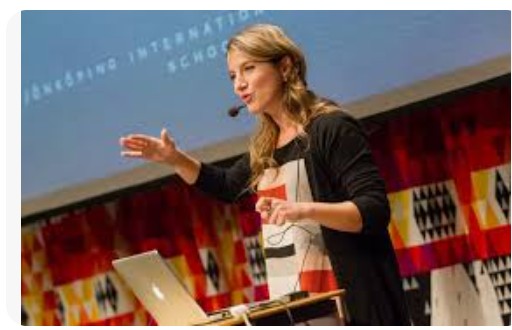 ozge oner
Summary:
According to economist Özge Öner, the cost of Turkey’s fight against inflation has so far been paid largely through a “silent erosion” of living standards. But as the country moves toward 2026, that cost is likely to become far more visible and severe, taking the form of rising bankruptcies, unemployment, and a deepening erosion of social trust and fairness.
Cambridge University economist Özge Öner has warned that Turkey is entering a phase in which the social and economic costs of disinflation will no longer be hidden. In an interview with Nefes, Öner said inflation in Turkey has evolved from a simple price phenomenon into a mechanism that reshapes society by redistributing losses unevenly.
“Inflation Is No Longer Just About Prices”
Öner argues that the key question is no longer how high inflation will be, but rather who will survive the adjustment and who will bear the heaviest burden.
“The groups that have paid the highest price so far are wage earners, fixed-income households, pensioners, small tradespeople, credit-constrained SMEs, and young people,” she said. Wages have consistently lagged inflation, renters have no room to maneuver, and fixed-income households lack tools to protect themselves.
Until now, this burden has mostly taken the form of what Öner describes as a “silent erosion”: declining purchasing power, shrinking savings, normalization of lower-quality consumption, and downsized future plans.
2026: From Silent Erosion to Open Stress
Öner cautions that the nature of this burden is set to change.
“As we move into 2026, the cost will become more visible and more severe,” she said. Tightening will no longer mean just reduced consumption, but harsher financing conditions, broken payment chains, rising bankruptcies and concordat filings, and ultimately higher unemployment.
What worries her most, however, is the erosion of the sense of justice.
“When rules are applied harshly to some groups and flexibly to others, the economy doesn’t just impoverish people — it undermines social belonging and citizenship,” Öner said.
What Will 2026 Look Like for Households?
Öner stresses that Turkey cannot be described by a single economic forecast, as multiple futures coexist within the same economy. While the official goal is disinflation, she says the decisive factor will not be technical targets but the political and institutional environment.
If uncertainty rises, risk premia will increase, inflation expectations will deteriorate, and tightening will return to society as a heavier cost. If legal certainty improves and institutions regain breathing room, the same tightening could be more manageable.
For households, Öner expects 2026 to be shaped by chronic cost-of-living anxiety, rising job insecurity, persistent housing and rent pressure, and a constant fear of “what the next shock will be.”
Politically, she argues, society is not looking for new rhetoric but for trust — in rules, institutions, and the future.
“Normalization Cannot Come from Interest Rates Alone”
Öner said 2025 was presented as a year of normalization, but what people experienced instead was “the collection of a delayed bill.” She emphasized that inflation in Turkey cannot be solved through monetary tightening alone.
“Inflation here is driven by three structural problems: lack of trust, persistent cost pressures, and institutional unpredictability,” she said. When legal predictability weakens, investment appetite fades, capacity does not expand, and competition remains limited — making inflation stickier even if headline numbers improve.
Turkey’s Three Most Pressing Structural Problems
According to Öner, Turkey faces three core challenges:
-
Institutional erosion and legal insecurity, which undermine predictability, investment, and social stability.
-
Systematic impoverishment of wage earners, as inflation has become a redistribution mechanism that fails to deliver fairness.
-
A squeeze on productive capacity, with industry and services trapped between high costs, weak demand, and tight financing.
Rising Risks for the Real Sector
Öner warned that expensive and selective credit conditions are intensifying cash-flow crises, especially for SMEs. Falling domestic demand is weakening the internal market, while energy, input, rent, and labor costs remain elevated amid exchange-rate volatility.
She dismissed the notion that “inefficient firms will simply be eliminated” as both unrealistic and dangerous in Turkey’s context, arguing that survival increasingly depends not on productivity but on access to finance and relationships.
Without a coherent policy framework, she said, risks include cascading closures, payment-chain breakdowns, rising informality, layoffs, and stalled investment.
“Everyone Knows the Ship Is Taking on Water”
Economic crisis in Turkey is no longer abstract, Öner noted — it is embedded in daily life, from grocery shopping to rent payments to the inability to plan for the future. The lack of collective action, she argued, stems not from indifference but from fragmentation, as different groups experience different dimensions of the crisis.
“When a shared sense of direction disappears, everyone clings to their own lifeboat,” she said.
Is There a Way Out?
Öner rejected the idea of a “magic formula” but said a path forward exists. That path, she stressed, is institutional as much as technical.
Turkey’s real need, she argued, is not short-term fixes but a rules-based, predictable, and politically insulated economic governance framework. Rebuilding a strong, independent planning capacity — focused on long-term priorities and market functioning rather than arbitrary intervention — would be a critical step.
“What Turkey needs is not miracle numbers, but direction,” Öner concluded. “And that direction can only be drawn through institutions, the rule of law, and a shared vision for the future.”
Source: Nefes
Author: Şehriban Kıraç
PA Turkey intends to inform Turkey watchers with diverse views and opinions. Articles on our website may not necessarily represent the view of our editorial board or count as endorsement.
Follow our English YouTube channel REAL TURKEY: https://www.youtube.com/channel/UCKpFJB4GFiNkhmpVZQ_d9Rg
Twitter: @AtillaEng
Facebook: Real Turkey Channel: https://www.facebook.com/realturkeychannel/