Doomsday Clock: Energy Shock and the Economic Stakes for Türkiye
 doomsday-clock
By Yağız Kutay Işık
Summary: Escalating hostilities between the United States, Israel and Iran are reshaping not only the military balance in the Middle East but also the outlook for the global economy. With the Strait of Hormuz at the center of the crisis, markets are beginning to price the risks of a potential energy shock. For energy-importing countries such as Türkiye, the duration of the conflict will determine whether the impact remains a temporary risk premium adjustment—or evolves into a stagflationary shock.
War, Markets and the Price of Uncertainty
The smell of gunpowder rising across the Middle East signals more than a military confrontation. It could mark one of the most severe stress tests for the global economic system in years.
The US-Israeli strikes on Iran and the heavy losses reported within Iran’s leadership structure have transformed what might have been viewed as a limited retaliatory exchange into something closer to a regional struggle for survival.
Economic history offers a simple rule: markets do not price war itself — they price uncertainty.
Today, however, markets are confronting not only uncertainty but also the cold arithmetic of energy supply disruptions.
Hormuz: The Artery of the Global Economy
At present, the world economy’s pulse is beating through the Strait of Hormuz.
The official closure announcement came late Sunday. Roughly one-fifth of global oil trade flows through this narrow waterway, making it one of the most critical chokepoints in the global energy system.
When that artery constricts, energy-importing economies like Türkiye face the risk of severe turbulence.
According to market projections cited by Bloomberg, a prolonged disruption in the strait could push oil prices from a baseline scenario of around $60 per barrel to above $110.
Yet that scenario has not materialized — at least not yet.
In the first hours following the closure announcement, oil prices unexpectedly fell below $70 per barrel, before rising roughly 3.5% during the trading session.
The muted reaction suggests that markets are, for now, discounting the geopolitical noise. But that calm may prove temporary.
Türkiye’s Economic Exposure
For Türkiye, the economic consequences of a sustained energy shock could be significant.
Oil Prices
Every $10 increase in oil prices typically:
-
widens Türkiye’s current account deficit by at least $2.5 billion, and
-
adds roughly 1 percentage point to inflation.
When natural gas contracts indexed to oil prices, petrochemical inputs and shipping costs are included, the total burden could reach $7 billion, according to estimates cited by economist Hakan Kara.
Finance Minister Mehmet Şimşek has argued that such a worst-case scenario remains unlikely. Still, wartime dynamics are inherently unpredictable.
OPINION: Iran’s Weakening Is Turkey’s Opportunity — and Its Trap
Medium-Term Program Assumptions
Türkiye’s 2026 Medium-Term Economic Program assumes an average oil price of $65 per barrel.
If oil instead stabilizes near $100, the consequences could include:
-
an additional $9 billion current account deficit, and
-
3–3.5 percentage points of extra inflation.
These estimates exclude secondary inflation effects across other sectors.
Exchange Rate Pressures
Periods of global risk aversion typically trigger a flight to safety toward the US dollar.
That dynamic could increase demand for foreign currency and place additional pressure on the Turkish lira, creating a second round of inflationary effects.
Two Possible Scenarios
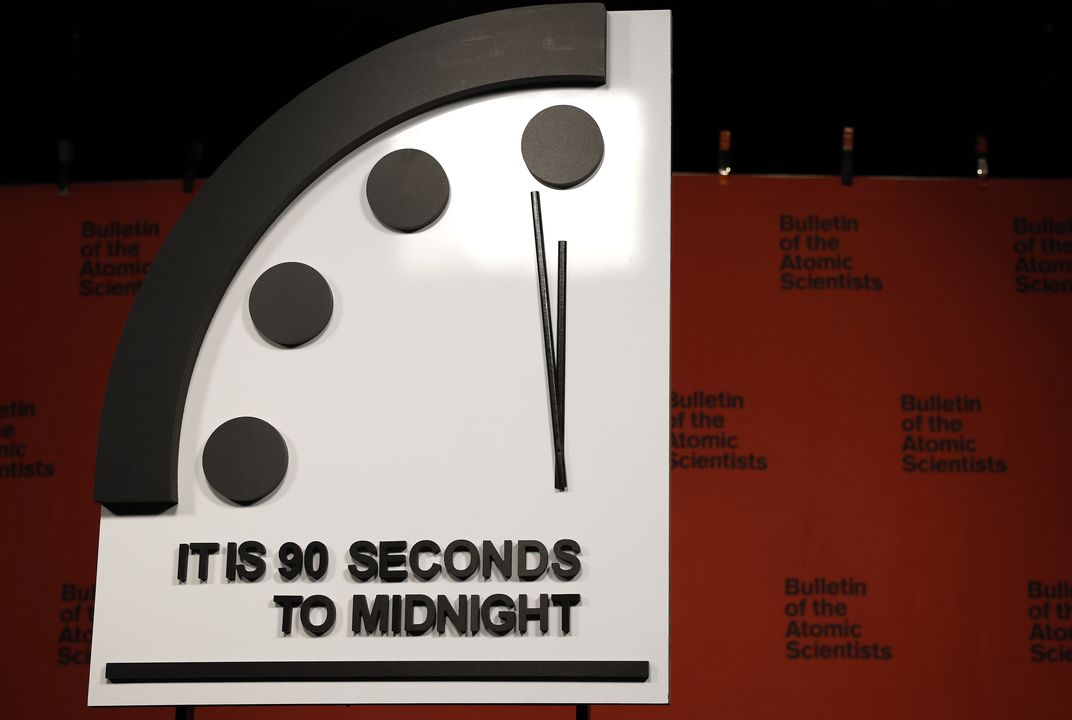
Markets have effectively started the stopwatch.
If the conflict is contained within three months, the episode may ultimately be remembered as a temporary adjustment in geopolitical risk premiums.
But if fighting drags on and the Strait of Hormuz remains closed for an extended period, the outlook becomes significantly darker.
Stagflation Risk
Rising energy costs could suppress industrial production while Europe — Türkiye’s largest export market — faces the risk of recession.
This combination could trap the economy in a classic stagflation scenario, where growth slows even as inflation accelerates.
Central Bank Response: Active Liquidity Management
Facing rising risks, the Central Bank of the Republic of Türkiye (TCMB) has already begun adjusting its policy toolkit.
Two notable measures have been implemented:
1. Higher overnight TL funding rates
The overnight Turkish lira market rate has been raised from 37% to 40%.
The objective is to absorb excess liquidity and maintain the attractiveness of lira-denominated assets such as deposits and money-market funds.
2. Lira-settled FX sales auctions
The central bank has reintroduced lira-settled foreign-exchange auctions as a tool to stabilize currency markets without directly drawing down reserves.
What Else Could the Central Bank Do?
If the conflict persists, the TCMB could deploy additional tightening tools:
Quantitative Tightening
Higher reserve requirements could be used to sterilize excess liquidity in the banking system.
Credit Restrictions
Limits on credit card spending or loan growth could be introduced to curb domestic consumption and reduce import demand.
Stronger Forward Guidance
The central bank could reinforce market expectations through firmer communication, signaling readiness for additional tightening if necessary.
Rate Hikes
The Monetary Policy Committee meeting scheduled for March 12 will likely assess the trajectory of the conflict before determining whether further interest rate action is required.
Crisis Also Brings Strategic Opportunities
Every crisis also creates the possibility of repositioning.
Türkiye could strengthen its role as an energy corridor while accelerating investments in:
-
LNG infrastructure
-
renewable energy
-
regional energy connectivity projects
Such shifts could help transform a geopolitical shock into a strategic advantage over the longer term.
Short-Term Reality
In the near term, however, realism is required.
The immediate costs of the conflict — higher energy prices, inflationary pressures and financial volatility — are likely to outweigh potential opportunities.
The stopwatch has started.
How long the war lasts may determine not only the fate of the Middle East, but also the trajectory of the global economy.
PA Turkey intends to inform Turkey watchers with diverse views and opinions. Articles on our website may not necessarily represent the view of our editorial board or count as endorsement.
Follow our English YouTube channel (REAL TURKEY):
https://www.youtube.com/channel/UCKpFJB4GFiNkhmpVZQ_d9Rg
Twitter: @AtillaEng
Facebook: Real Turkey Channel: https://www.facebook.com/realturkeychannel/