



Davutoğlu Admits: How Turkey Secretly Bypassed US Sanctions on Iran
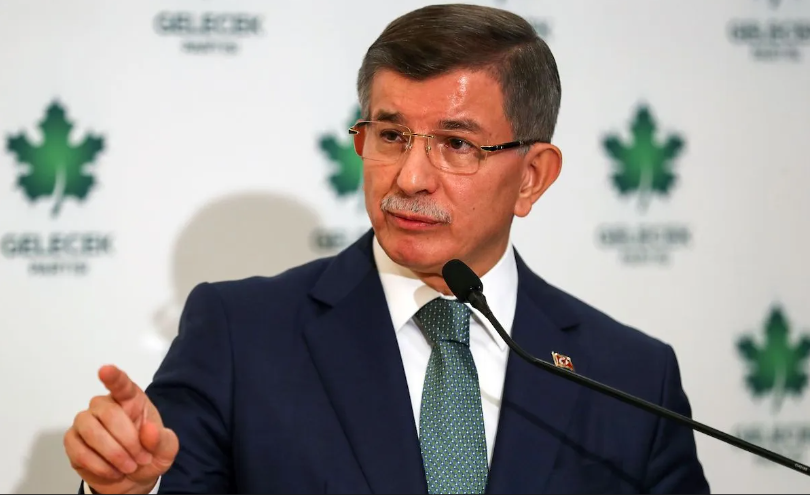 ahmet-davutoglu
In an unusually candid public appearance, former Turkish prime minister and foreign minister Ahmet Davutoğlu has offered one of the most detailed insider accounts to date of how Turkey deliberately bypassed US sanctions on Iran, constructing alternative financial mechanisms that later evolved into one of the most consequential sanctions-evasion scandals prosecuted in American courts. His remarks provide rare confirmation that Ankara’s defiance of Washington was not accidental or improvised, but a strategic decision taken at the highest levels of the state.
Speaking on January 14 during a lengthy interview on the nationalist-leaning TiVi6 television channel, Davutoğlu openly defended Turkey’s refusal to recognize the legitimacy of US-led sanctions against Iran. Rather than denying the allegations that Turkey maintained deep economic ties with Tehran despite American pressure, he framed the policy as a sovereign choice rooted in geography, history, and national interest. “We told the Americans very clearly that we did not consider the embargo on our neighbor Iran to be legitimate,” he said. “Turkey had energy needs, Turkey had economic interests, and we never saw it as acceptable to cut off a country with which we share one of the oldest borders in the world.”
A Deliberate Rejection of US Pressure
Davutoğlu stated that this position was communicated directly to senior US officials, including those responsible for enforcing sanctions. According to his account, Ankara made it explicit that it would continue importing Iranian oil and gas and would not allow US policy to dictate its bilateral relations. “When I was foreign minister, American officials responsible for sanctions came to my ministry,” he said. “We told them openly: We do not find this embargo right, and we will not comply with it at the expense of our national interests.”
As Washington tightened financial restrictions and closed conventional payment channels, Davutoğlu acknowledged that Turkey adopted unconventional methods to sustain trade. He described the creation of what he called “special arrangements” between the Turkish Central Bank and its Iranian counterpart to overcome transfer obstacles. “When there were problems with transfers, we created certain special procedures between our central banks,” he said.
These statements closely mirror the findings later presented by US federal prosecutors, who argued that Turkish institutions facilitated the conversion of Iranian energy payments into gold and non-dollar instruments, masking them as legitimate trade. Those mechanisms eventually became central evidence in landmark US court cases involving Turkish banks and officials.
State Policy Versus Systemic Abuse
While Davutoğlu framed Ankara’s actions as state-to-state commerce conducted in defiance of sanctions it viewed as illegitimate, he conceded that the absence of strict legal safeguards allowed corruption to take root. “Maintaining economic relations without recognizing the embargo is one thing,” he said. “Turning that into illegitimate money flows that implicate the Turkish state is something entirely different.”
Crucially, Davutoğlu did not publicly object to these practices while serving as prime minister, nor did he challenge the government’s facilitation of Iran-related transactions through state-controlled channels. During his years in power alongside President Recep Tayyip Erdogan, Turkey’s finance and economy ministries continued enabling trade flows that would later be scrutinized in US courts.
It was only after Davutoğlu was forced out of office in 2016 and expelled from the ruling Justice and Development Party (AKP) that he began repositioning himself as a critic. He subsequently founded the Future Party (Gelecek Partisi) and started offering retrospective criticism of how Iran sanctions and corruption allegations were handled.
The Reza Zarrab Factor
Davutoğlu’s interview also revisited the role of Reza Zarrab, the Turkish-Iranian gold trader who became the central figure in the sanctions-evasion scheme. Although Davutoğlu now claims he warned about Zarrab early on, he acknowledged that no decisive action was taken to dismantle the network while it was active. “I said it clearly: This man is a trickster,” he recalled. “Even if there were no other evidence, no one piles up cash and poses for photographs like that with clean money.”
Zarrab was arrested in Turkey in December 2013 as part of a corruption investigation implicating several cabinet ministers. However, the probe was swiftly derailed after Erdogan intervened, purging prosecutors and senior police officials and ensuring Zarrab’s release. Davutoğlu said he advised Erdogan to manage the case domestically, warning of international consequences, but his counsel was rejected.
That warning proved accurate. Zarrab was arrested in the United States in 2016, later becoming a cooperating witness in New York. He testified that billions of dollars were moved on Iran’s behalf through Turkey’s state-owned Halkbank, facilitated by bribes and falsified trade records. “I said openly: if you do not try him here, he will go to New York and testify. That is exactly what happened,” Davutoğlu said.
The fallout extended to Halkbank executives, including former deputy general manager Mehmet Hakan Atilla, who was convicted in a US federal court and served a prison sentence. Davutoğlu stressed that US authorities do not abandon such cases. “Americans do not close these files,” he said. “They keep them on the shelf. When the time comes, they take them down again.”
Lessons Unlearned and Future Risks
Throughout the interview, Davutoğlu returned to a central theme: Turkey’s rejection of sanctions was political, but the failure to impose accountability allowed illicit networks to flourish under protection. “We did not accept the embargo, yes,” he said. “But what followed was something else entirely. People exploited this position and dragged Turkey into illegitimate networks.”
He warned that similar dynamics could reemerge in Turkey’s dealings with other sanctioned countries, including Venezuela, potentially leading to another scandal adjudicated abroad rather than within Turkey’s own legal system.
Iran, Protests, and Red Lines
Davutoğlu also addressed recent unrest in Iran, firmly opposing any US intervention. He supported Ankara’s cautious approach, arguing that Turkey should not align with external powers seeking to exploit instability. “Our relations with Iran have never been determined by the wishes of a third actor,” he said.
Rejecting US military or coercive action, he criticized Washington’s human rights rhetoric as inconsistent, citing domestic crackdowns in the US. For Turkey, he defined a clear red line: no Turkish territory or military bases should ever be used in an attack on Iran. “If any government were to allow US bases in Turkey to be used against Iran, it would be the greatest mistake in the history of the republic,” he said, noting the absence of any UN Security Council mandate.