



CHP’s Açıkel Slams Wealth Gap: “Middle Class Is Being Erased”
 fethi-acikel
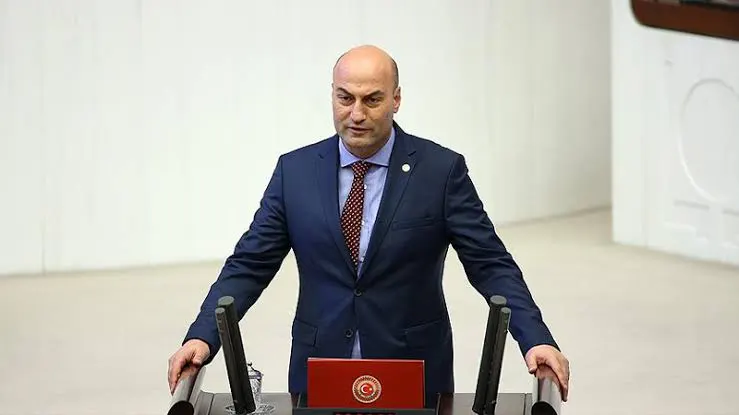
Fethi Açıkel, Member of Parliament for Istanbul from the Cumhuriyet Halk Partisi (CHP), has sharply criticized Türkiye’s economic policies, arguing that income inequality and wealth concentration have deepened under the current system.
In a social media statement, Açıkel claimed that the middle class is weakening and that broad segments of society are becoming poorer, while a small wealthy minority accumulates a disproportionate share of national wealth.
“Wealth Concentrated in the Top 1 Percent”
Açıkel cited striking figures on wealth distribution in Türkiye. According to his post, the richest 1% hold 35% of total wealth, while the richest 10% control 68%.
In contrast, he stated that 44 million citizens collectively hold only 2.7% of total wealth, highlighting what he described as a widening structural imbalance.
He argued that such disparities reflect a broader redistribution dynamic that favors a narrow elite at the expense of the majority.
Banking Deposits Reveal Stark Divide
Açıkel also cited data on the distribution of bank deposits to illustrate the scale of inequality.
He reported that there are 175 million bank accounts with balances below 10,000 TL, totaling 140 billion TL. Meanwhile, 2.5 million accounts hold a combined 22 trillion TL.
The figures, he suggested, demonstrate a significant concentration of financial assets within a relatively small segment of the population.
“Wealth Transferred to a Privileged Minority”
In his remarks, Açıkel described the current system as one in which “wealth has been transferred to a privileged minority,” arguing that economic policies have intensified social stratification.
He framed the issue not only as an economic imbalance but also as a social risk, warning that sustained inequality could weaken social cohesion and long-term economic stability.
Debate Over Inequality Intensifies
Income inequality and wealth concentration have become increasingly central to public debate in Türkiye, especially amid high inflation and rising living costs.
Supporters of current policies argue that structural reforms and macroeconomic stabilization efforts aim to restore long-term balance. Critics, however, contend that wealth distribution indicators show persistent disparities that disproportionately affect lower- and middle-income households.