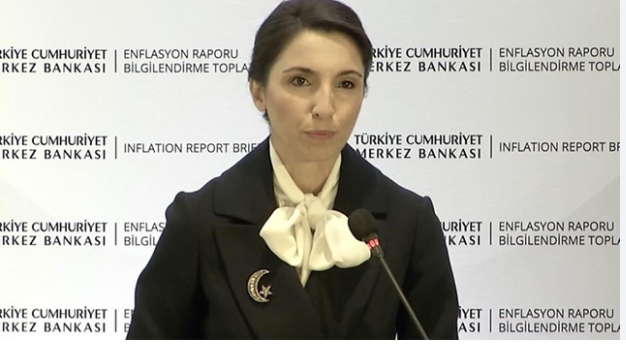
CBRT Signals Long-Term Commitment to Tight Policy and Stronger Reserves
 CBRT
CBRT
Turkey’s Central Bank (TCMB) has reaffirmed its determination to maintain a tight monetary policy stance and steadily strengthen international reserves, underlining financial stability as a core pillar of sustainable price stability. According to the new Pre-Accession Economic Reform Program for 2026–2028, prepared under the coordination of the Presidency of Strategy and Budget, the Bank plans to continue building reserves as long as market conditions remain favorable
Monetary Policy Anchored in Comprehensive Analysis
The TCMB emphasizes that monetary policy decisions will continue to be shaped by a broad and data-driven analytical framework. This includes detailed price assessments, inflation expectations, pricing behavior, demand-side dynamics, supply-side developments, domestic and external balance, savings behavior, credit conditions, and overall financial conditions. Importantly, the delayed effects of previous policy decisions will continue to be a critical input.
This holistic approach reflects the Bank’s intention to enhance the effectiveness of the monetary transmission mechanism, ensuring that policy signals are accurately reflected in market interest rates and financial conditions.
Inflation Targeting Remains the Core Framework
Within the inflation targeting regime, Turkey’s medium-term inflation target of 5%, jointly set with the government, remains unchanged. Monetary policy will be calibrated to ensure inflation follows a path consistent with this target, reinforcing the ongoing disinflation.
The TCMB has also refined its communication strategy by introducing year-end interim inflation targets, designed to provide clearer reference points for economic agents. Under this framework, interim targets were set at 24% for 2025, 16% for 2026, and 9% for 2027, with room for updates between Inflation Report periods.
Transparency and Accountability in Focus
If year-end inflation deviates from the announced interim targets, the TCMB commits to explaining the reasons behind the divergence. In line with transparency and accountability principles, this assessment will be published in the first Inflation Report of the following year, strengthening policy credibility and public trust.
Tight Stance to Persist Until Price Stability Is Secured
The Central Bank makes it clear that a tight monetary policy stance will remain in place until price stability is firmly achieved. This stance is expected to reinforce disinflation through demand, exchange rate, and expectations channels.
Decisions on the policy rate will be guided by realized inflation, underlying inflation trends, and expectations, ensuring alignment with interim targets. Any steps taken will aim to deliver the level of tightness required by the disinflation path, with adjustments reviewed cautiously on a meeting-by-meeting basis.
Should inflation outlooks deviate significantly from interim targets, the TCMB has signaled readiness to further tighten monetary conditions.
Supporting the Transmission Mechanism
Ensuring that market interest rates move in line with the policy rate remains a priority. To this end, the Bank will continue implementing supportive measures to enhance the efficiency of the monetary transmission mechanism.
In cases where unexpected developments emerge in credit or deposit markets, additional macroprudential measures may be deployed to preserve policy effectiveness. Liquidity conditions will also be closely monitored, with liquidity management tools used actively and flexibly.
Commitment to a Floating Exchange Rate Regime
The TCMB reaffirmed its commitment to the floating exchange rate regime, under which exchange rates are determined freely by market supply and demand. The Bank reiterated that it does not target any specific exchange rate level or direction and will not conduct foreign exchange transactions to influence the value of the lira.
That said, exchange rate developments and associated risks will continue to be monitored closely to ensure orderly market functioning. Where necessary, the TCMB may deploy appropriate instruments to safeguard financial stability.
Strategy to Strengthen International Reserves
A key highlight of the program is the Bank’s strategy to strengthen international reserves. Recognizing reserves as a critical buffer for financial stability and monetary policy credibility, the TCMB plans to continue accumulating reserves whenever market conditions allow.
International reserves will be managed according to three core principles: safety, liquidity, and return, in that order of priority. This approach aims to ensure resilience against external shocks while maintaining adequate liquidity and reasonable returns.
Financial Stability as a Pillar of Price Stability
Throughout the program, the TCMB underscores that financial stability is not separate from price stability, but rather a supportive and reinforcing element. By maintaining disciplined monetary policy, strengthening reserves, and preserving market mechanisms, the Bank aims to anchor expectations and foster a sustainable macroeconomic environment over the 2026–2028 period.
Related articles
Gaye Erkan’s first Inflation Report : Correct diagnosis, but no real remedy for inflation

EBRD President: Turkey central bank shakeup raises financial stability concerns

Deutsche Bank: Turkey’s Economy Unlikely to Face a Hard Landing