CBRT/Akçay: FX holding hands will burn
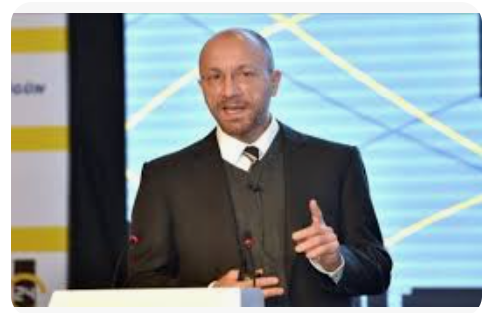 cevdet akçay
CBRT Deputy Governor Akçay: “Those Who Turned to FX for the Wrong Reasons Must Pay the Price”
Summary: Central Bank of the Republic of Türkiye (CBRT) Deputy Governor Cevdet Akçay said policymakers must ensure that speculative shifts into foreign currency are penalized, arguing that otherwise inflation could have spiraled as high as 200%. He emphasized that the central bank stands ready to act against external shocks, while acknowledging both successes and missteps in Türkiye’s disinflation process.
“We Had to Burn Those Who Dollarized for the Wrong Reasons”
Speaking after a policy discussion event in Istanbul, CBRT Deputy Governor Cevdet Akçay delivered some of his most candid remarks to date on monetary policy and market behavior.
Akçay said that speculative moves into foreign currency had to carry consequences:
“Everyone who turned to FX for the wrong reasons got seriously burned—and they had to be.”
He argued that without the central bank’s recent tightening measures, inflation could have reached extreme levels:
“If we hadn’t taken these steps, inflation could have gone as high as 200%.”
Central Bank Ready to Act Against External Shocks
Akçay stressed that the CBRT remains vigilant in the face of geopolitical risks, including the ongoing war in the Middle East.
- Policy measures are being monitored on a daily basis
- Additional action will be taken if current steps prove insufficient
- The central bank retains multiple tools to respond to shocks
“We always have weapons against external shocks. There are always things we can do.”
He also pointed to the central bank’s response during the political and financial turbulence ahead of the 2024 elections, when heavy short positions against the Turkish lira were reversed through policy intervention.
Inflation Rate in Turkey Forecaster: Istanbul Prices Surge 2.97pct
Policy Framework Can Change if Needed
Akçay emphasized that interest rates, macroprudential tools, and exchange rate dynamics must be assessed together.
He noted that:
- The current policy mix is not fixed
- Adjustments can be made depending on evolving conditions
“If we don’t find our steps sufficient, we will do what is necessary. We have to.”
Learning From Mistakes: “We Correct When We See Errors”
Addressing Türkiye’s long-standing struggle with inflation, Akçay acknowledged that the country has experienced both successes and failures.
However, he framed policy flexibility as a strength:
“When you see a mistake, correcting it is a virtue. Persisting in error is the real problem.”
He added that both the CBRT and global central banking practices continue to evolve, and that Türkiye’s central banking framework has strong long-term potential.
Communication Challenges With Markets
Akçay also pointed to a gap between policymakers and market participants, attributing part of the disconnect to “confirmation bias.”
“People interpret you the way they want to, not the way you are.”
He suggested that the CBRT may need to communicate more assertively:
- Better explain the complexity of policymaking
- Clearly outline the difficulty of the disinflation process
“We may have made it look easier than it is.”
Despite perceptions of confidence, Akçay struck a notably cautious tone:
“I have no confidence in myself. Everything I say could be wrong—until proven otherwise.”
Inflation Fight: Expectations Remain Key
Akçay echoed former Fed Chair Ben Bernanke’s view that monetary policy is largely about expectations management—arguing that in Türkiye’s case, it is even more critical.
“This job is 99% expectations management in Türkiye.”
He noted that inflation has declined from 48% to 31%, but stressed that the counterfactual scenario—without policy tightening—could have been far worse.
Interest Rate Strategy: Gradualism Over Shock Therapy
Responding to criticism that rate hikes were not aggressive enough, Akçay defended the central bank’s approach.
He explained that:
- The monetary transmission mechanism had been severely damaged
- Abrupt, large rate hikes could have triggered financial instability
- Gradual tightening was necessary to restore policy effectiveness
“Each rate hike had to deliver maximum impact. Raising rates too sharply at the start could have created serious instability.”
No Labels: “Not Hawk or Dove”
When asked whether he considers himself a “hawkish” policymaker, Akçay rejected the classification.
“I am not trying to be a hawk or a dove. I am just trying to do central banking as I understand it.”
He noted that such labels are often imposed externally rather than reflecting actual policy intent.
Credit Ratings and Reserves: Policy Will Be Decisive
Akçay also addressed concerns about reserves and potential credit rating actions.
He said outcomes will depend on policy credibility:
- If markets see policy missteps → downgrades possible
- If shocks are handled effectively → no action or even positive reassessment
“Everything is possible—it depends on what we do.”
Key Policy Achievements Highlighted
Among the policy measures he highlighted as most significant:
- Phasing out FX-protected deposit schemes (KKM)
- Strengthening securities requirements
He also acknowledged that the central bank may have been “too modest and defensive” in communicating its achievements.
Outlook: Cautious, Flexible, and Data-Driven
Akçay’s remarks point to a policy framework that remains:
- Flexible
- Data-dependent
- Prepared for volatility
While acknowledging uncertainties, he emphasized that the central bank’s guiding principle should be prudence:
“You should always expect the worst and hope for better outcomes.”
Related articles
BofA Report: Elections in May – is Türkiye heading towards orthodoxy?

2026 Outlook: Tactical Positioning, AI Infrastructure, and Select Opportunities in EM and Turkey
Foreign Currency Deposits in Turkey Climb by Over $1.5 Billion in a Week