



Can Türkiye Turn World Cup 2026 Qualification Into an Economic Breakthrough?
 milli takım
Türkiye’s return to the FIFA World Cup after 24 years offers more than sporting excitement—it presents a rare opportunity for structural transformation in the country’s football economy. Whether this momentum evolves into lasting financial gains or fades as a short-term boost will depend on how effectively the windfall is managed.
A Long-Awaited Return With Economic Implications
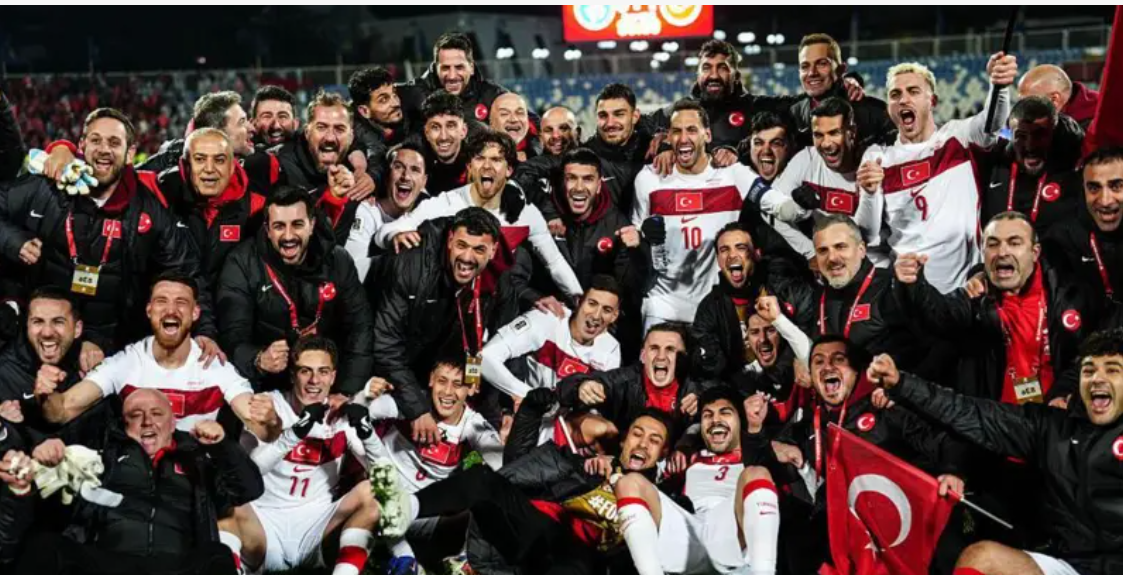
After a 24-year absence, Türkiye’s national football team has secured qualification for the 2026 FIFA World Cup, marking its first appearance since the historic third-place finish in 2002.
The playoff victory against Kosovo not only signals a sporting milestone but also opens the door to a significant economic opportunity. Participation in the tournament could help reposition Turkish football on the global stage and revive its international competitiveness.
However, the scale of this opportunity extends far beyond the pitch.
A Tournament of Record Revenues
The 2026 World Cup—co-hosted by the United States, Canada, and Mexico—will feature an expanded 48-team format and unprecedented financial scale.
According to FIFA estimates, the tournament is expected to generate a total economic distribution of $727 million, with $655 million allocated based on performance.
This makes it the most financially lucrative World Cup in history.
For Türkiye, this represents not just a short-term revenue injection but a potential catalyst for structural change—if managed strategically.
Three Scenarios: From Guaranteed Income to Breakout Gains
Türkiye’s economic upside from the tournament can be analyzed across three main scenarios:
1. Group Stage Exit (Base Case):
Even in the most conservative scenario, Türkiye is expected to secure approximately $10.5 million in guaranteed revenue—comprising $9 million in participation fees and $1.5 million in preparation support.
This provides immediate liquidity relief for the Turkish Football Federation (TFF).
2. Advancing Beyond the Group Stage:
If Türkiye progresses to the Round of 32 or Round of 16, total revenues could rise to between $12.5 million and $20 million.
Additional bonuses from match results would further increase earnings.
At this level, the broader economic impact becomes more visible:
- Sponsorship revenues could rise by 30%–50%
- Player market values may increase by 25%–40%
- Transfer income for clubs would accelerate accordingly
3. Deep Tournament Run (Upside Scenario):
A quarterfinal or better performance could generate revenues ranging from $20 million up to $50 million, with the tournament winner earning around $50 million.
Such success would significantly enhance Türkiye’s global football brand, boosting player exports and strengthening Turkish clubs’ negotiating power in international transfer markets.
From “Consuming League” to “Value-Creating Ecosystem”?
At its core, the World Cup represents more than prize money—it functions as a global valuation platform for football talent.
Historically, strong tournament performances have led to:
- Average player value increases of 25%–40%
- Breakout stars seeing gains exceeding 50%
In practical terms:
- A €10 million player could rise to €15–18 million
- A €20 million player could exceed €30 million
This shift is critical because players are not only sporting assets but also financial instruments on club balance sheets.
If leveraged correctly, rising player valuations can translate into higher transfer revenues, enabling Turkish clubs to transition from a “consuming league” model—dependent on imports—to a sustainable, export-oriented system.
A New Revenue Geography: North America
The 2026 tournament’s North American focus adds a strategic dimension.
The growing influence of Major League Soccer (MLS) and the expanding U.S. sports market create new commercial and transfer pathways for Turkish players.
This effectively opens a new “revenue geography,” diversifying opportunities beyond Europe and aligning Turkish football with emerging global demand centers.
Beyond Transfers: A Multi-Layered Economic Impact
The economic effects of World Cup participation extend well beyond player transfers:
- Sponsorships: Expected to increase by 30%–70%, driven by global exposure
- Commercial revenues: Licensed merchandise and branding deals likely to expand
- Broadcasting and digital engagement: Despite time-zone challenges, digital platforms and social media create new monetization channels
Football is no longer just a sport—it is a multi-layered media and content industry.
The Key Question: Sustainable Growth or “Financial Doping”?
The central issue is not revenue generation, but sustainability.
Türkiye’s football economy has historically struggled with structural weaknesses, particularly:
- High wage inflation
- Short-term transfer spending
- Chronic debt accumulation
If World Cup revenues are directed toward salaries and expensive transfers, the system risks reverting to its familiar cycle of financial instability.
In this scenario, the tournament would function merely as temporary “financial doping”—a short-lived boost followed by renewed fragility.
A Blueprint for Long-Term Transformation
A sustainable strategy is clear and widely acknowledged:
- Investment in youth academies to ensure consistent talent production
- Data analytics and scouting systems to identify undervalued players
- Financial discipline, particularly maintaining wage-to-revenue balance
- Long-term planning over short-term success
Clubs that have successfully adopted this model in Europe have achieved both sporting and financial stability.
A Three-Phase Opportunity
Türkiye’s World Cup participation should be viewed as a three-stage economic opportunity:
- Short term: $10–20 million in direct revenue and increased sponsorship inflows
- Medium term: Rising player valuations and stronger transfer income
- Long term: Potential transformation of the football business model
The outcome will ultimately depend on governance and strategic execution.
Conclusion: A Strategic Opportunity, Not a Windfall
Qualification for the 2026 World Cup is not merely a reward—it is a strategic inflection point.
The potential financial gains, combined with increased visibility and access to new markets, provide the foundation for long-discussed structural reform in Turkish football.
However, the decisive factor is not the size of the revenue, but how it is used.
Türkiye now faces a clear choice:
- Repeat past mistakes and treat the windfall as a short-term gain
- Or leverage it as the starting point for a sustainable, value-generating football economy
The difference between these paths will determine whether 2026 becomes a turning point—or just another missed opportunity.
Source: T24 (Tugrul Aksar)
PA Turkey intends to inform Turkey watchers with diverse views and opinions. Articles on our website may not necessarily represent the view of our editorial board or count as endorsement.
Follow our English YouTube channel (REAL TURKEY):
https://www.youtube.com/channel/UCKpFJB4GFiNkhmpVZQ_d9Rg
Twitter: @AtillaEng
Facebook: Real Turkey Channel: https://www.facebook.com/realturkeychannel/