BYD’s Billion Dollar Turkey Factory Faces Cancellation Claims
 BYD
BYD
Claims that Chinese automotive giant BYD has shelved its planned $1 billion electric vehicle factory in Turkey are sending ripples through the country’s automotive and investment circles. While no official confirmation has come from the company, statements from local sources and recent parliamentary scrutiny have intensified questions about whether one of Turkey’s most ambitious industrial projects is quietly unraveling.
Allegations Point to a Halted Investment in Manisa
The controversy centers on Manisa Organized Industrial Zone (MOSB), where BYD was expected to build a large-scale production facility. According to Ali Suat Ertosun, President of the Manisa Association for the Protection of Cultural and Natural Assets and a retired member of Turkey’s Supreme Court of Appeals, the company has allegedly suspended its investment plans. Citing what he described as reliable sources, Ertosun claimed that a formal announcement could come as early as February or March 2026.
As of now, BYD has neither confirmed nor denied these allegations. The absence of visible construction activity at the proposed site has only amplified speculation, with critics pointing to an apparent standstill where rapid development was once expected.
A Flagship Project Once Touted as Transformational
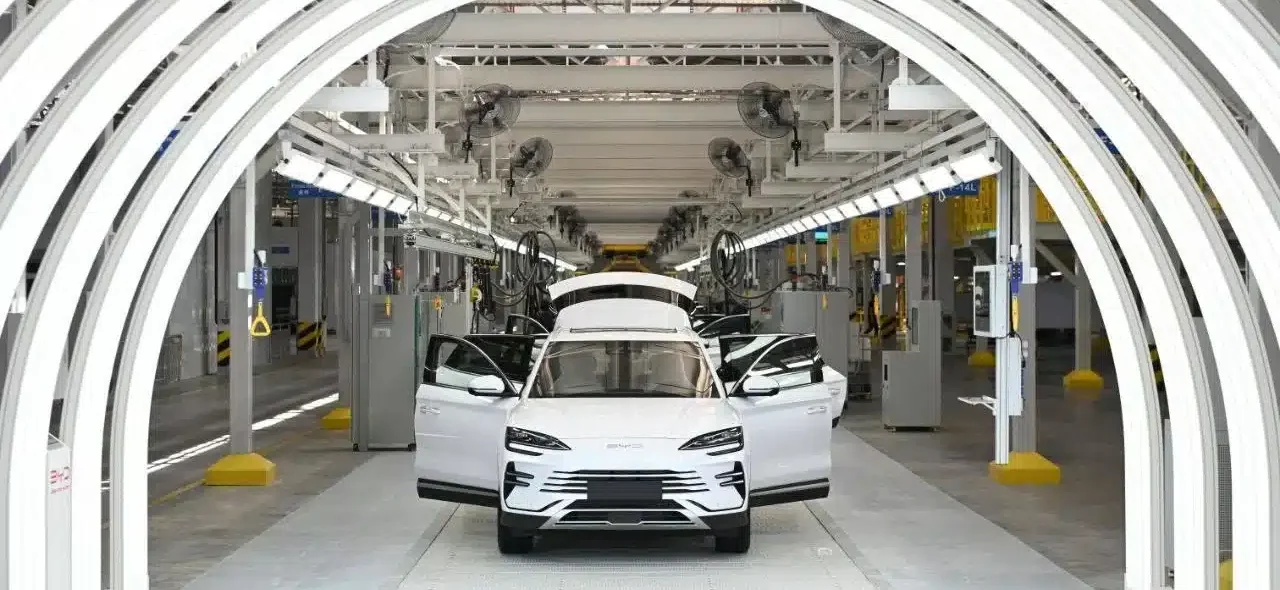
The factory project was officially unveiled in July 2024 with considerable fanfare. Designed to have an annual production capacity of 150,000 vehicles, it was among the largest automotive investments in Turkey’s history. Beyond manufacturing, the facility was expected to strengthen Turkey’s role in the electric vehicle (EV) supply chain, boost exports, and create thousands of jobs.
To secure the investment, the Turkish government extended a strategic incentive package, including tax exemptions and Special Consumption Tax (ÖTV) advantages. These incentives were framed as part of a broader strategy to accelerate the country’s transition toward electric mobility and high-value manufacturing.
Parliamentary Oversight Raises Red Flags
Doubts about the project’s trajectory reached the Turkish Grand National Assembly (TBMM) on January 28, 2026. CHP İzmir MP Sevda Erdan Kılıç submitted a 10-question written parliamentary inquiry to Minister of Industry and Technology Mehmet Fatih Kacır.
The inquiry sought clarity on several critical points:
– How much of BYD’s promised $1 billion investment had actually been realized
– The characteristics and current status of the land allocated in Manisa OSB
– Details of tax exemptions and ÖTV reductions granted to the company
– Potential sanctions if investment commitments were not fulfilled
Additional questions addressed BYD’s vehicle exports to Turkey between 2023 and 2025, the potential impact of the company’s Hungary factory project, and whether incentives provided to BYD were comparable to those extended to Turkey’s domestic EV brand, TOGG.
Ministry Response Stays Broad, Noncommittal
In its official reply, the Ministry of Industry and Technology did not directly address BYD-specific allegations. Instead, it emphasized the global transformation of the automotive sector, highlighting electric vehicles, digitalization, and increased local value-added production as strategic priorities.
The ministry reiterated that project-based incentives are governed by clearly defined timelines and obligations. It also noted that penalties and sanctions are legally provided for if investors fail to meet the agreed conditions. However, the response did not confirm whether BYD was currently in compliance with its commitments.
Strong Sales, Growing Price Controversy
Ironically, the investment debate unfolds against the backdrop of BYD’s commercial success in Turkey. In 2025, the company sold 45,537 vehicles, cementing its market leadership in the plug-in hybrid and new energy vehicle (NEV) segments. These figures were achieved without any local production, relying entirely on imports.
This success has fueled criticism over pricing strategies. Analysts and consumer groups noted that BYD models were sold in Turkey at prices well above those in China, with some vehicles showing pre-tax price differences exceeding 100 percent. While BYD attributed this gap to customs duties and ÖTV rates, critics argued that a company benefiting from strategic incentives should not be perceived as leveraging advantages solely to boost imports.
Political and Public Scrutiny Intensifies
Opposition lawmakers continue to question whether the incentive framework was designed to support long-term domestic production or merely to ease market entry for imported vehicles. Reports that customer deposits linked to the Manisa factory are being refunded have further intensified public skepticism, though there is no official confirmation.