



Bloody Crackdown Appears to Quell Iran Protests — For Now
 iran3
iran3
Summary:
Iran’s security forces have violently suppressed nationwide protests that erupted over economic hardship, leaving streets largely quiet amid an internet blackout. Activists say thousands have been killed and tens of thousands detained, warning that while demonstrations have paused, the underlying causes remain unresolved.
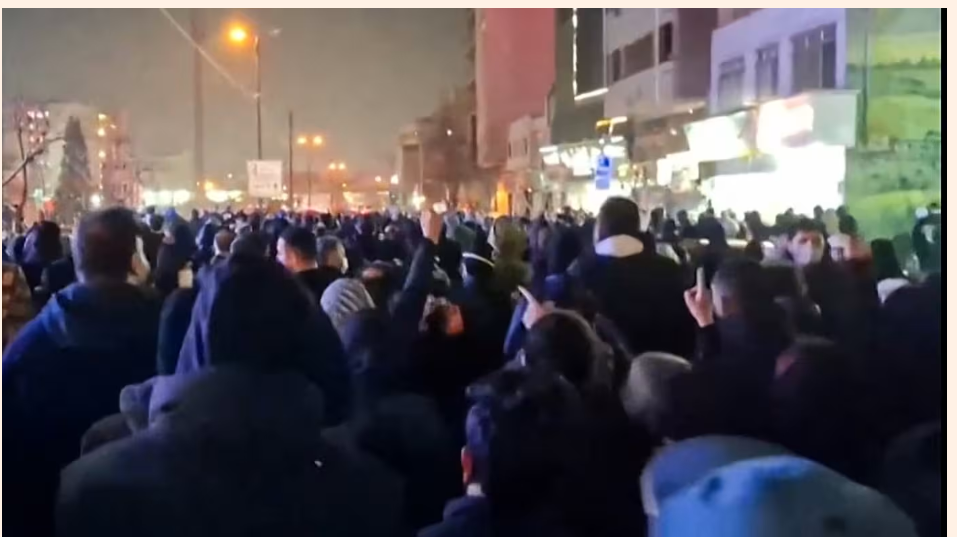
Iran’s security forces appear to have succeeded — at least temporarily — in forcing protesters off the streets following an extraordinarily violent crackdown, according to activists and analysts who have managed to obtain information from inside the country despite a near-total communications blackout.
The protests began in late December in Tehran, initially driven by anger over soaring inflation and the rapid collapse of the national currency, the rial. Demonstrations quickly spread nationwide and evolved into open calls for the end of the Islamic Republic’s rule. In response, authorities shut down internet access for more than a week and deployed security forces to suppress the unrest.
Cities Quiet Under Heavy Security Presence
With internet access still severely restricted, a full picture of conditions on the ground remains elusive. However, accounts are emerging via phone lines, limited access to Starlink satellite terminals, and testimonies from Iranians who have recently left the country.
These sources describe an eerie calm across major cities, where heavily armed security forces patrol streets and enforce what many residents characterize as a de facto curfew.
Mehdi Yahyanejad, a Washington-based Iranian activist and co-founder of the anti-censorship group Net Freedom Pioneers, said he has helped facilitate the transfer of hundreds of Starlink terminals to citizen journalists and activists inside Iran.
“Unfortunately, the crackdown has been so severe that protests have largely come to a halt,” Yahyanejad told ABC News. “Security forces are everywhere. There is a pervasive state of fear.”
Dissent Persists Beneath the Surface
Despite the apparent calm, activists say signs of resistance continue. In recent days, residents in some neighborhoods have been heard chanting anti-regime slogans from windows, while small groups of youths have briefly gathered before dispersing when security forces arrive.
Yahyanejad said the anger remains intense but doubts protests will quickly return to mass scale without external intervention.
“If there is no action from the United States, I don’t think people will come back to the streets anytime soon,” he said.
Death Toll in the Thousands, Arrests Mounting
The Washington-based Human Rights Activists News Agency (HRANA) estimates that more than 2,800 protesters have been killed, with nearly 1,700 additional deaths under review. The group also reports that approximately 22,000 people have been arrested since the protests began.
These figures have not been independently verified. Iranian authorities have not released an official death toll, though Supreme Leader Ayatollah Ali Khamenei acknowledged on Saturday that thousands had been killed.
Iranian officials have claimed that a majority of those killed were security personnel or civilians described as “terrorists” or “foreign mercenaries” linked to Israel and the United States.
Allegations of Hospital Raids and Executions
Activists and analysts have raised serious concerns over the treatment of injured protesters. According to Yahyanejad, many wounded demonstrators are afraid to seek medical care, fearing arrest by security officers stationed at hospitals.
There are also allegations that some severely injured protesters were removed from hospitals and executed. These claims are based on videos showing bodies with bullet wounds to the head while still connected to medical equipment.
Iranian physician Yasser Ghorashi told ABC News that hospitals in Iran do not send bodies to morgues without removing medical devices, suggesting the videos point to extrajudicial killings.
Accounts from doctors inside Iran indicate that security forces raided hospitals in several cities, including Ilam in western Iran — incidents partially corroborated by verified footage.
Trump Steps Back From Military Threats
U.S. President Donald Trump initially signaled that Washington might intervene militarily if Iranian security forces continued killing peaceful protesters. However, he later said the decision not to strike Iran was his own.
“Nobody convinced me. I convinced myself,” Trump told reporters.
Trump also claimed — without independent confirmation — that Iranian authorities had canceled more than 800 scheduled executions, praising the move on social media. Iranian officials have not publicly confirmed the claim. Earlier, Iran’s judiciary chief had warned of expedited trials and executions for detainees.
Economic Roots of the Unrest
Analysts say the protests were fundamentally driven by economic collapse. The rial’s falling value has made it impossible for traders to operate, while widespread poverty has deepened under sanctions and domestic mismanagement.
Iran is also grappling with shortages of water, electricity, and natural gas — despite possessing the world’s second-largest gas reserves — largely due to infrastructure neglect and environmental degradation.
Khamenei acknowledged that shopkeepers and traders had legitimate grievances but blamed the crisis on foreign enemies rather than internal policy failures.
Consensus View: Protests Will Return
While Iran’s security apparatus — particularly the Revolutionary Guard — has so far remained loyal to the leadership, analysts agree the unrest has been suppressed, not resolved.
With internet access still largely disabled and communications limited to roughly 2% of normal levels, according to NetBlocks, the true extent of public anger remains unclear.
The prevailing assessment among observers is that protests will re-emerge once conditions allow — potentially triggered by renewed economic shocks, political missteps, or shifts in elite cohesion.
For now, Iran’s streets are quiet. But few believe the silence will last.
Source: BBC, ABC News, HRANA
PA Turkey intends to inform Turkey watchers with diverse views and opinions. Articles on our website may not necessarily represent the view of our editorial board or count as endorsement.
Follow our English YouTube channel (REAL TURKEY):
https://www.youtube.com/channel/UCKpFJB4GFiNkhmpVZQ_d9Rg
Twitter: @AtillaEng
Facebook: Real Turkey Channel: https://www.facebook.com/realturkeychannel/***