Atilla Yesilada: Turkish assets to outperform EM in 2026
 gop4
gop4
Today, I am going out on a very bold limb to tell you why, with the sole exception of the Turkish Lira’s nominal value, Turkish financial assets are going to be the absolute darlings of the Emerging Markets (EM) universe this year.
The Global Context: Why Emerging Markets are Stagnating
To understand the Turkish opportunity, we must first look at the global landscape. The current market consensus is that EM assets are poised to shine after a decade of misfortune. The logic is simple: a weak dollar and the potential for the Fed to cut rates should, ceteris paribus, lower US bond yields and drive capital toward higher-yielding developing economies.
Parenthetically, I hold a strongly dissident view. I believe most EM stories are fundamentally broken. China is currently “Japanifying,” suffering from deflation, a catastrophic real estate crisis, and record-low consumer confidence. India, while a legitimate growth story, faces sustainability hurdles that are often ignored. Most other EM nations lack a unique catalyst.
Thus, EMs are simply proxies for the US dollar index. If the dollar is weak, they rise; if it strengthens, they collapse. In this environment, I predict that EM as a whole will underperform developed markets like the NASDAQ and S&P 500.
However, for the time being I’m comfortable with the EM “everything goes” rally, because after Friday’s CPI data futures markets began pricing in a third rate cut this year.
At the end, within this mediocre universe, Turkey has become a unique “safe haven” and a high-yield outlier.
The “Strong Lira” Paradox and the Carry Trade
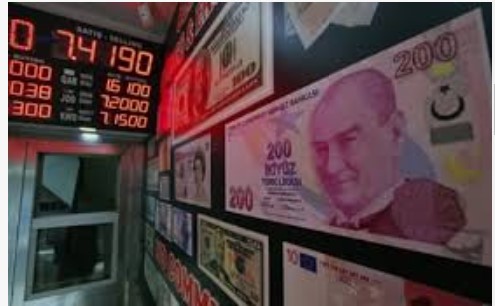
Let’s talk about the Lira. The Central Bank of Turkey (CBRT) is officially pursuing a “strong Lira policy.” To a casual observer, this might suggest the Lira will gain nominal value against the dollar. It will not. In my view, the Lira will still depreciate by roughly 18% against the dollar this year. However, because our year-end inflation forecast stands at 25%, the Lira is actually strengthening in real, inflation-adjusted terms.
This is the cornerstone of the Carry Trade. Currently, the Central Bank policy rate is 37%, and we expect it to end the year at roughly 33%. If you invest in Turkish overnight deposits, you are looking at a 33% simple return, or roughly 37% compounded. If the currency only loses 18-20% of its value, your net dollar yield is in the double digits.
Can the CBRT maintain this control? Yes. The central bank has accumulated nearly $200 billion in gross reserves. While critics point to “soft money” or swaps, what matters for currency defense is gross liquidity. Furthermore, dollarization among Turkish locals has stopped. 60% of deposits are now in Lira. As domestic confidence grows, the central bank will see even more FX inflows, creating a virtuous cycle that bolsters the very reserves global funds look at before investing.
Valuation: Borsa Istanbul is Dirt Cheap
Last year, EM assets underperformed almost every major benchmark. Turkey was no exception in terms of its “Erdogan discount.” However, the valuation gap has now become absurd. Borsa Istanbul (BIST 100) has gained about 15% in dollar terms recently, yet it still trades at a staggering 50% discount to the broader EM equity index.
Historically, Turkey trades at a 30-35% discount due to political risk. Closing just that “excess” discount represents a massive upside. Our GDP growth is tracking at approximately 3%, which is the average for major developing nations when you strip out the hyper-growth of India and China. More importantly, our current account deficit has shrunk to roughly 2% of GDP. In the Turkish context, anything below 4% is considered safe and easily financeable.
Furthermore, our public debt-to-GDP ratio remains our secret weapon. At roughly 35%, it is half the average of our EM peers. This gives the government immense fiscal room. Most importantly, the era of “crazy” economic experiments—where high interest rates were viewed as the cause of inflation—is over. President Erdogan has handed the steering wheel to Mehmet Şimşek and a technocratic central bank team. With no elections until May 2028, there is no political incentive to sabotage this return to orthodox sanity.
Market Targets for 2026
Based on the current research consensus and my own analysis, here is the roadmap for Turkish assets:
-
Equities: The target for the BIST 100 is approximately 17,000 points by year-end. From current levels, that is a 30% upside.
-
Local Bonds: I see the 10-year bond yield dropping by 300 to 400 basis points. The short end of the curve is even more lucrative, with a potential 500-700 basis point capital appreciation in 2-year bonds.
-
CDS Spreads: Our 5-year Credit Default Swap is currently around 210 basis points. The EM average is 100. As Turkey continues its orthodox path, I predict this discount will shrink, bringing our CDS down to 150 basis points.
Risks: The “Black Swans” and the Oil Factor
No analysis is complete without the downside. Turkey’s story is essentially a “put” on the oil market. If energy prices fall, every metric in Turkey—from inflation to the current account—improves. Conversely, an American or Israeli strike on Iran would be devastating. If Iran retaliates by sabotaging regional production or blockading the Strait of Hormuz, Brent crude could shoot to $100 per barrel, derailing our recovery.
Domestically, we face two major “Black Swans.” First, the long-dreaded Marmara earthquake. Seismologists aren’t asking “if,” but “when.” A quake above 6.5 magnitude would hit Turkey’s industrial heartland, potentially slashing GDP by 5% in a single year. Second, there is the health of the leadership. Both Erdogan and MHP leader Bahçeli have appeared frail. Should either retire for health reasons, the ruling coalition could fracture, leading to early elections and a total reset of the economic narrative.
The Geopolitical Tailwinds: Trump and Syria
Despite these risks, the “upsides” are dominating the headlines. Geopolitically, Syria is becoming something of a Turkish mandate. The rebuilding of Syria is a $300 billion project, representing huge export and construction potential for Turkish firms.
Furthermore, the “bromance” between Erdogan and Trump is not trivial. Turkey expects significant concessions from the Trump administration, including the withdrawal of the Halkbank money laundering case. On the defense front, a formula for the S-400 impasse is likely. If Turkey “locks up” the Russian systems and allows American oversight, CAATSA sanctions will be suspended. This would pave the way for Turkey to re-enter the F-35 program and modernize its aging F-16 fleet.
In the investment world, funds buy “stories.” For the first time in years, the Turkish story isn’t about eccentricity or crisis; it’s about a return to the global fold, strategic regional dominance, and deep-value recovery. For those reasons, Turkey will be the best performer in the EM space this year.
PA Turkey intends to inform Turkey watchers with diverse views and opinions. Articles in our website may not necessarily represent the view of our editorial board or count as endorsement.
Follow our English YouTube channel (REAL TURKEY):
https://www.youtube.com/channel/UCKpFJB4GFiNkhmpVZQ_d9Rg
Twitter: @AtillaEng
Facebook: Real Turkey Channel: https://www.facebook.com/realturkeychannel/