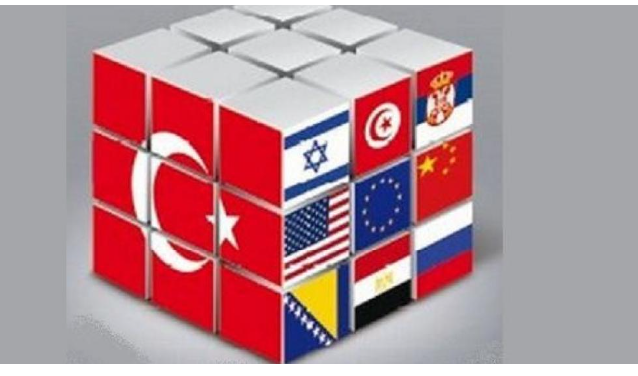
At the Crossroads of the 21st Century: Is Pax Sinica or Pax Americana More Dangerous for the Turkic World?
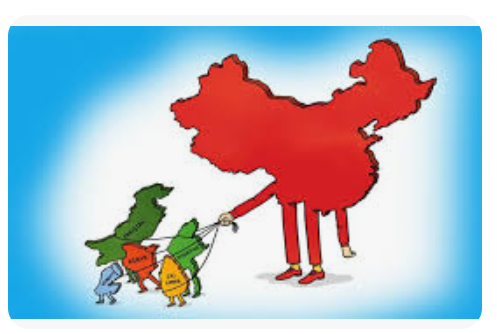 pax sinica
By Yücel Tanay Researcher, Author, and East Turkestan Activist
As we navigate the complexities of the 2020s, the global landscape is witnessing a seismic shift. The long-standing dominance of Pax Americana—the US-led international order—is increasingly challenged by the emergence of Pax Sinica (or Pax China). For the Turkic world, stretching from the Adriatic to the Great Wall of China, this transition is not merely an academic debate; it is a matter of profound geopolitical and cultural survival.
Defining the New Order: What is Pax Sinica?
The term “Pax,” Latin for peace, has historically described a world order dictated by a singular hegemonic power. While Pax Americana was built on a foundation of liberal democracy and market capitalism (however imperfectly applied), Pax Sinica represents a world order centered on China’s economic, political, and military gravity.
Unlike Western imperialism, which often sought to export ideological systems, Pax Sinica is rooted in a much older concept: Sinocentrism. In this worldview, China is Zhōngguó—the “Middle Kingdom”—and all other nations are peripheral entities. Historically, this was managed through a tributary system where peace was maintained not through direct occupation, but through total recognition of Chinese cultural and political superiority.
The Tools of Modern Hegemony
China does not seek to replace the US by mimicking it. Instead, it uses a unique toolkit to build its influence:
-
The Belt and Road Initiative (BRI): Massive infrastructure investments in ports, railways, and energy lines across Eurasia and Africa. While these projects offer development, they often result in “debt-trap diplomacy,” creating strategic dependency.
-
Economic Leverage: As the “world’s factory,” China exerts pressure through supply chain control and the long-term goal of making the Yuan a viable alternative to the US Dollar.
-
Alternative Institutions: By establishing the Asian Infrastructure Investment Bank (AIIB) and leading the Shanghai Cooperation Organisation (SCO), Beijing is building a parallel international architecture to bypass Western-centric organizations.
A Different Definition of “Peace”
In the Pax Sinica model, “peace” is defined by stability and obedience rather than liberal values. Under this framework:
-
Human Rights are dismissed as strictly “internal affairs.”
-
Democracy is viewed as a “cultural preference” rather than a universal right.
-
Sovereignty is treated as absolute—until it conflicts with Beijing’s core interests.
The Existential Crisis for the Turkic World
For the Turkic states and communities, the rise of China presents a series of acute dangers that differ significantly from the challenges posed by Western hegemony.
1. The Tragedy of East Turkestan
The most glaring contradiction in China’s “peaceful rise” is its domestic policy. In East Turkestan (Xinjiang), the world witnesses a systematic campaign of cultural assimilation. Reports of mass detention camps, the suppression of the Uyghur language, and restrictions on religious practices highlight the fate of Turkic identities within the Pax Sinica sphere.
2. Strategic Dependency of Central Asian States
The independent Turkic republics of Central Asia face a delicate balancing act. While Chinese investment is necessary for growth, the risk of economic colonization looms large. The challenge for these nations is to maintain their sovereignty while being geographically sandwiched between a resurgent Russia and an expansive China.
3. Cultural and Demograhic Transformation
The patterns observed in Tibet and Southern Mongolia—where demographic shifts and linguistic erosion are prevalent—serve as a warning. For the Turkic world, the preservation of identity is increasingly at odds with China’s demand for “harmony” and “stability.”
Conclusion: Seeking a Third Way
The dilemma facing the Turkic world in the 21st century is whether to remain under the fluctuating umbrella of Pax Americana or move toward the rigid hierarchy of Pax Sinica.
However, the true goal for the Turkic states should not be to choose between two masters. Instead, the objective must be to develop a unified, independent, and balanced strategy. Only by strengthening the Organization of Turkic States and fostering internal solidarity can these nations navigate the rivalry between global giants without sacrificing their cultural heritage or political autonomy.
The 21st century will be defined by this competition. For the Turkic world, the price of “peace” under a new hegemon may be higher than it is willing to pay.
Optional Reading by PA Turkey Staff: The Economic Architecture of Pax Sinica: BRI and the Turkic Republics
While the political discourse surrounding the rise of China often focuses on ideology, the reality on the ground in Central Asia is built on concrete, steel, and debt. For the Turkic republics—Kazakhstan, Kyrgyzstan, Uzbekistan, and Turkmenistan—China’s Belt and Road Initiative (BRI) is the primary vehicle through which Pax Sinica is being constructed.
To understand the stakes for the Turkic world, we must examine the specific economic mechanisms that define this relationship.
1. Kazakhstan: The “Buckle” of the Belt
Kazakhstan serves as the most critical land link in the BRI, acting as the gateway between the Chinese mainland and European markets.
-
Infrastructure Gains: Massive projects like the Khorgos Gateway, the world’s largest dry port, have transformed Kazakhstan into a regional logistics hub.
-
The Energy Factor: China has invested billions in Kazakh oil and gas, securing long-term supply lines that bypass maritime choke points like the Strait of Malacca.
-
The Risk: Despite the growth, there is a growing concern over “Dutch Disease,” where the economy becomes overly reliant on raw material exports to a single buyer (China), stifling the development of domestic manufacturing.
2. Kyrgyzstan and Tajikistan: The Debt-Trap Warning
For the smaller, mountainous Turkic and neighboring states, the BRI presents a much more precarious financial outlook.
-
Sovereign Debt: Kyrgyzstan owes approximately 40% of its total external debt to China’s Export-Import Bank. This creates a massive power imbalance; when a nation cannot service its debt, Beijing often seeks “equitable compensation” in the form of long-term leases on mineral rights or land.
-
Infrastructure vs. Industry: Most BRI projects use Chinese labor, Chinese materials, and Chinese technology, meaning the “multiplier effect”—where local businesses benefit from large projects—is often minimal.
3. Uzbekistan: The New Frontier
Under its recent liberalization policies, Uzbekistan has shifted from a cautious observer to an active BRI participant.
-
Diversification: Unlike its neighbors, Uzbekistan is attempting to use Chinese capital to modernize its industrial base, focusing on textiles and chemical processing rather than just transit.
-
The Challenge: Tashkent faces the difficult task of absorbing billions in investment without falling into the same debt traps that have plagued Bishkek.
Related articles
TRT News: Turkey’s Mega Find: How 694 Million Tons of Rare Earth Elements Could Break China’s Global Monopoly
Europe Faces a New Age of Power Politics — and Turkey Is Emerging as a Strategic Pivot

Geopolitical Whims and Judicial Risks Drive Volatility: Turkish Analyst Warns of Deeper Crisis