Armenia–Azerbaijan Peace Deal “Inevitable,” Says Pashinyan
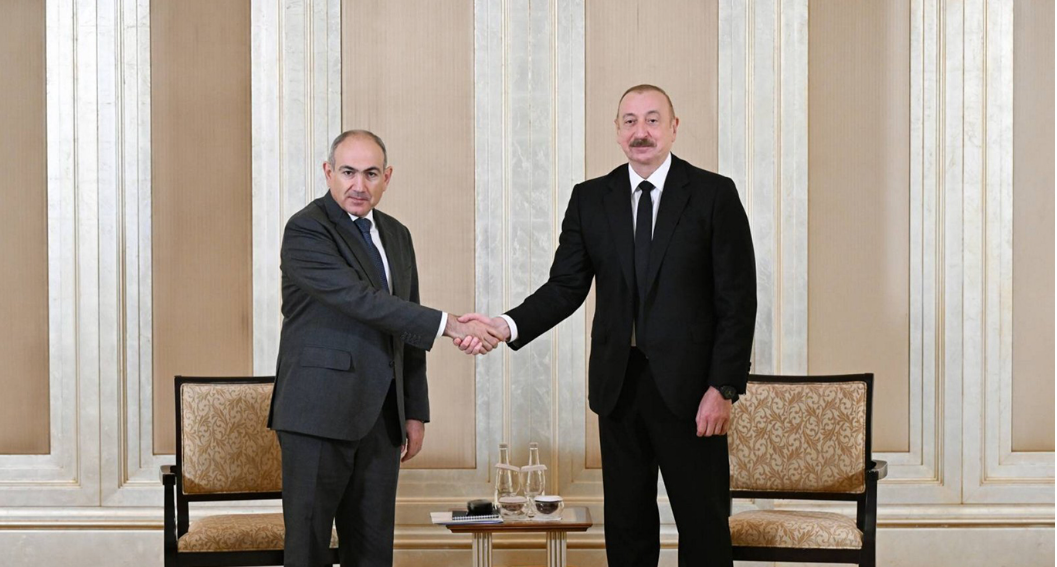 aliyev pashinyan
Armenian Prime Minister Nikol Pashinyan says a formal peace agreement with Azerbaijan is inevitable as negotiations with President Ilham Aliyev move toward a comprehensive settlement after decades of conflict. At the same time, Azerbaijan is preparing major regional connectivity projects, including new transport routes linking the South Caucasus with Türkiye and Europe. Leaders from both countries say recent diplomatic progress and reduced tensions along the border are laying the groundwork for lasting peace.
Pashinyan: Peace Agreement Will Be Signed
Armenian Prime Minister Nikol Pashinyan has said that negotiations with Azerbaijan are steadily moving toward a formal peace agreement, expressing confidence that the two countries will eventually finalize a deal.
Speaking about the ongoing talks with Azerbaijani President Ilham Aliyev, Pashinyan noted that diplomatic efforts have progressed beyond maintaining temporary stability and are now focused on establishing a comprehensive and lasting peace settlement.
According to the Armenian leader, negotiations continue through quiet and sustained diplomatic engagement behind the scenes, with both sides working to finalize the agreement.
“I have no doubt that the agreement will be signed,” Pashinyan said.
“It may be signed in April, May, June, or September — the exact timing is secondary. The important point is that it will be signed.”
Decades of Conflict in the Background
Armenia and Azerbaijan have been engaged in long-running disputes over Nagorno-Karabakh, which has been the center of multiple wars and political crises since the collapse of the Soviet Union.
Recent negotiations represent one of the most significant diplomatic efforts in years to resolve tensions that have destabilized the South Caucasus for decades.
Pashinyan suggested that although the final agreement has not yet been completed, recent diplomatic engagement has already created the foundation for peace.
However, he also warned that opposition to reconciliation exists within both societies.
“There are forces that are not satisfied with the establishment of peace and may attempt to reverse it,” Pashinyan said.
He stressed that both countries must work to ensure that the progress achieved so far becomes irreversible.
Azerbaijan Plans Major Transport Corridors
While negotiations continue, Azerbaijan is already planning major infrastructure and connectivity projects that could reshape regional trade routes following a peace agreement.
Speaking at the opening of the 13th Global Baku Forum, Azerbaijani President Ilham Aliyev said transportation will be a key priority in the post-peace agenda.
Aliyev announced that Azerbaijan is working on expanding the Middle Corridor, a major trade route linking Asia with Europe.
According to Aliyev, a new extension of the corridor is expected to pass through Armenian territory, potentially transforming Armenia into a transit country for the first time since gaining independence.
Connecting Azerbaijan, Nakhchivan, and Türkiye
The project would also restore a long-sought link between mainland Azerbaijan and its exclave, the Nakhchivan Autonomous Republic.
Aliyev referred to the Trump Route for International Peace and Prosperity (TRIPP), a connectivity project included in the joint declaration signed by Armenia and Azerbaijan in Washington on August 8, 2025.
Under the agreement:
-
Armenia will work with the United States and other partners to develop the TRIPP connectivity framework.
-
A 42-kilometer segment inside Armenia will form part of the broader Zangezur transport corridor.
-
The route will connect with Azerbaijan’s Horadiz–Aghband railway line and continue into the Nakhchivan rail system.
Ultimately, the corridor is expected to extend into Türkiye’s railway network, creating a new international transport link between Central Asia, the South Caucasus, Türkiye, and Europe.
Azerbaijan plans to complete its section of the project by the end of 2026, while construction on the Armenian portion is expected to begin later this year.
Restoring Links Lost a Century Ago
Direct land connections between Azerbaijan and Nakhchivan were severed during the Soviet-era geopolitical restructuring of the South Caucasus in 1920.
The region’s isolation worsened during the Armenia–Azerbaijan conflict of the early 1990s, when transport, energy, and communication links between Nakhchivan and mainland Azerbaijan were cut.
Today, Nakhchivan has overland access primarily through Iran and Türkiye.
To prepare for the new corridor, Azerbaijan Railways began reconstruction of Nakhchivan’s railway infrastructure in December 2025, aiming to connect the region directly with the TRIPP route and restore the missing link to mainland Azerbaijan.
Signs of Stabilization on the Border
President Aliyev said the peace process is already producing tangible results on the ground.
According to the Azerbaijani leader, tensions along the border have significantly eased.
“We achieved peace with Armenia not only on paper,” Aliyev said.
“The agreement has been initialed and a joint declaration was adopted seven months ago, but more importantly we now have peace on the ground — no shootings, no victims, no casualties.”
Trade and Transport Restrictions Easing
As part of the normalization process, Azerbaijan has also lifted restrictions on transporting goods to Armenia, both from Azerbaijan and from third countries.
Recent shipments illustrate the gradual reopening of economic links.
On March 11, a train carrying:
-
1,984 tons of Azerbaijani diesel fuel
-
135 tons of Russian fertilizer
was transported to Armenia via Georgia.
Since January 2026, Azerbaijan has facilitated shipments to Armenia including:
-
more than 10,000 tons of petroleum products
-
over 22,000 tons of grain from Russia
-
about 610 tons of fertilizer.
These developments suggest that economic cooperation may begin to accompany the diplomatic process.
A Potential Turning Point for the South Caucasus
If finalized, the peace agreement between Armenia and Azerbaijan could mark a major turning point for the South Caucasus, opening the door to new trade corridors, regional integration, and long-term stability.
While political challenges remain, both governments say the momentum toward peace is growing.
For now, leaders in both capitals appear determined to ensure that decades of conflict give way to a new regional order based on cooperation and connectivity.