Ankara Warns Iran War Could Trigger Regional Collapse
 orta dogu savas
by Pro-Government Columnist Hande Fırat
Prominent pro-government columnist Hande Fırat says Türkiye has warned all actors involved in the Iran conflict that a deeper war could spiral into regional chaos. According to Fırat, Ankara is particularly concerned about attempts to mobilize Kurdish armed groups against Iran, which could strengthen the PKK–PJAK network and destabilize the region.
Hande Fırat

Negotiations Collapsed as War Began
Before the conflict escalated, diplomatic negotiations were underway between Washington and Tehran. Many capitals were awaiting another round of talks in hopes that tensions could be contained.
However, the diplomatic process collapsed abruptly.
U.S. Secretary of State Marco Rubio publicly acknowledged that Israel was preparing to strike Iran regardless of negotiations, saying that delaying action could have resulted in even greater losses.
According to Fırat, U.S. President Donald Trump initially wanted to secure a rapid diplomatic breakthrough—particularly on Iran’s nuclear program. But Tehran demanded the removal of all sanctions during the negotiations.
That demand, combined with strong Israeli pressure on Washington, effectively stalled the talks and pushed the crisis toward military confrontation.
Erdoğan’s Warning to Trump
When the war began, President Trump reportedly called several world leaders—including Turkish President Recep Tayyip Erdoğan.
During the call, Erdoğan urged the U.S. leader to allow diplomacy another chance.
“If civil war breaks out or a wave of refugees begins, the region will not be able to bear it,” Erdoğan reportedly warned.
According to Fırat, Trump acknowledged the concern privately but faced strong pressure from Israel.
Iran War Raises New Concern for Ankara: PKK Enters the Equation
Ankara’s Quiet Diplomatic Efforts
Fırat writes that Türkiye has been pursuing an intensive diplomatic effort for months to prevent the crisis from spiraling out of control.
Turkish officials have been in contact with:
-
The United States
-
European governments
-
Iran
-
Gulf states
The goal has been to prevent the conflict from escalating into a broader regional war.
Ankara’s strategy is clear: Türkiye does not want to become a direct party to the conflict, but it seeks to play a significant role in managing the crisis.
In fact, Türkiye had previously proposed a diplomatic initiative aimed at defusing tensions.
In a phone call earlier this year, Erdoğan suggested a leaders’ summit involving the United States, Iran, and Türkiye.
Foreign Minister Hakan Fidan later confirmed the proposal publicly, noting that Erdoğan had invited Trump and Iranian President Masoud Pezeshkian to meet.
Iran initially described the idea as constructive, but the opportunity ultimately went unused.
According to Ankara, such a summit could have been a potential “game-changer.”
Ankara Trying to Freeze the Crisis
Fırat argues that Türkiye’s current strategy is effectively aimed at freezing the conflict before it escalates further.
Ankara fears that a wider war could fundamentally reshape the Middle East’s security architecture.
A prolonged conflict could affect:
-
The Strait of Hormuz and global energy routes
-
Gulf security
-
Regional power balances
-
The global economy
For Türkiye, however, the risks are even more immediate.
As a NATO member, a neighbor of Iran, and a central regional actor, Türkiye faces direct geopolitical consequences if the conflict spirals out of control.
Ankara does not seek a confrontation with Tehran, but Turkish officials believe that a regional war involving the Gulf could quickly become uncontrollable.
Concerns About U.S. and Israeli Military Strategy
According to Fırat, Türkiye’s concerns are not limited to Iran’s actions.
Ankara also believes that U.S. and Israeli military operations could further destabilize the region.
Turkish officials often point to the experiences of Iraq and Syria as examples of how military interventions in the Middle East can produce unintended consequences.
A weakened Iran would not only affect Tehran itself but could reshape political dynamics across:
-
Iraq
-
Syria
-
Lebanon
-
The Gulf states
The “Kurdish Card” and PKK-PJAK Risks
One of Ankara’s greatest concerns is the possibility that Kurdish armed groups could be mobilized as part of a strategy to pressure Iran.
Reports cited by Fırat suggest that U.S. intelligence agencies have discussed supporting Kurdish militants in order to spark unrest inside Iran.
The strategy would exploit Iran’s ethnic fault lines by encouraging uprisings among:
-
Kurds
-
Azeris
-
Baloch groups
-
Arab communities in Khuzestan
In this framework, Kurdish regions in northwestern Iran—particularly around Mahabad, Urmia, and Kermanshah—could become key areas of conflict.
Washington is believed to prefer this model because it avoids deploying American troops directly in Iran.
Instead, local actors would provide the “boots on the ground.”
Ankara’s Alarm Over PKK–PJAK Links
For Türkiye, however, such a strategy carries significant risks.
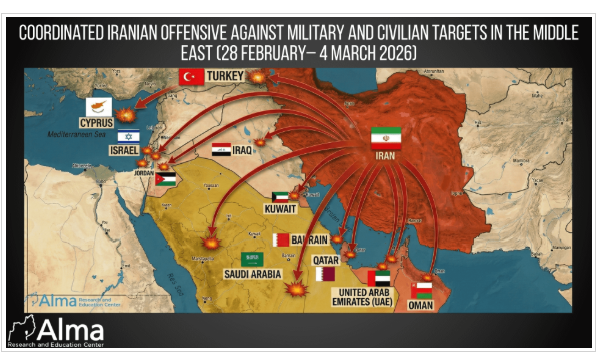
Iran has already carried out strikes against Kurdish militant groups in northern Iraq, including the PJAK, which Ankara considers closely linked to the PKK.
Fırat notes that Iraqi Kurdish leader Bafel Talabani controls areas where movement between PKK and PJAK networks can occur.
This raises concerns that PKK fighters could move into Iran and become part of a broader regional conflict.
From Ankara’s perspective, the expansion of the PKK–PJAK network would represent a serious security threat.
Turkish officials therefore argue that external powers should avoid turning Kurdish armed groups into instruments of geopolitical competition.
Ankara’s Three Core Red Lines
Fırat concludes by outlining what she describes as Ankara’s three fundamental concerns:
-
Kurdish armed groups in the region must not be strengthened.
-
The fragmentation of Iran must not lead to the emergence of a new Kurdish geopolitical corridor.
-
The PKK–PJAK network must not expand across the region.
According to the columnist, Türkiye has conveyed these warnings to all actors involved in the conflict.
If the war deepens and internal unrest spreads inside Iran, Ankara fears the consequences could extend far beyond the current battlefield—reshaping the political and security landscape of the entire Middle East.
Author: WS37
PA Turkey intends to inform Turkey watchers with diverse views and opinions. Articles in our website may not necessarily represent the view of our editorial board or count as endorsement.
Follow our English YouTube channel (REAL TURKEY):
https://www.youtube.com/channel/UCKpFJB4GFiNkhmpVZQ_d9Rg
Twitter: @AtillaEng
Facebook: Real Turkey Channel: https://www.facebook.com/realturkeychannel/