



Ankara isn’t worried about Iran War delaying the Peace Process
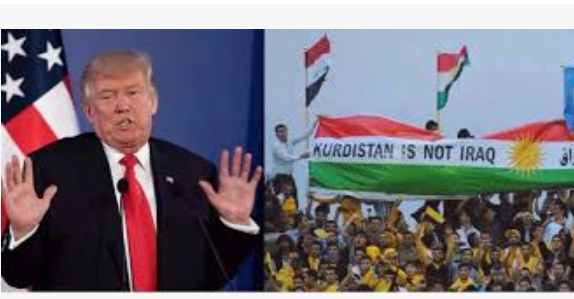 trump kürtler
Could a U.S. “Kurdish Card” in Iran Affect Türkiye’s İmralı Process?
As speculation grows that the United States could mobilize Kurdish groups against Iran in the escalating regional conflict, political circles in Ankara are debating how such a move might affect Türkiye’s ongoing “İmralı process.” According to government sources and intelligence officials cited in political reporting, Ankara believes that attempts to open a Kurdish front inside Iran would be far more complicated than similar strategies pursued in Iraq or Syria.
Debate Over a Possible “Kurdish Card” in Iran
Following the U.S.–Israeli war against Iran, discussions have intensified over whether Washington might attempt to mobilize Kurdish groups in the region against Tehran.
The debate gained momentum after U.S. President Donald Trump reportedly held phone calls with Kurdish leaders in Iraq and Iran. The contacts fueled speculation that Kurdish opposition groups could be organized as part of a potential ground front against Iran.
Analysts say such a strategy would mirror past U.S. approaches in Iraq and Syria, where Kurdish forces were used as local partners in military operations.
However, according to discussions within Türkiye’s ruling circles, replicating that model in Iran may prove significantly more difficult.
Ankara’s View: Iran Is Different
According to reporting by journalist Nuray Babacan, government officials and intelligence sources in Ankara argue that Iran’s internal structure makes a Kurdish mobilization far less likely to succeed.
They note that the ethnic and sectarian balance inside Iran differs significantly from other parts of the region.
In Iran:
-
Kurdish communities are largely Sunni Muslim
-
Azerbaijani Turks and many other groups are predominantly Shia
Officials argue that while Kurdish political movements often approach issues from an ideological perspective, many other communities in Iran tend to interpret developments through religious and sectarian lenses.
This dynamic, they say, makes coordinated anti-regime mobilization across different ethnic groups far less probable.
Limited Impact of Kurdish Cooperation
Another argument circulating in Ankara is that even if a small number of Kurdish groups cooperated with external powers, their influence would likely remain limited.
Iran’s population exceeds 100 million, and officials believe that a localized insurgency would struggle to significantly affect the political balance.
Some analysts also point out that Kurdish communities in Iran enjoy relatively broader cultural and legal rights compared with Kurdish populations in certain neighboring countries, which may reduce incentives for large-scale rebellion.
Historical Skepticism Toward U.S. Support
Government insiders also point to historical precedents shaping Kurdish attitudes toward outside powers.
One example often cited is the experience of Mullah Mustafa Barzani, who fought Saddam Hussein’s government in Iraq in the 1970s. At the time, the United States eventually withdrew its support after reaching a political arrangement with Baghdad, leaving Kurdish forces exposed.
This historical memory, according to Turkish officials, may make Kurdish leaders cautious about becoming deeply involved in a confrontation with Iran.
Iraqi Kurdish Leadership Seen as Unlikely to Join
Within Iraqi Kurdistan, the Barzani leadership is seen as particularly unlikely to become involved in a new regional conflict.
While political factions associated with Bafel Talabani are often viewed as closer to Washington, their regional influence is considered relatively limited.
Observers also note that in Syria the United States recently shifted its policy toward supporting the central government, pushing Kurdish-led forces toward an agreement with Damascus.
These developments, according to Ankara’s assessment, suggest that Washington may struggle to build broad Kurdish support for operations against Iran.
Yavuz Baydar: Trump’s Call for Kurdish Support Against Iran Raises Regional Questions
Potential Impact on Türkiye’s İmralı Process
The debate has also raised questions about whether regional developments could influence Türkiye’s İmralı process, which involves dialogue linked to imprisoned PKK leader Abdullah Öcalan.
According to political sources, Kurdish political dynamics in the region are often shaped by organized militant groups rather than broader public sentiment.
In the past, intelligence agencies and regional powers have attempted to influence groups such as the PKK through military support and political leverage.
Turkish officials argue that these networks have sometimes attempted to shape Kurdish public opinion through propaganda or pressure.
PKK’s Role in Regional Politics
Another view circulating in Ankara is that the PKK has historically been perceived by some regional actors as a useful geopolitical tool.
For example, it is widely believed that Syria once allowed Abdullah Öcalan to reside in the country as part of its broader strategic calculations vis-à-vis Türkiye.
Similarly, Iranian authorities have at times been accused of tolerating or indirectly supporting PKK activities for strategic purposes.
Limited Impact Expected on the Process
Despite the regional turbulence, political sources suggest that the ongoing İmralı process in Türkiye may not be significantly affected.
Officials argue that the involvement of both state institutions and Abdullah Öcalan himself in the process could help maintain its continuity.
Still, some observers remain cautious about predicting outcomes.
As Babacan notes in her analysis, the political process remains uncertain, and it may be premature to draw firm conclusions before its final stage becomes clear.
Author: WS37
PA Turkey intends to inform Turkey watchers with diverse views and opinions. Articles in our website may not necessarily represent the view of our editorial board or count as endorsement.
Follow our English YouTube channel (REAL TURKEY):
https://www.youtube.com/channel/UCKpFJB4GFiNkhmpVZQ_d9Rg
Twitter: @AtillaEng
Facebook: Real Turkey Channel: https://www.facebook.com/realturkeychannel/