ANALYSIS: JD Vance’s Caucasus Tour Rattles Regional Powers as US-Armenia IT, Nuclear Deals Takes Shape
 jd vance
US Vice President JD Vance’s visit to Armenia has accelerated Washington’s economic and strategic engagement in the South Caucasus, with agreements on civil nuclear cooperation and support for advanced technology infrastructure. While Armenia frames the moves as diversification and modernization, Türkiye and Iran view the expanding US footprint — including plans for a major AI data center — as a potential shift in regional power balances.
US-Armenia Civil Nuclear Deal Signals Strategic Realignment
Armenia and the United States have agreed to cooperate in the civilian nuclear sector, marking a significant step in Yerevan’s effort to reduce long-standing dependence on Russian and Iranian energy supplies.
The agreement was signed on Monday by Armenian Prime Minister Nikol Pashinyan and US Vice President JD Vance, who is on a two-day visit to the country.
The deal finalizes negotiations on a so-called “123 Agreement,” enabling the US to license nuclear technology exports to Armenia. Vance said the agreement could unlock up to $5 billion in initial US exports, with an additional $4 billion in long-term fuel and maintenance contracts.
“This agreement opens a new chapter in the deepening energy partnership between Armenia and the United States,” Pashinyan said.
Armenia is currently reviewing proposals from US, Russian, Chinese, French and South Korean firms to replace its ageing Soviet-era Metsamor nuclear power plant. While no final decision has been announced, the agreement substantially strengthens the US position.
AI Data Center Project Adds New Dimension to US Engagement
Beyond energy, Washington’s engagement now extends into advanced technology. US-linked investors and diaspora-backed initiatives are supporting the establishment of a large-scale AI data center and cloud infrastructure project in Armenia, designed to position the country as a regional technology hub.
The project, expected to include high-performance AI computing capacity and data processing infrastructure, is framed by Armenian officials as a tool for economic diversification, job creation and integration into global technology supply chains.
Armenian backers argue that the data center would help reduce reliance on traditional energy and remittance-based growth models, while strengthening Armenia’s role in digital services, AI training and cloud computing.
However, the project has drawn close scrutiny from regional powers, which see strategic implications beyond its commercial scope.
Türkiye: Watching the Technology Shift Closely
For Türkiye, the emergence of an AI and data center hub in Armenia introduces a new layer of competition in the South Caucasus.
Ankara has invested heavily in its own AI ecosystem, defense technologies and data center capacity, and views technological leadership as increasingly intertwined with geopolitical influence. Turkish analysts note that Armenia’s AI ambitions, combined with US backing, could gradually rebalance regional technological capabilities at a time when Azerbaijan remains more energy-focused.
Türkiye, as Azerbaijan’s closest ally, supports stability and economic development in the region but stresses that new technology corridors should not undermine existing regional cooperation frameworks or strategic balances.
Turkish officials also emphasize that technology partnerships should complement — not bypass — regional actors, particularly Azerbaijan.
Iran: Strong Objections to US Presence Near Its Borders
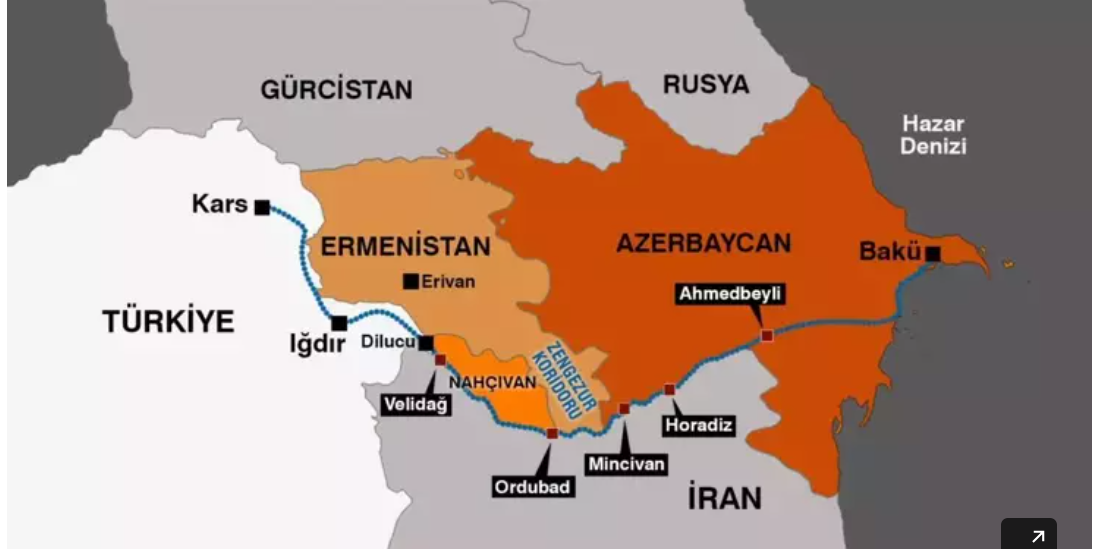
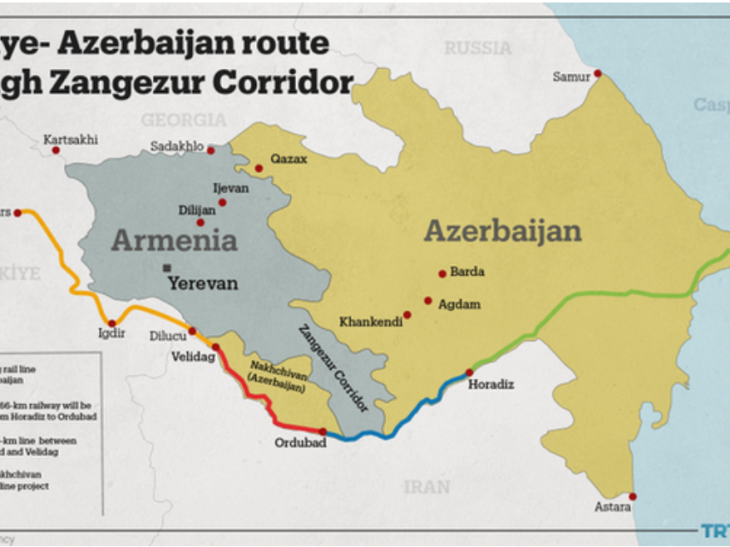
Iran has reacted far more sharply to the expanding US role in Armenia, particularly when viewed alongside proposed infrastructure projects such as the Zangezur corridor and the AI data center.
Tehran sees the combination of US-backed transport corridors, nuclear cooperation and advanced data infrastructure as evidence of a deeper American attempt to entrench itself near Iran’s northern borders.
Iranian analysts argue that a US-supported data center in Armenia could have dual-use implications, raising concerns over intelligence gathering, cyber capabilities and long-term security risks.
Iran has warned Yerevan that it will not accept a sustained US presence — commercial or technological — along its borders, and has called for regional solutions involving Armenia, Azerbaijan and Iran instead.
Corridor Politics and Broader Geopolitical Tensions
Vance’s visit also focused on advancing the proposed “Trump Route for International Peace and Prosperity (TRIPP)”, a transport corridor across Armenia’s Syunik province linking Azerbaijan to Nakhchivan.
While Washington frames the project as an economic integration initiative, Türkiye and Iran both stress that any corridor must respect Armenia’s territorial integrity and avoid external military or political entrenchment.
Iran, in particular, fears that US involvement in the corridor — combined with technology and energy projects — could turn a commercial route into a geopolitical pressure point against Tehran and Moscow.
A Region at a Strategic Crossroads
Armenia views US engagement in nuclear energy and AI as a path toward sovereignty, modernization and reduced dependence on traditional partners. Yet for Türkiye and Iran, the pace and scope of Washington’s involvement raise concerns about long-term regional stability.
As peace talks between Armenia and Azerbaijan continue, the South Caucasus is increasingly becoming a test case for how economic development, technology and infrastructure intersect with great-power competition.
Whether Armenia’s AI and nuclear initiatives ultimately enhance regional cooperation or deepen geopolitical fault lines will depend on how inclusively — and transparently — these projects are implemented.
Daily Sabah, Press TV, Azer news
PA Turkey intends to inform Turkey watchers with diverse views and opinions. Articles in our website may not necessarily represent the view of our editorial board or count as endorsement.
Follow our English YouTube channel (REAL TURKEY):
https://www.youtube.com/channel/UCKpFJB4GFiNkhmpVZQ_d9Rg
Twitter: @AtillaEng
Facebook: Real Turkey Channel: https://www.facebook.com/realturkeychannel/***
Related articles
Erdoğan Hails Breakthrough on Zangezur Corridor: A Strategic Gamechanger for the Region

Turkey’s Push for Nakhchivan Rail Corridor Raises Alarm in Moscow
Opening Zangezur corridor will strengthen Ankara-Baku ties: Turkish president