360,000 Still in Containers as Earthquake Region Lags Behind
 earthquake
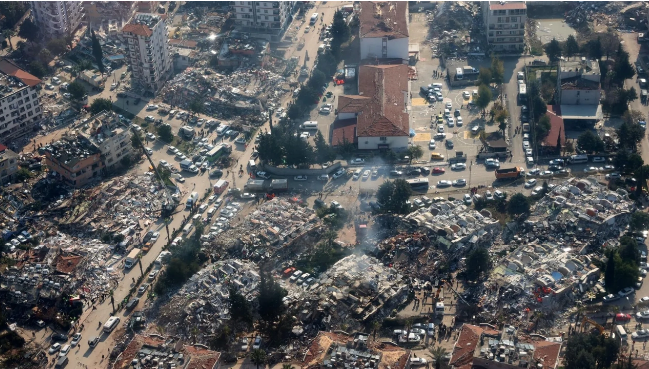
A newly released 2026 report by Turkey’s Presidency of Strategy and Budget has revealed that severe social and economic challenges persist in the regions affected by the Kahramanmaraş and Hatay earthquakes, even three years after the disaster. Despite ongoing reconstruction efforts, the report indicates that unemployment remains high, incomes lag behind the national average, and hundreds of thousands of people continue to live in container housing.
According to reporting by Mustafa Çakır of Cumhuriyet, the findings are detailed in the “Kahramanmaraş and Hatay Earthquakes Reconstruction and Development Report – 2026.” The document provides one of the most comprehensive snapshots to date of the long-term impact of the earthquakes on employment, income levels, housing conditions, and social recovery.
Employment and Labor Market Conditions Remain Weak
The report highlights that labor market indicators in the earthquake-affected region continue to trail national averages. In 2024, both the employment and labor force participation rates in the region were significantly lower than the National figures, while unemployment was notably higher.
Across Turkey, the labor force participation rate was 54.2 percent, and the employment rate was 49.5 percent. In contrast, the earthquake zone recorded a labor force participation rate of 49.2 percent and an employment rate of 44.2 percent. These gaps underline the structural difficulties facing the region’s workforce, including disrupted economic activity, business closures, and population displacement.
The lowest labor force participation rates were observed in Diyarbakır and Elazığ, at 44.1 percent and 45.5 percent, respectively. Unemployment levels were particularly elevated in Kilis and Hatay, where rates reached 12.5 percent and 12 percent, well above the national unemployment average of 8.7 percent in 2024.
In absolute terms, the number of unemployed people across the disaster-affected provinces reached 491,000 by 2024. Adana recorded the highest number of unemployed, at 105,000, followed by Hatay at 70,000. The report also highlights the scale of informal employment, noting that the unregistered employment rate in the region stands at 37.1 percent, further weakening income security and social protection.
Income Levels Remain Below the National Average
While the report notes some improvement in income levels compared to previous years, it confirms that the region continues to lag behind the rest of the country in terms of prosperity. Per capita income in the earthquake zone increased in 2024 compared to 2023, but the recovery has not been sufficient to close the gap with national averages.
The combined per capita gross domestic product (GDP) of the 11 earthquake-affected provinces was calculated at $7,051 in 2023, rising to $9,303 in 2024. Despite this growth, the figure remains significantly below Turkey’s overall per capita income, reflecting ongoing economic fragility and uneven recovery.
The report suggests that employment instability, high levels of informal employment, and delayed reconstruction have limited the region’s capacity to generate sustainable income growth, particularly for low- and middle-income households.
Hundreds of Thousands Still Living in Container Housing
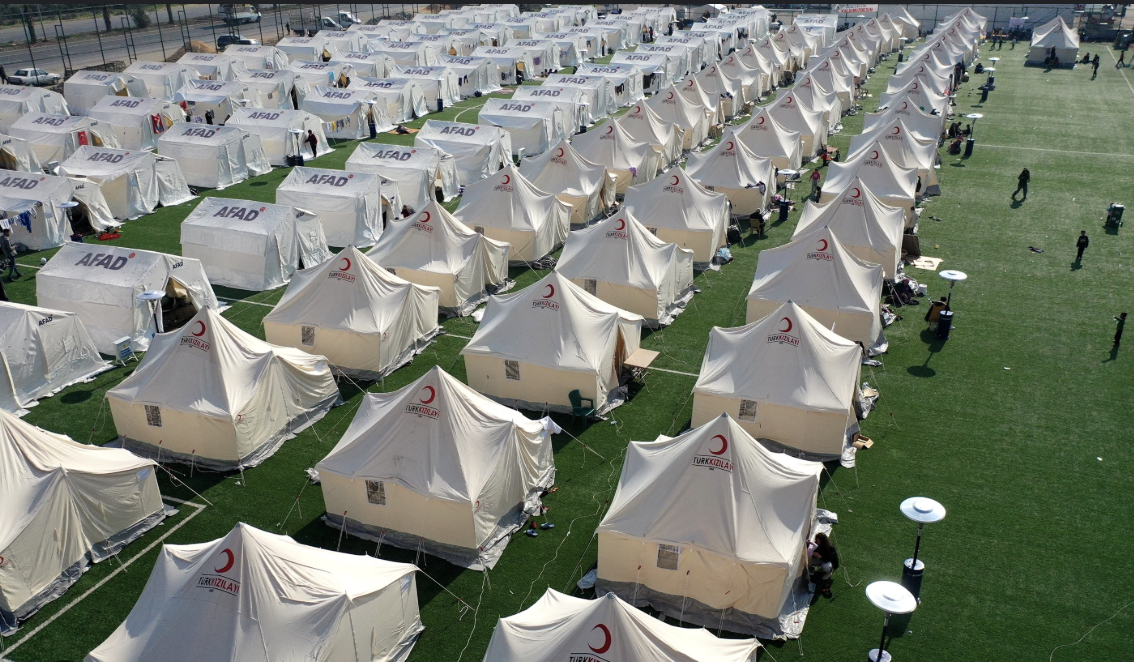
One of the most striking findings of the report concerns housing conditions. As of January 26, 2026, a total of 360,455 people were still living in container housing units across the earthquake zone.
Of this number, 223,072 people resided in urban areas, while 137,383 lived in rural areas. The data indicate the presence of 70,182 containers in cities and 56,401 in rural areas, distributed across 242 container settlements.
The province with the highest number of residents in container housing is Hatay, where 156,973 people continue to live in temporary accommodation. Malatya follows with 67,664, while Kahramanmaraş accounts for 55,264 residents. Other provinces include Adıyaman (42,456), Gaziantep (21,985), Elazığ (6,023), Osmaniye (3,223), Şanlıurfa (3,084), Diyarbakır (1,305), Kilis (1,889), and Adana (609), with people still housed in containers.
These figures underscore the slow pace of permanent housing delivery and the prolonged uncertainty facing hundreds of thousands of families.
Billions Paid in Earthquake Insurance Compensation
The report also provides updated figures on earthquake insurance compensation. Prior to the disaster, the number of active compulsory earthquake insurance policies issued by the Natural Disaster Insurance Institution (DASK) in the affected region stood at 1,143,249.
By the end of 2025, a total of 519,650 insurance claims had been processed, resulting in 39 billion Turkish lira in compensation payments. While these payouts have played a critical role in supporting households, the report suggests they have not been sufficient to offset the broader economic and housing losses caused by the disaster.
Housing Rights and Reconstruction Progress
According to the report, the entitlement determination process, launched on May 30, 2023, was completed within the legally prescribed timeframe, including extensions. The process covered 18 provinces, 179 districts, 8,474 neighborhoods, and 2,472 villages.
At the conclusion of the process, authorities recognized approximately 359,157 housing beneficiaries, 39,121 workplace beneficiaries, and 12,057 beneficiaries for barns and agricultural structures, bringing the total number of recognized rights holders to 410,335.
Lottery draws have so far been completed for 433,667 housing units and 21,690 workplaces, with the delivery of homes and businesses to rightful owners still ongoing.