



YÖK Denies Allegations Over FM Hakan Fidan’s University Degree
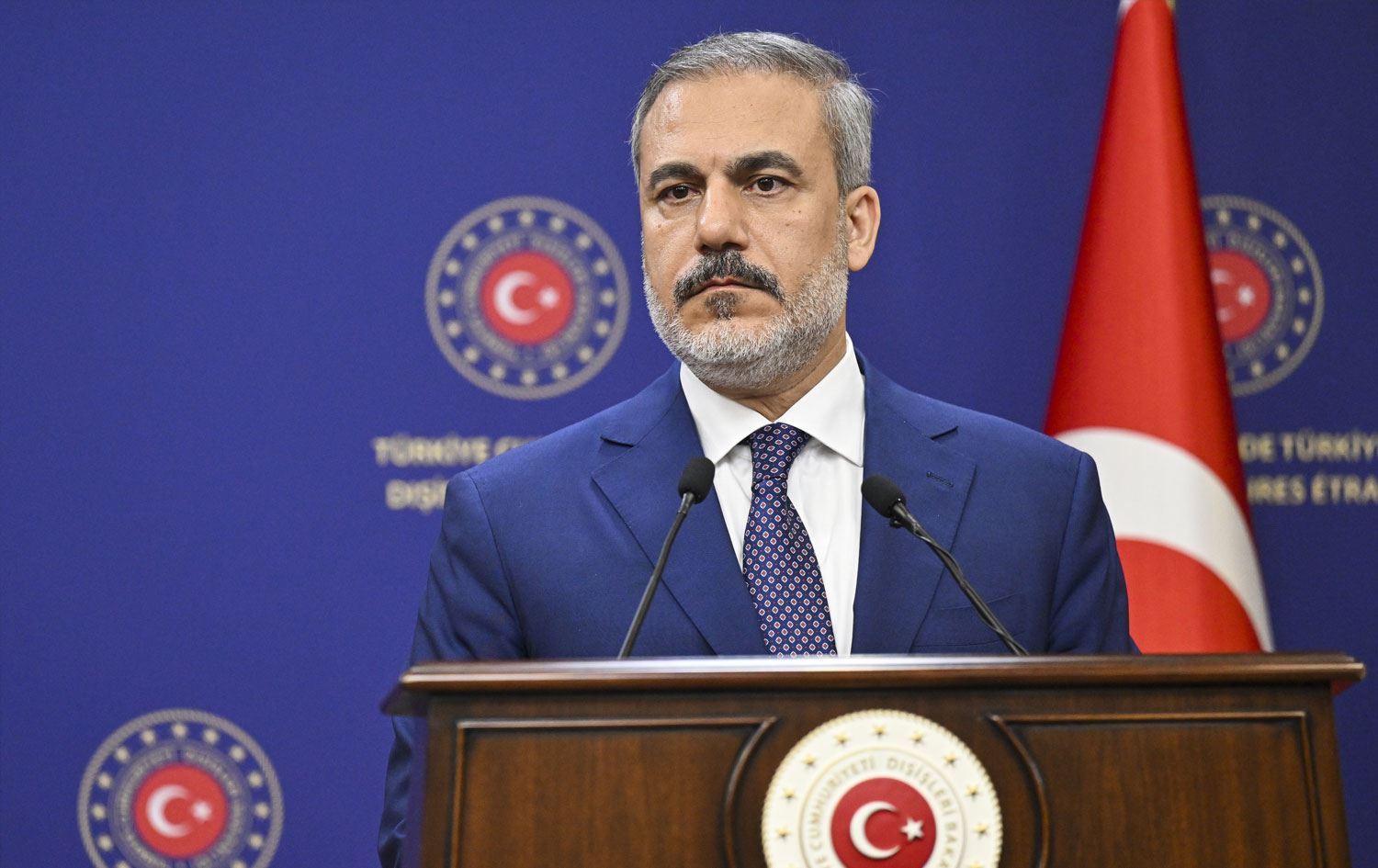 Hakan Fidan
Turkey’s Higher Education Council (YÖK) has issued an official statement rejecting recent allegations regarding Foreign Minister Hakan Fidan’s undergraduate education and degree equivalency. The claims, which spread widely across social media and various media outlets, questioned the legitimacy of Fidan’s university credentials.
In a written announcement dated November 4, 2025, YÖK described the reports as “unfounded” and provided detailed clarification on Fidan’s educational history and the formal recognition of his degree in Turkey.
Fidan Completed His Degree Between 1994 and 1997 in Germany
According to the Council, Hakan Fidan began his undergraduate studies in 1994 at the University of Maryland University College (UMUC), an American institution operating in Germany, majoring in Government and Politics. He completed the program in 1997, fulfilling all academic and credit requirements necessary for graduation.
YÖK emphasized that higher education programs around the world are subject to different regulations and credit systems, and that Fidan’s academic progress and completion met all legal and institutional standards:
“Mr. Hakan Fidan completed the required credits and fulfilled the conditions for graduation,” the statement read.
Equivalency Was Approved in 1998 Without Irregularities
Following his graduation, Fidan applied for diploma equivalency recognition in Turkey. YÖK confirmed that the process was carried out in accordance with regulations, and on January 15, 1998, the Higher Education Executive Board officially granted him a Bachelor’s Degree Equivalency Certificate in Political Science.
In its announcement, YÖK stated unequivocally:
“There is no irregularity or procedural violation in Mr. Hakan Fidan’s graduation or equivalency process.”
This clarification directly addresses claims that his degree was improperly recognized or that his academic records were incomplete.
“Graduate Studies Without Equivalency Were Permissible”
YÖK also responded to one of the most debated aspects of the controversy — the claim that it was impossible to pursue graduate studies without first obtaining degree equivalency.
Citing a 1996 regulation published in the Official Gazette, the Council reminded that it was legally permissible at the time to begin or continue postgraduate education before the equivalency process was finalized, provided that equivalency was later completed before graduation.
“According to the regulation in effect during that period, it was possible to start or continue a master’s program without finalized equivalency,” the statement noted.
“However, the degree could only be awarded once the equivalency process was completed.”
This clarification aims to settle confusion regarding Fidan’s subsequent studies and academic trajectory, which had been used by critics to allege irregularities.
Background: Opposition Allegations Sparked the Debate
The controversy began in August 2025, when Namık Tan, a Member of Parliament and Deputy Chairman of the Republican People’s Party (CHP), submitted a parliamentary inquiry concerning the validity of Hakan Fidan’s educational credentials.
Tan questioned whether Fidan’s three-year undergraduate program at UMUC between 1994 and 1997 complied with Turkey’s four-year bachelor’s degree standard. He suggested that the program might have been “accelerated or remote,” potentially disqualifying it from equivalency recognition under Turkish law.
Tan’s allegations quickly circulated online, leading to widespread debate over whether Fidan’s degree met official requirements for public service positions.
YÖK’s Statement Seeks to End the Speculation
YÖK’s November 4 clarification effectively refutes the opposition’s claims, affirming that both Fidan’s education and his equivalency recognition were legally valid and administratively sound.
The Council’s intervention underscores its broader role in ensuring academic legitimacy amid increasing scrutiny of public officials’ credentials. In recent years, questions about educational transparency have become politically charged topics in Turkey, often intertwining with broader debates on governance, meritocracy, and public accountability.
By reaffirming Fidan’s compliance with national and international academic standards, YÖK aims to restore confidence in the formal recognition system for foreign degrees. The Council reiterated its commitment to “objective and transparent procedures” for all equivalency applications, regardless of political context.
Aiming to Close the Chapter
As of now, no additional investigation has been announced regarding Fidan’s academic record. The statement appears designed to put an end to the circulating rumors and protect the credibility of YÖK’s diploma validation system.
While opposition voices continue to call for more transparency in government officials’ educational backgrounds, YÖK’s position remains firm:
“All documents were prepared in accordance with proper legal and procedural standards.”
With this, the institution seeks to finalize the debate over one of the most discussed academic controversies of the year.