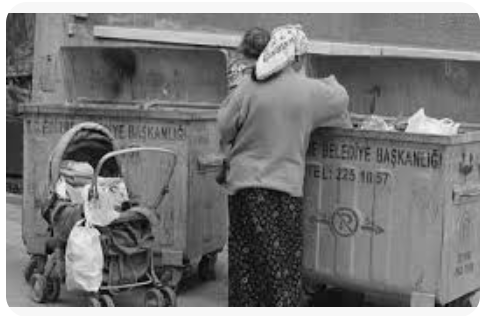
Why One in Seven Turks Now Depend on Social Aid: Inside Turkey’s Growing Poverty Gap
 poverty line
In a stark reflection of Turkey’s deepening economic challenges, new data from the Ministry of Family and Social Services reveal that one in every seven citizens now relies on regular social aid. According to figures reported by Nefes, the number of households receiving consistent government support has surged by 63% in just 12 years, outpacing population growth fivefold.
Social Assistance Outpaces Population Growth
In 2012, Turkey counted 2,171,614 households under regular social assistance programs. By 2024, that figure had climbed to 3,537,185 households, marking a sharp rise that paints a vivid picture of widening inequality. During the same period, the population grew from 75.6 million to 85.6 million, an increase of only 13%. The contrast underscores the growing strain on low-income families as the cost of living crisis deepens.
The Turkish Statistical Institute (TÜİK) notes that the average household size dropped from 3.8 people in 2012 to 3.3 in 2024, meaning fewer people per home—but more families in need. This shift suggests that economic pressures are not confined to large families, but are spreading across smaller and once-stable units.
More People Relying on Aid Than Ever Before
Based on these numbers, 8.25 million people benefited from regular aid in 2012, representing 10.9% of the population. In 2024, the number has swelled to 11.67 million people, accounting for 13.6% of the nation. Put simply, nearly 14% of Turkey’s population now depends on some form of continuous state support.
“In 12 years, the number of people needing social aid grew by over 3.4 million,” Nefes reported, highlighting the long-term impact of inflation, stagnant wages, and rising poverty.
Elderly Support and Expanding Welfare Programs
The government’s flagship welfare programs include support for elderly citizens, the disabled, low-income families, and seasonal workers. For instance, individuals aged 65 and over whose monthly income is less than one-third of the net minimum wage receive a 5,390.41 TL monthly pension under the “elderly benefit” scheme. In 2024 alone, 737,837 people benefited from this allowance.
Alongside income support, heating and housing assistance programs have also expanded sharply. In 2024, 1,637,118 households received fuel or heating assistance, while 21,380 households were granted housing or shelter-related aid—a notable rise from 16,070 in 2012.
Soup Kitchens and Hotlines Reflect Worsening Conditions
Another area of growth lies in community food services. The number of citizens relying on public soup kitchens (aşevi) rose from 23,650 in 2013 to 65,414 in 2024—a near threefold increase that mirrors the growing dependence on local welfare infrastructures.
The ALO 144 Social Assistance Hotline, designed to streamline access to state aid, has also seen usage nearly double, with calls jumping from 2.16 million in 2013 to 4.95 million in 2024. This rise in calls reflects both greater awareness of available programs and an escalating sense of urgency among struggling citizens.
Rising Inequality and a Shrinking Middle Class
Economists say that while the expansion of welfare coverage shows the state’s commitment to cushioning vulnerable groups, it also underscores the erosion of middle-class stability. Many formerly self-sufficient households now qualify for social aid as inflation continues to weaken purchasing power.
Inflationary pressures, coupled with rising unemployment and stagnant real wages, have steadily pushed more people below the poverty threshold. According to analysts, the situation illustrates how structural issues—such as dependency on imports, high energy costs, and limited productivity gains—have exacerbated inequality.
A System at the Crossroads
Experts argue that sustainable solutions will require more than expanded aid programs. Long-term strategies such as employment creation, education reform, and regional economic diversification are essential to reduce dependence on social assistance.
In the meantime, Turkey’s welfare system remains both a lifeline and a warning sign: a reflection of resilience amid hardship, and a stark indicator of how economic turbulence can widen the social divide.