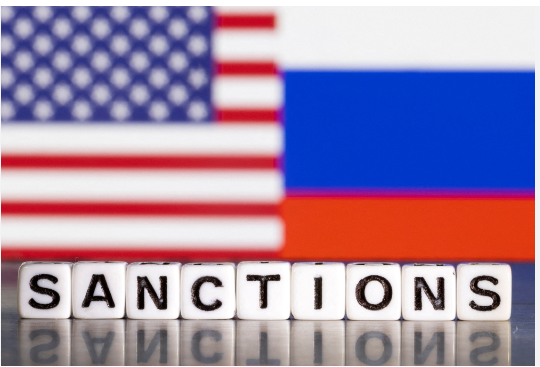
West Turns to Turkey as Geopolitical Realities Shift Under Trump
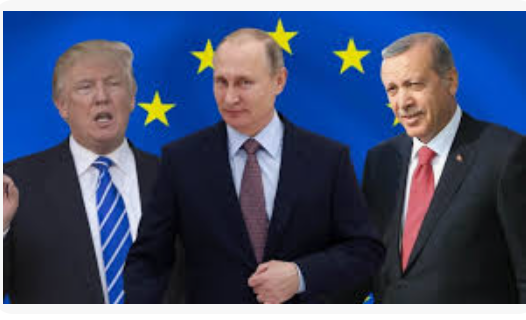 rte-putin2
Summary:
Turkey’s recent moves suggest closer coordination with the West — but analysts say it is the West that now needs Ankara. Europe’s security crisis, Trump’s transactional foreign policy and Russia’s war in Ukraine have made President Recep Tayyip Erdoğan indispensable, even as democratic backsliding continues at home.
A New Strategic Landscape
Turkey has taken several steps in recent months that appear to signal alignment with Western partners. Ankara has cut imports of Russian oil and natural gas, begun weighing U.S. and South Korean firms for its next nuclear power plant instead of Russia’s Rosatom, placed a £8 billion ($10.5 billion) order for Eurofighter jets, and expanded defense-industry ties with the UK and Italy.
But analysts argue this is not Turkey “turning West,” but rather the West turning toward Turkey. With Donald Trump back in the White House and European governments confronting a renewed sense of insecurity, Ankara’s role has become too important to ignore.
Trump and Erdoğan: Mutual Interests
President Trump has long admired Erdoğan’s strongman political style. Their shared skepticism toward the liberal international order has smoothed personal relations, allowing Ankara to secure concessions that were off the table under the Biden administration.
This year, the two leaders met twice. After their June meeting at NATO headquarters, the U.S. Justice Department unexpectedly dropped bribery charges against a Turkish contractor accused of manipulating alliance procurement. During Erdoğan’s September visit to the White House, the pair oversaw a $43 billion LNG deal.
Long-standing disputes remain — notably Turkey’s purchase of Russian S-400 air defense systems — but officials suggest a negotiated solution may be forthcoming.
Europe Lifts Its Veto Despite Democratic Concerns
Erdoğan remains unpopular among many European leaders, but geopolitical urgency is shifting calculations.
Germany had blocked Turkey’s effort to acquire Eurofighter jets for years, citing Ankara’s military operations in Syria and its democratic deterioration. That veto collapsed this autumn as European governments faced the reality of their defense vulnerabilities. The reversal came despite further erosion of rule of law in Turkey, not because of improvements.
The timing underscores Europe’s dependence on Ankara — even as repression intensifies. Istanbul Mayor Ekrem İmamoğlu, the leading opposition presidential candidate, was arrested in March and now faces 142 charges carrying a combined theoretical sentence exceeding 2,000 years. In October, authorities seized the critical broadcaster Tele1 during a live broadcast, with its final presenter signing off: “Take care of yourselves, don’t believe the lies.”
Ukraine War Makes Turkey Indispensable
Erdoğan’s assertiveness rests partly on Moscow’s strategic blunders. Russia’s invasion of Ukraine elevated Turkey’s importance to Western security. Ankara has quietly helped arm Kyiv while refusing to join sanctions, profiting from discounted Russian oil and expanded transit trade.
Russia’s preoccupation with Ukraine also weakened Assad in Syria, enabling Turkey to play a decisive role in reshaping the political landscape there. Former President Bashar al-Assad’s fall, widely viewed as a setback for Putin, removed key leverage Russia once held over Turkey via refugee flows.
At home, these shifts created economic breathing room. Ankara’s new economic team has pulled inflation down to 33% from a high of 80% in 2022, while keeping growth between 4% and 5%.
A Rebalanced Kurdish Strategy
The war in Ukraine also altered the dynamics in northern Syria, weakening Kurdish militant groups and giving Ankara room to recalibrate domestic politics. With tensions reduced, Erdoğan has sought to open channels with Turkey’s Kurdish population once again, a move that could reshape electoral coalitions.
Europe’s Missed Opportunity
Sinan Ülgen, head of Istanbul think tank EDAM, argues that Europe squandered earlier chances to anchor Turkey firmly within the democratic camp. After pushing Turkey to meet accession criteria in 2005, member states like France and Cyprus later blocked progress, freezing negotiations and discouraging further reform.
Brussels also declined to modernize the customs union or ease visa rules — decisions that contributed to Turkey’s gradual drift away from the EU.
Why Europe Must Still Work With Ankara
Regardless of political tensions, Turkey remains strategically irreplaceable. Its control over access to the Black Sea, its NATO-scale military, a booming defense industry, and a large, youthful industrial workforce all make it essential for Europe as it confronts a new era of insecurity.
European capitals increasingly view Erdoğan’s relationship with Putin as a model: compartmentalizing conflicts while cooperating where interests align. Given Turkey’s importance — and the inevitability of Erdoğan’s eventual exit — Western governments are being urged to engage Ankara while also supporting Turkey’s embattled democratic opposition.
Although Turkey has not become another Russia or Iran, observers warn that it could — unless Europe maintains active engagement on both security and democratic fronts.
PA Turkey intends to inform Turkey watchers with diverse views and opinions. Articles in our website may not necessarily represent the view of our editorial board or count as endorsement.
Follow our English language YouTube videos @ REAL TURKEY, Twitter @AtillaEng, and Facebook: Real Turkey Channel.
Related articles

Academician explains Erdogan’s balancing act between Tel Aviv and Hamas
Atilla Yesilada interview with Dr Miad Nakhavali: What Erdoğan’s victory means for the USA, EU, NATO and Russia
Reuters: Recent polls are bad news for Erdogan