Washington: Why Erdogan Must Never Get the F-35
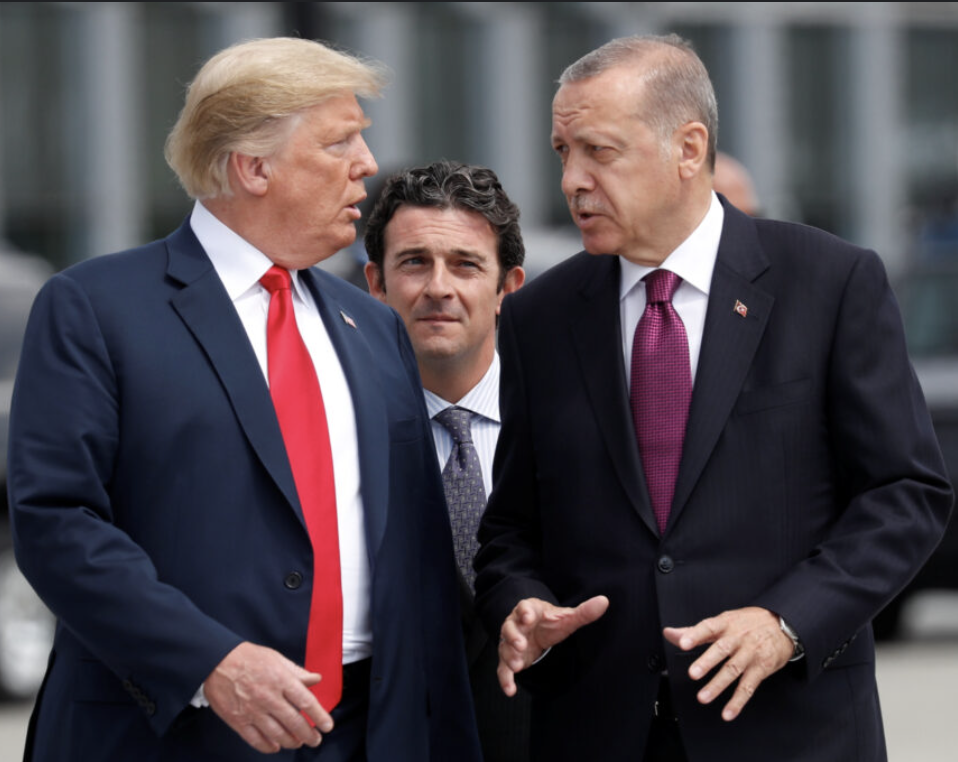 Trump & Erdoğan
In the realm of global defense politics, few stories capture as much intrigue as the one unfolding around Turkey’s pursuit of the F-35 stealth fighter jet. Once a partner in the program, Turkey was abruptly expelled after President Recep Tayyip Erdogan welcomed Russia’s S-400 missile system with open arms. These very missiles, designed in Moscow, were engineered to track and destroy the F-35s that Erdogan now seeks. The irony is sharp: the weapons that severed Turkey’s access to the jets are the same bargaining chips he is attempting to return.
The Expulsion from the F-35 Club
Back in December 2019, the United States Congress passed Section 1245 of the 2020 National Defense Authorization Act. This legislation explicitly banned the transfer of F-35 aircraft or any related technology to Ankara. The move was not symbolic — it permanently altered Turkey’s defense trajectory. The law remains in effect today, setting an unambiguous boundary: the advanced jet is out of reach for Erdogan’s government.
The penalty came swiftly. By choosing Russian hardware over NATO solidarity, Turkey lost its place in the most exclusive fighter jet program in the world. What once represented Ankara’s pathway to technological parity with Western allies became a closed door.
A Bargain with Trump
Now, six years later, Erdogan is making a bold pitch. With Russia’s missile stockpile running low due to the war in Ukraine, Moscow reportedly wants some of its S-400 systems back. Erdogan’s idea? Return them, and in exchange, regain entry into the F-35 program.
It is a high-stakes gamble, relying on the possibility of persuading Donald Trump, should he win office again. The proposal is straightforward on the surface but loaded with peril for Washington: accept Erdogan’s trade, or reaffirm the hard line Congress has already drawn.
The Terrorism Question
Opponents argue that even if Turkey discards its Russian weapons, the U.S. should not reward Erdogan’s double-dealing. The stakes extend beyond military procurement. Critics point to Ankara’s direct support of Hamas, which the United States classifies as a terrorist organization.
“Selling Erdogan our most advanced fighter jet would mean arming a state sponsor of terrorism,” the article warns.
Following Hamas’ October 7 attack — the deadliest assault on Jews since the Holocaust — Erdogan did not recoil. Instead, he tightened ties, granting Turkish passports to Hamas leaders like Ismail Haniyeh and Khaled Mashal. When Haniyeh was assassinated in Tehran in 2024, Erdogan declared a national day of mourning and ordered flags at Turkish embassies lowered worldwide — including in Tel Aviv.
Such actions, critics argue, resemble those of an adversary, not an ally.
Regional Flashpoints: Greece, Cyprus, and Syria
Erdogan’s ambitions do not stop at domestic policy. He has openly challenged Greece with his “Blue Homeland” doctrine — a vision of Turkish dominance over waters and islands recognized under international law as Greek territory. In recent years, Ankara has threatened Athens with ballistic missiles and demanded the demilitarization of Greek islands.
Cyprus, divided since 1974, continues to feel Ankara’s presence. Turkey still occupies a third of the island and recently warned Nicosia of “dangerous consequences” after its purchase of Israeli defense systems. Critics highlight the contradiction: Erdogan punished for buying Russian missiles, yet threatening others for buying Israeli ones.
Syria represents another theater of conflict. Since 2016, Turkey has launched multiple invasions aimed at the Syrian Democratic Forces (SDF), America’s key partner in the fight against ISIS. Even now, Ankara threatens new offensives, putting Washington’s most reliable ally in Syria directly at risk.
The Bigger Picture: A Different Turkey
There was a time when Turkey was seen as a cornerstone NATO ally. But observers argue that era has ended. Under Erdogan’s Islamist rule, Turkey has grown closer to Hamas, flirted with Moscow, and antagonized fellow NATO members.
“The F-35 isn’t just another plane: It’s the world’s most advanced stealth fighter, a weapon designed to keep America and its friends one step ahead of China, Russia and Iran.”
Giving such a weapon to a government accused of undermining U.S. allies could, critics say, be a betrayal of American interests. The law is unambiguous, the risks are evident, and Erdogan’s record, they argue, speaks for itself.
What Should Washington Do?
Erdogan’s strategy may seem clever: offer a concession to reclaim access to a prized technology. But the broader implications are clear. Allowing him back into the F-35 program could embolden regional aggression, compromise U.S. partnerships, and indirectly strengthen adversaries.
For many in Washington, the response should be concise and firm. When Erdogan enters the Oval Office with his list of demands, they argue, the only answer must be: No.
Related articles
Erdoğan to Meet Trump at White House on September 25: F-16, F-35, Trade and Gaza on the Agenda
Erdoğan Signals New Era with U.S. After Trump Meeting, Seeks Return to F-35 Program
Reuters: Turkey Offers $100M Settlement to End Halkbank Case