



Walking Among Ghosts: The Lycian Way Where Memory Breathes Through Stone
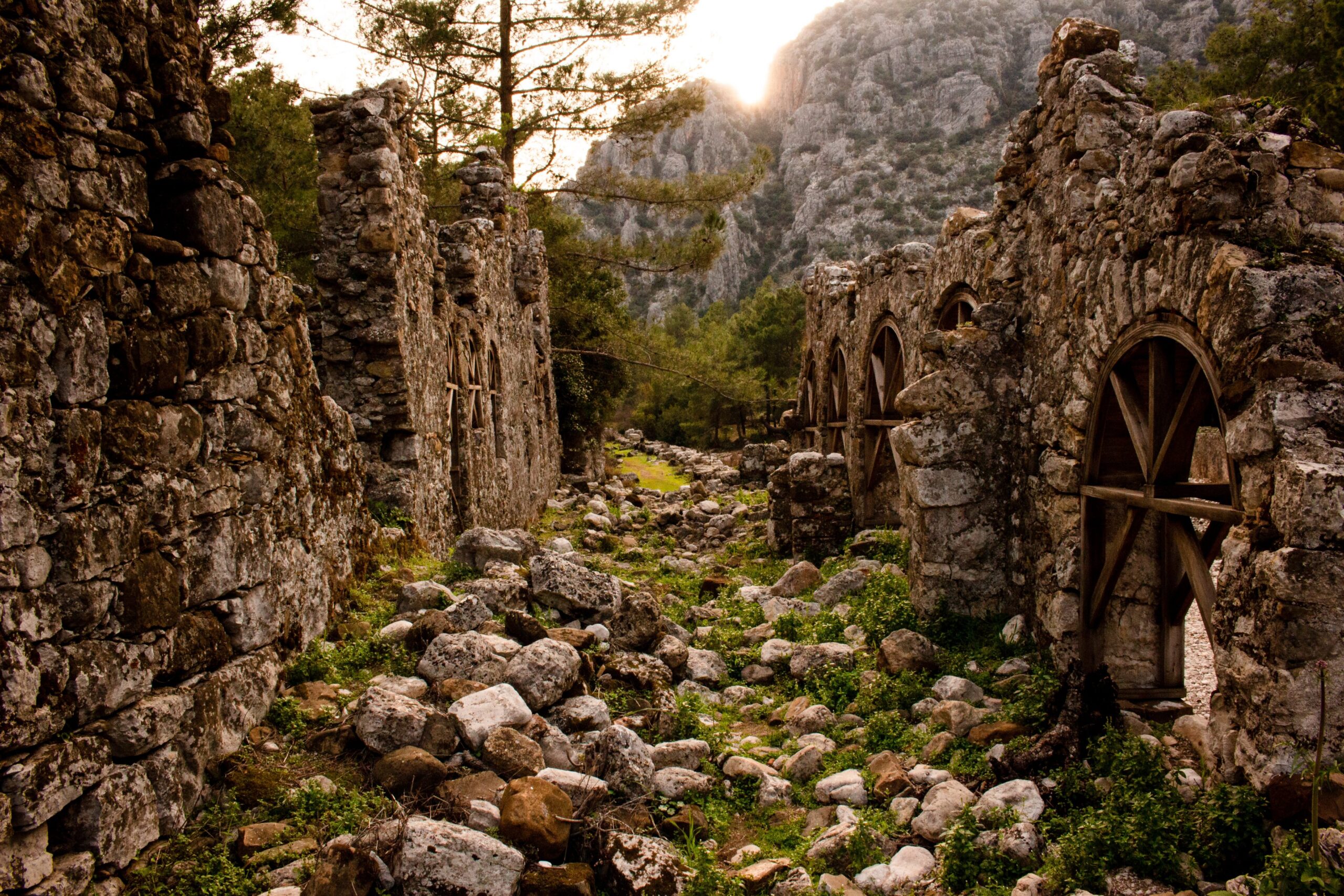 Lycian Way
In the mountain villages of southern Türkiye, life feels suspended between worlds. Women in colorful şalvar trousers welcome travelers with goat cheese, honey, and warm gözleme flatbreads, all served with steaming glasses of tea. During the blazing afternoons, one finds refuge in the azure waters of the Mediterranean, forested canyons, or the thyme-scented groves of oak, olive, and dogwood. As dusk falls, silence cloaks the valleys, broken only by the hiss of a campfire beneath whispering pines—echoes of a land built by ancient hands.
The Land of the Dead That Still Speaks
Along the Lycian Way, the past is never absent. Every step feels shared with phantoms of a vanished civilization, whose presence still lingers in the stones. The British explorer Freya Stark, in her 1950s travelogue The Lycian Shore, called this region “the most haunted coast in the world.” Indeed, the Lycian landscape is dotted with empty tombs scattered through thickets and olive groves—solemn messengers from a civilization long gone.
Pillars of Eternity: The Tower Tombs of Xanthos
Among the Lycian ruins, tombs were not merely graves but declarations of belief. The people of Lycia celebrated their dead with monumental architecture, reflecting their devotion to ancestor worship and the afterlife.
The most curious of these are the pillar tombs—tower-like structures rising from the ruins of Xanthos, the former Lycian capital under Persian rule. The Harpy Tomb, adorned with winged female figures, and the Xanthian Obelisk, covered in still-untranslated Lycian script, dominate the site’s rocky acropolis. Nearby, greenhouses and orange groves now grow where once stood temples and tombs of stone.
One of the most famous monuments, the Tomb of Payava, was removed from Xanthos in 1841 by British archaeologist Sir Charles Fellows, who transported it aboard the HMS Beacon. Today, the tomb—alongside friezes from the Harpy Tomb and the grand Nereid Monument—resides in the British Museum, standing as both a tribute and a reminder of archaeology’s colonial past.
Elevating the Dead: The Lycians’ Vertical Vision of Eternity
From the 4th century BCE, the Lycians developed new burial traditions—rock-cut “house tombs” carved into cliffs, their facades mimicking wooden Lycian homes with protruding beams and decorative joists. The most common type was the sarcophagus tomb, built atop a lower chamber.
According to Dr. Catherine Draycott of Durham University, “There is this idea in Lycia of literally elevating important people in death.” The deceased would be placed in the upper sarcophagus, while servants or relatives were buried below—an architectural gesture of reverence, symbolically raising the dead closer to the divine.
Yet for all the grandeur of their funerary art, little remains of everyday Lycian life. Their jewelry, tools, and household relics are scarce, and even the tombs—plundered centuries ago—are often empty shells, their bones long vanished into dust.
The Rise and Fall of Patara: Cradle of the Lycian League
Two days’ journey from Xanthos, the Lycian Way descends to the coast, to the ruins of Patara—once a bustling port city and capital of the Lycian League, one of the earliest examples of federal democracy.
The city was eventually abandoned as its river silted up, leaving behind colonnaded streets, collapsed shops, and a Council Chamber that stands as the most important structure today. Known as the Bouleterion, it features a semicircular auditorium with twenty tiers of stone benches—recently restored to its ancient dignity.
Sitting in the Bouleterion, one can almost hear the murmur of debates that shaped early democracy. Hundreds of delegates in robes once gathered there, guided by the Lyciarch, to discuss matters of trade, law, and governance. The spirit of these assemblies echoes far beyond the ruins of Patara.
Lycia’s Legacy: From Ancient Councils to Modern Democracy
The Lycian League inspired thinkers far from Anatolia. James Madison, one of America’s Founding Fathers, cited it in The Federalist Papers as a model for the United States Congress. Today’s House of Representatives—with 435 seats distributed among 50 states according to population—owes part of its design to this ancient coastal confederation.
Of all Lycia’s attempts to defy time, its greatest triumph was not carved in stone but born in an idea—that governance could unite diverse regions under shared representation. In the end, Lycia’s true afterlife lies not in its tombs but in its enduring influence on how humans rule, remember, and aspire.