



Vice President Cevdet Yılmaz: “Per capita income will reach $17,748 by year-end”
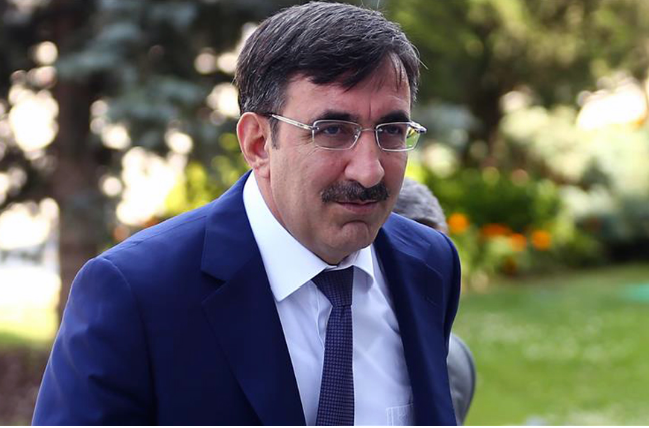 cevdet yilmaz
Turkey’s Vice President Cevdet Yılmaz announced that the government expects per capita income to reach $17,748 by the end of the year, placing Turkey among the high-income countries according to international classifications. Yılmaz delivered the remarks during his presentation of the 2026 Central Government Budget Bill and the 2024 Final Accounts Bill at the Turkish Grand National Assembly.
Yılmaz emphasized that the 2026 budget was designed with a strong focus on protecting labor, ensuring economic stability, and strengthening the country’s long-term growth path.
“2026 is the most critical year of our program”
Opening his speech, Yılmaz underlined that the coming year will play a pivotal role in Turkey’s medium-term economic strategy:
-
“2026 is the most critical year of our program.”
-
High-value production, R&D investments and entrepreneurship have been prioritized in the budget.
-
The government will continue efforts to make all cities earthquake-resistant.
-
The 2026 budget reflects both stability and shared prosperity.
-
“The budget was prepared with an approach that protects labor.”
According to Yılmaz, global economic conditions require countries like Turkey to remain flexible, adaptable and strategic in an environment where emerging economies are gaining influence while G7 countries’ share of global output is gradually declining.
Global conditions still uncertain, but 2026 expected to be more supportive
Yılmaz noted that despite the recent decline in global inflation, the world has not yet reached desired price levels. Global trade volume is expected to remain below pre-pandemic averages, while political risk remains “still high, even if partially reduced.”
However, he expects external conditions to improve next year:
“We assess that in 2026, external conditions will be more supportive than in the previous year.”
Turkey shows moderate but steady growth
The Vice President highlighted Turkey’s relative economic performance:
-
After the pandemic, the world economy grew 15.2%, while Turkey grew twice that rate.
-
“Turkey’s economy has demonstrated moderate but more stable growth.”
He said the government expects Turkey to become the 4th-largest economy in Europe, the 16th-largest globally, and the 11th-largest in purchasing power parity terms.
High-income threshold expected to be achieved
A key highlight of Yılmaz’s presentation was the projection that Turkey will reach the high-income country classification:
“By year-end, we expect per capita income to reach $17,748. This will place Turkey among high-income countries.”
The Medium-Term Program’s growth targets were described as achievable, and the government aims to maintain sustainable growth.
Growth and unemployment projections for 2026
According to the 2026 plan:
-
The economy is expected to grow 3.8%.
-
The unemployment rate is projected to fall to below 8.5%.
Yılmaz said the ongoing disinflation process is now on a “path of permanent stability.”
Inflation targets: under 20% in 2026, single digits in 2027
Yılmaz reported that consumer inflation (CPI) had declined to 31.1% as of November 2025. The government aims for a sharp disinflation path:
-
Inflation below 20% in 2026
-
Inflation reaching single digits in 2027
Export performance remains strong
Turkey’s total goods and services exports are projected to surpass $390 billion by year-end. Foreign direct investment reached $11.4 billion, with annualized levels climbing to $15.3 billion.
KKM near-zero, central bank reserves rise
Yılmaz highlighted the rapid decline in the FX-protected deposit scheme (KKM):
“KKM’s share has fallen to 0.1%, effectively near zero.”
In addition, CBRT reserves reached $183.2 billion as of November 28.
Budget expectations: deficit may come in lower than forecast
Yılmaz said the government expects:
-
The budget deficit to be 3.6% of GDP, possibly lower due to strong year-end revenues.
-
Budget expenditures to come in 57 billion TL below estimates.
-
The post-earthquake budget gap to fall below 3%, returning to historical norms.
-
Budget revenues to increase by 30% in 2026.
Related articles
Turkey’s Finance Minister Şimşek Says Inflation Will Fall Below 20% Next Year

Turkey’s 2026 Budget Shock: Space Gets Less, Religion Gets More
ANALYSIS: Turkey’s 2026 Budget: More Taxes, More Spending
