Unending Crackdowns: Is the Government Seeking a “Loyal Capitalist Class”
 sadik sermaye
By Mr Gokcer Tahincioglu, T24.com.tr
In recent months, the focus of high-profile investigations in Türkiye has shifted away from municipalities toward media outlets, holding companies and prominent business figures — including some previously considered close to the government. This change has fueled speculation in political and financial circles that the ruling bloc may be seeking to reshape the economic landscape around a more politically loyal capital structure.
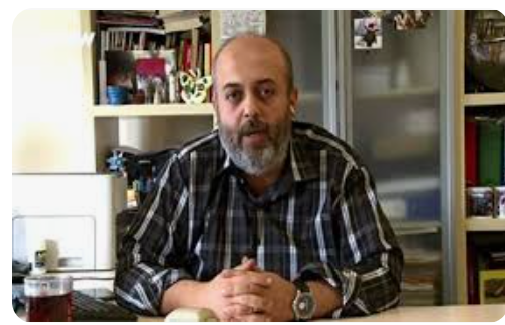
Author Gökçer Tahincioglu
A Shift in the Target of Investigations
For much of the past year, public attention was centered on investigations involving opposition-led municipalities. More recently, however, scrutiny has moved toward major companies, media groups and well-known individuals. This trend has coincided with a separate wave of investigations involving celebrities and allegations related to narcotics, further broadening the scope of enforcement actions.
What has drawn particular attention is that many of the affected institutions and individuals were widely perceived as being close to the ruling Justice and Development Party (AKP) or its ally, the Nationalist Movement Party (MHP). As a result, questions have emerged over the underlying rationale and political context of these moves.
Competing Explanations in Political Circles
Ankara’s political circles have offered multiple interpretations. Some point to tensions within the governing alliance, while others argue that rival factions inside the AKP are competing for influence. A more far-reaching interpretation suggests that these developments may be linked to maneuvering over a post-Erdoğan political order.
Alongside these explanations, another argument — less openly discussed but increasingly prominent — has begun to surface: the idea that the government is seeking to consolidate a business elite whose political loyalty is beyond doubt.
Media Sector as a Key Battleground
The media sector has emerged as one of the clearest examples of this shift. Habertürk, long regarded as a relatively protected media institution, was sold by Ciner Holding in an abrupt transaction. Despite the buyer, Can Holding, being viewed as close to the government, the outlet was later transferred to the Savings Deposit Insurance Fund (TMSF) through a trustee process.
At the same time, figures perceived as aligned with the government have been detained, with elements of their private lives disclosed in public reporting. Media outlets have changed hands, operations have been shut down and entire newsrooms have been dismissed in quick succession.
These developments have created visible uncertainty even within pro-government media. While calls for respecting the presumption of innocence and personal privacy have surfaced, coverage has frequently included detailed — and at times sensational — descriptions of ongoing investigations.
The Role of the Istanbul Chief Prosecutor’s Office
Many of the recent cases originate from the Istanbul Chief Public Prosecutor’s Office, which has overseen a series of wide-ranging investigations across finance, media and digital platforms. A particular focus on alleged links to illegal betting activities has raised further questions about whether the shift reflects a new enforcement priority or a broader political recalibration.
Observers note that the scale and breadth of these investigations go beyond what would be expected from a narrow law-enforcement campaign, reinforcing speculation about deeper structural objectives.
Allegations of a Push for “Loyal Capital”
According to political insiders, some business groups are believed to have hedged their political bets by cultivating relationships beyond the current ruling coalition, including preparing for a possible post-AKP landscape. The claim is that such positioning has increasingly drawn the government’s attention — and, in some cases, triggered legal pressure.
From this perspective, parts of the current wave of investigations are seen not only as judicial actions but also as instruments of political and economic discipline. Other files, particularly those involving narcotics allegations, are described as more disruptive in nature and potentially capable of reshaping existing power balances.
What Comes Next?
Market observers expect further changes in the media sector, including the eventual sale of TMSF-controlled outlets at relatively modest valuations and the entry of new actors with no previous footprint in media ownership. Such moves could significantly alter the structure of Türkiye’s media landscape.
The prevailing view in Ankara is that the current process is far from complete. Additional investigations and institutional shifts are widely expected, suggesting that the reconfiguration of economic and media power may continue in the period ahead.
IMPORTANT DISCLOSURE: PA Turkey intends to inform Turkey watchers with diverse views and opinions. Articles on our website may not necessarily represent the view of our editorial board or count as endorsement.
Follow our English YouTube channel (REAL TURKEY):
https://www.youtube.com/channel/UCKpFJB4GFiNkhmpVZQ_d9Rg
Twitter: @AtillaEng
Facebook: Real Turkey Channel: https://www.facebook.com/realturkeychannel/