Ukraine Under Fire, Lira Underwater: The Day Türkiye’s Currency Hit Rock Bottom
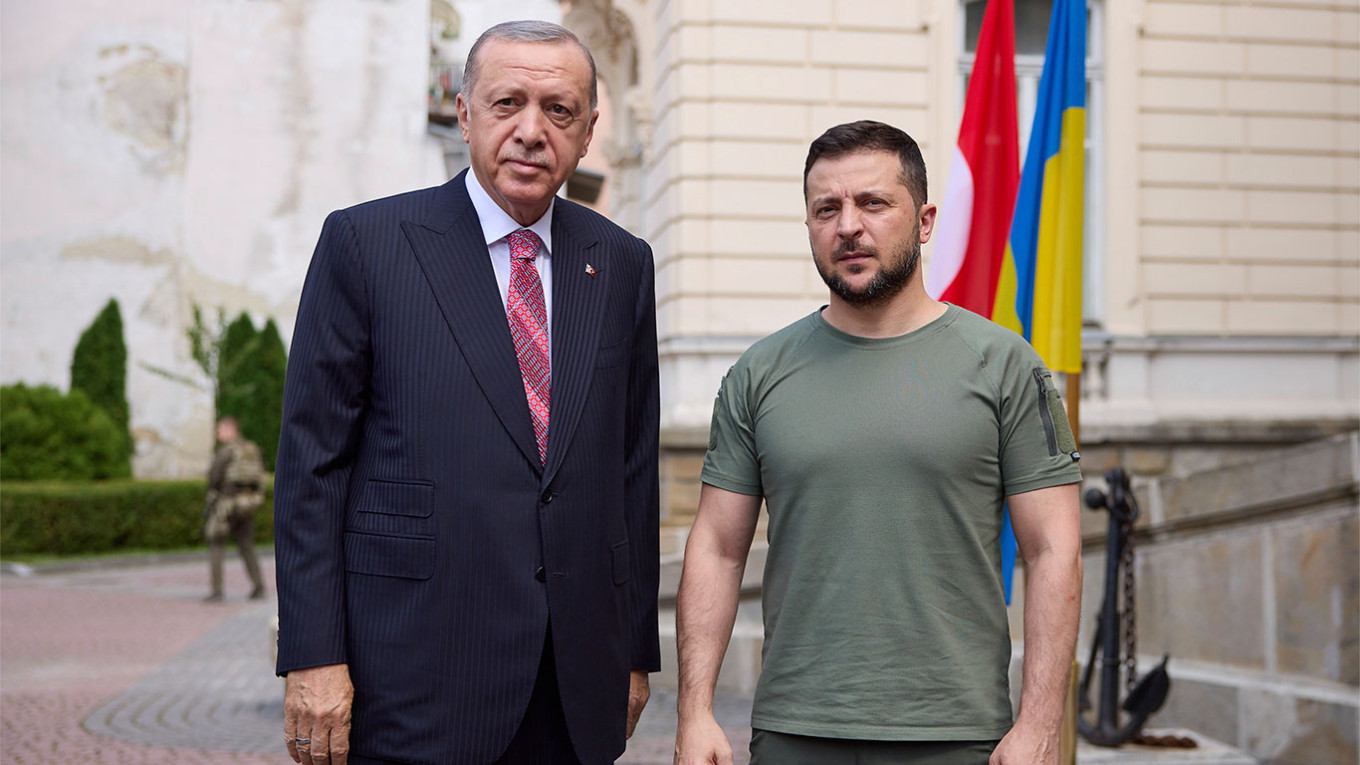 Erdogan-Zelensky
In a development that has sent shockwaves through financial circles and sparked widespread criticism, Ukraine’s currency, the hryvnia (UAH), has surpassed the Turkish lira for the first time in history. Market data shows the UAH/TRY exchange rate breaking above 1, meaning 1 hryvnia is now worth more than 1 Turkish lira—a symbolic threshold that underscores the depth of Türkiye’s prolonged currency erosion.
This extraordinary moment arrives while Ukraine enters the third year of a devastating war with Russia, confronting mass displacement, infrastructure collapse, and continuous military strain. Yet despite these existential pressures, the hryvnia has managed to hold its ground. In stark contrast, Türkiye—technically at peace, with functioning institutions and no comparable external shock—continues to see its currency weaken to new historical lows.
The comparison is unavoidable, and increasingly, so is the criticism: How did a wartime economy manage to preserve more currency stability than a G20 nation?
War in Ukraine Since February 2022, Yet a Currency That Holds
The turning point emerges when observing two sharply different monetary paths. Ukrainian authorities, confronting the shock of the February 2022 invasion, implemented strict exchange-rate controls, maintained a de facto fixed currency regime, and adopted aggressive monetary tightening to prevent a freefall. Every policy tool was mobilized to guard the hryvnia against collapse.
Furthermore, international financial aid, emergency funding packages, and sustained support from allied governments provided Ukraine with a vital buffer of stability.
Against all odds, these combined measures helped keep the hryvnia from spiraling—even as the country faced bombardments, economic contraction, and ongoing security threats.
The uncomfortable juxtaposition raises a question Türkiye must confront: How can a currency under wartime duress outperform one operating under normal conditions?
Türkiye’s Prolonged Lira Weakness Deepens the Gap
Experts point out that the widening of the UAH–TRY spread is not due to Ukraine suddenly gaining strength, but rather to the persistent, structural deterioration of the Turkish lira. Years of cumulative depreciation, elevated inflation, credibility concerns, and inconsistent policy environments have eroded the lira’s value, leaving it vulnerable even in relatively stable global conditions.
The fact that a war economy’s currency now outperforms Türkiye’s is not merely a statistical curiosity—it’s a stark reminder of the magnitude of Türkiye’s ongoing currency challenges. Financial analysts emphasize that this symbolic “crossover point” reflects deeper macroeconomic issues, including:
-
Long-term loss of purchasing power
-
Weak investor confidence
-
Prolonged inflationary pressures
-
Unanchored currency expectations
The hryvnia’s rise against the lira is not about Ukraine suddenly outperforming economically; it is about Türkiye’s currency losing ground faster than almost any peer.
The Year the Ukrainian Hryvnia Pulled Ahead
Throughout 2025, the UAH/TRY exchange rate rose steadily, at a pace few had predicted. By the end of the year, the trend culminated in a decisive break above the critical 1.0 threshold, marking a historic and symbolic moment:
A war-stricken Ukraine now has a stronger currency than a peaceful Türkiye.
This is a decisive narrative shift, one that highlights not only Türkiye’s currency weakness but also the increasingly visible consequences of long-term macroeconomic mismanagement. Rarely does the global financial system produce such a striking contrast.
A Wake-Up Call Hidden in an Exchange Rate
The new UAH–TRY parity level is more than a headline. It is:
-
A reflection of policy discipline versus policy inconsistency
-
A comparison of institutional trust versus market skepticism
-
A reminder that external shocks do not always dictate outcomes—policy choices do
The historical significance of this moment may force Türkiye’s policymakers, institutions, and financial leaders to reevaluate the country’s approach to currency management and macroeconomic stability.
If a currency under bombardment and martial law can maintain more resilience than the lira, the urgency of Türkiye’s economic recalibration becomes impossible to ignore.
Related articles
Fitch Warns: Turkish Industrial Firms Face Credit Rating Pressures in 2025
Real Effective Exchange Rate Declines Despite Inflation Spike in Türkiye
Ankara insider: “Without Stabilizing the Lira, Reducing Inflation is a Fantasy”