



Türkiye Warns SDF Ahead of Deadline as Hakan Fidan Signals Possible Military Action
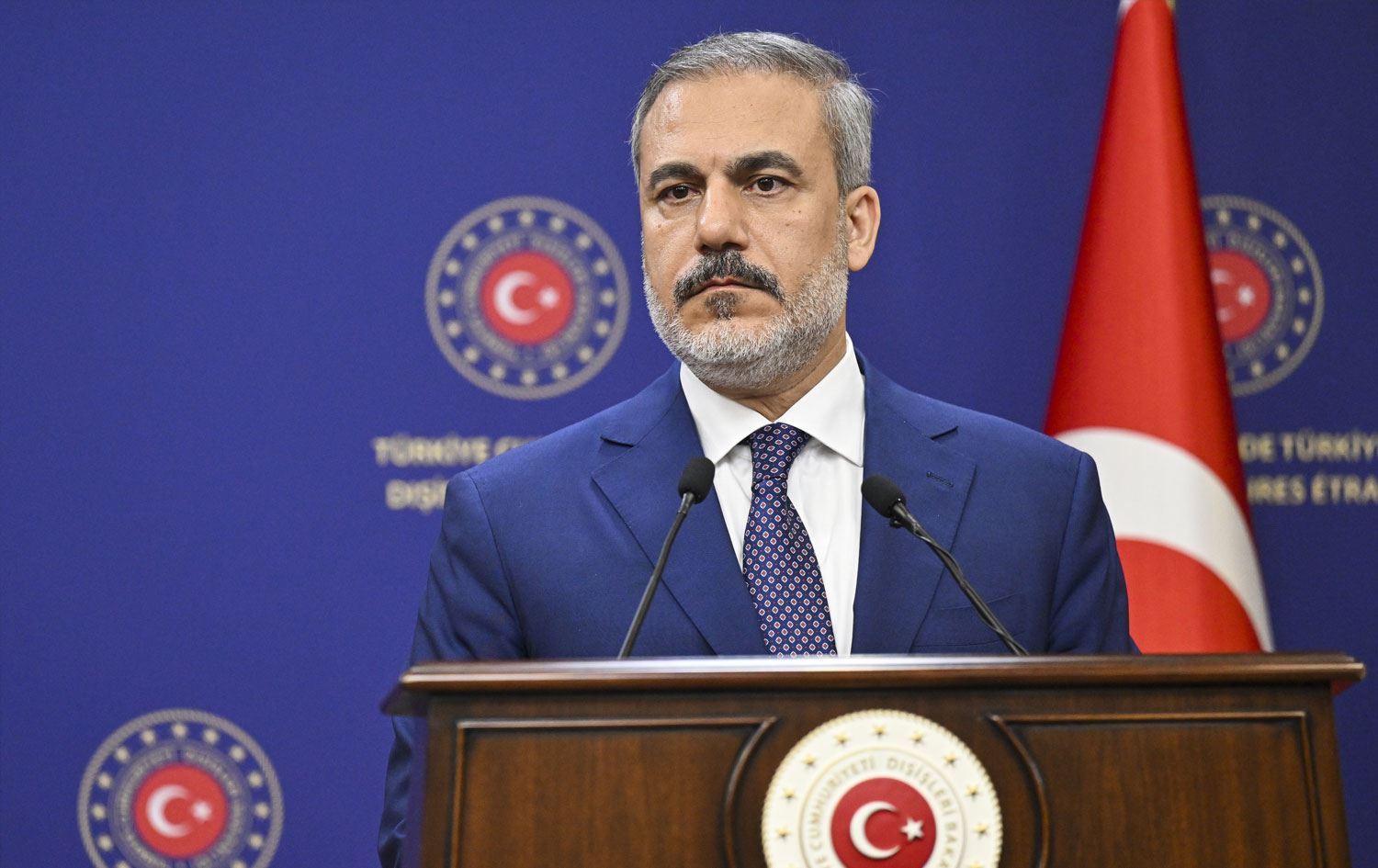 Hakan Fidan
Türkiye’s Foreign Minister Hakan Fidan issued a stark warning to the Syrian Democratic Forces (SDF), asserting that recent signals from the group show “no intention” of complying with the March agreement that requires their incorporation into Syria’s national military framework. Speaking to Reuters during the Doha Forum, Fidan emphasized that Ankara’s patience is running out as the year-end deadline approaches.
According to Fidan, the SDF appears to be maneuvering around the reunification expectations rather than preparing to merge under Damascus’ central chain of command. Türkiye considers the SDF a terrorist organization and has consistently maintained that the agreement must result in a single, unified military hierarchy within Syria.
He reinforced this stance with a firm message: “They should understand that the command and control should come from one place. There can be no two armies in any given country. There can only be one army, one command structure. But in local administration, they can reach different settlements and understandings.”
A Post-Assad Syria Navigates Fragile Transition
The dispute unfolds nearly a year after the fall of former Syrian President Bashar al-Assad, a turning point that left Syria’s new leadership attempting to consolidate authority amid deep political and ethnic fractures. Fidan acknowledged the progress made by Damascus toward national cohesion but underscored persistent obstacles—particularly issues surrounding minority rights.
He stressed that Türkiye’s endorsement of the new Syrian government is not unconditional: the transition must avoid marginalizing ethnic or political groups. Ankara, he said, will not treat its support as a “blank cheque” that allows exclusionary policies.
Israel’s Role: A Major Obstacle, Says Fidan
Fidan also pointed to external interference as a destabilizing force. He argued that Israeli military actions continue to hinder Syria’s path toward national unity. “Israeli destabilization policies” remain the leading challenge, according to Fidan, particularly as Israel steps up airstrikes in southwestern Syria.
Israeli Prime Minister Benjamin Netanyahu recently stated that Syria is expected to establish a demilitarized buffer zone extending from the capital to the border—another move intensifying the region’s tensions.
Gaza Negotiations and the Future of Hamas
Beyond Syria, Fidan addressed developments surrounding President Trump’s proposal to end the two-year conflict in Gaza. Türkiye, which helped broker the ceasefire and is acting as a guarantor, insists that stability requires the emergence of a credible Palestinian civil administration along with a vetted Palestinian police force capable of operating without Hamas control.
Fidan explained: “First, we need to see that the Palestinian committee of technical people is taking over the administration of Gaza, then we need to see the police force formed to police Gaza—by Palestinians, not Hamas.”
Ankara has indicated its willingness to participate in the international stabilization force outlined in the plan, a role Israel firmly opposes. According to Fidan, Washington is actively urging Israel to accept Türkiye’s involvement.
U.S.–Türkiye Relations and the S-400 Issue
Turning to bilateral ties, Fidan said progress is being made toward lifting U.S. sanctions imposed in 2020 over Türkiye’s acquisition of Russia’s S-400 air defense system. He expressed optimism that the impasse is nearing resolution: “I believe we’ll soon find a way to remove that obstacle.”
Fidan also commented on Washington’s evolving proposal for ending the Russia–Ukraine war, describing the American 28-point plan as “a starting point” now undergoing refinement. He warned that the diplomatic process must continue despite strain among mediators: “I just hope that nobody leaves the table, and the Americans are not frustrated.”
Ankara Expands Its Regional Footprint
Amid simultaneous crises in Gaza, Syria, Lebanon, and Ukraine, Fidan’s remarks highlight Türkiye’s ambition to project influence across multiple regional theaters. Yet despite these broader engagements, Ankara’s most immediate focus remains the SDF.
Türkiye has given the Kurdish-led force until the end of the year to comply with the unification mandate. Failure to do so, Fidan warned, will trigger consequences—including potential military intervention—as Ankara insists that Damascus must preside over a single centralized command.