Turkey’s War of Independence: From the Fall of the Ottoman Empire to the Birth of a Republic
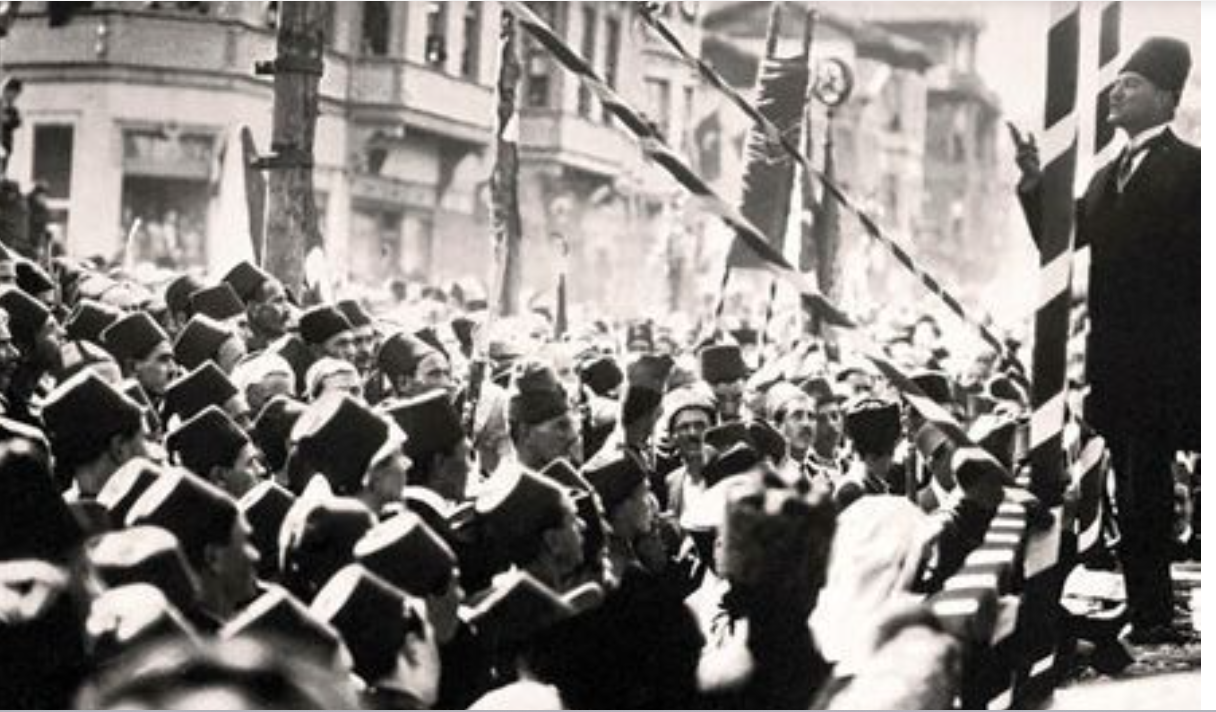 ataturk-cumhuriyet
The End of an Empire
On October 29, Turkey celebrates its Republic Day, marking both the nation’s independence and the birth of a new Republic under Mustafa Kemal Atatürk, rising from the ashes of the Ottoman Empire.
The founding of the Turkish Republic was not an easy path. It was shaped by years of war, political turmoil, and immense human sacrifice. Turks shed their blood to build a modern nation from the remains of an empire once spread across three continents.
The Ottoman Empire’s downfall came in 1918, with the defeat of the Central Powers in World War I. The Allies — including Britain, France, and Italy — occupied Istanbul (then Constantinople), and the last Ottoman sultan, Mehmet VI Vahdettin, became a puppet ruler under Allied control. By late 1918, he had dissolved the parliament and ruled by decree.
Occupation and Resistance
As Allied troops took over Ottoman territories, resistance movements began to form across Anatolia, determined to fight foreign occupation. Among these nationalist leaders was Mustafa Kemal, a decorated commander from Gallipoli, who would become the driving force of the independence struggle.
On May 19, 1919, Mustafa Kemal landed in Samsun — a date now celebrated as Atatürk Memorial, Youth and Sports Day — marking a turning point in Turkish history. Alarmed by Western occupation, he defied orders from Istanbul and began organizing the national resistance.
He issued the Amasya Circular, declaring:
“The integrity of the nation and the independence of the country are in danger. The nation’s independence will be saved by the nation’s determination and will.”
Laying the Groundwork for Independence
This call led to the Erzurum Congress (July 1919) and the Sivas Congress (September 1919), where nationalist delegates declared that the Turkish nation would not accept a foreign mandate or protectorate, and resolved to defend the entire homeland. Mustafa Kemal emphasized the principle that became his lifelong creed:
“There will be no mandate. Either independence or death.”
The Treaty of Sèvres and National Uprising
Meanwhile, in August 1920, the Allies imposed the Treaty of Sèvres, dismembering the Ottoman Empire and dividing Anatolia among Greeks, Armenians, Kurds, the British, and the French. It left Turks with only a small portion of central Anatolia and reduced their army to 50,000 men.
Outraged, Mustafa Kemal and the nationalist movement denounced the treaty as an act of betrayal. They vowed to resist the occupation and reclaim the sovereignty of the Turkish nation.
The Turkish War of Independence (1919 – 1922)
Under Mustafa Kemal’s leadership, the Turkish National Movement launched a determined military and diplomatic struggle. Nationalist forces, led by commanders such as İsmet İnönü, fought against occupying Greek, French, and Armenian troops in what became known as the Turkish War of Independence.
Key victories — including the Battle of Sakarya (August 1921) and the Great Offensive (Büyük Taarruz) of August 1922 — turned the tide. On September 9, 1922, Turkish forces entered Izmir, marking the decisive end of foreign occupation.
In November 1922, the Ottoman sultanate was formally abolished. The following year, the Republic of Turkey was proclaimed, with Ankara as its capital and Mustafa Kemal Atatürk as its founding president.
A Nation Reborn
Atatürk’s vision went beyond military victory. His reforms in education, law, language, and governance built the foundations of a secular, modern, and sovereign Republic.
Each year, on October 29, Turks commemorate not just the birth of their nation, but the enduring spirit of resistance and renewal that turned a defeated empire into a republic built on independence, unity, and progress.
Related articles

Historian Counters Claims: “Ignorance, Not Technology Was the Real Downfall of the Ottoman Empire”
The friendship between the Ottomans and Japan
Çanakkale Victory: Atatürk’s Telegram Revealed After 110 Years