Turkey’s Finance Minister Şimşek: “We Are Taking Measures Against Carry Trade Flows”
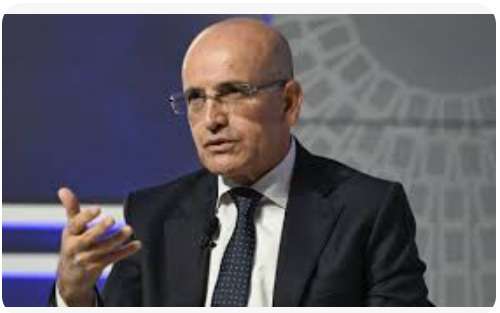 mehmet simsek4
Turkey’s Treasury and Finance Minister Mehmet Şimşek told parliament that the government is actively tightening measures against speculative carry trade inflows, while reaffirming commitment to disinflation, fiscal discipline and medium-term growth. Şimşek said inflation is on a downward path, external vulnerabilities have eased sharply, and Turkey has significantly strengthened its reserves and risk profile under the current economic program.
Inflation easing, but services remain sticky
Speaking at the Turkish Grand National Assembly during discussions on the 2026 Central Government Budget Bill, Treasury and Finance Minister Mehmet Şimşek said inflation, which peaked at 64–65% in 2022–2023, fell to 44.4% last year and declined further to 31.1% as of November 2025.
Şimşek acknowledged that inflation remains above official targets but stressed that the underlying trend is improving.
“Durable goods and clothing inflation has fallen to 18.6%, while food inflation is down to 27%,” Şimşek said. “The main reason headline inflation is still above 30% is the rigidity in services inflation, which reacts with a lag to disinflation measures due to backward-looking indexation.”
He added that earlier price caps on rents and education fees contributed to distortions, causing rent and education inflation to rise at nearly twice the headline rate over the past two years.
Looking ahead, Şimşek said the government expects housing supply to increase through social housing projects and the completion of earthquake reconstruction, which should help contain rent inflation. Education pricing, meanwhile, will shift to a rules-based model approved by parliament.
Taxes, fees and fiscal policy in 2026
Şimşek said that in 2026, taxes and fees will generally be updated in line with targeted inflation, not the higher revaluation rate. However, he stressed that adjustments benefiting households — such as income tax brackets — will be raised at the full revaluation rate of 25.5%.
“In short, public prices will be set in the 16–19% range, while measures in favor of citizens will be applied at the higher revaluation rate,” he said.
External balances no longer a major risk
Şimşek said Turkey has significantly reduced external vulnerabilities under the current program.
“At the start of the program, the current account deficit exceeded 5% of GDP. In 2024 it fell to 0.8%,” he said. “Excluding imported gold — which is largely a portfolio choice — Turkey actually posted a $3.2 billion current account surplus last year.”
He added that the improvement is continuing in 2025, supported by structural gains in energy.
“Today, we meet 15% of our oil needs and 16% of our natural gas needs from domestic production,” Şimşek said. “Renewables now account for 62% of installed capacity, although drought reduced their share in output this year.”
As energy dependence declines, he said, the current account balance is becoming structurally stronger. Turkey has spent nearly $1 trillion on oil and gas imports over the past 23 years.
Thanks to this progress, Turkey’s gross external financing requirement, which had risen to 23% of GDP, is expected to fall below 17% this year, and potentially to 13–14% by the end of the program period, strengthening macroeconomic stability.
Reserves surge, risk premium collapses
Şimşek said Turkey now meets international reserve adequacy standards.
“Compared with May 2023, our gross reserves have increased by $88 billion, while net reserves excluding swaps are up by around $123 billion,” he said.
He also highlighted the successful exit from FX-protected deposits (KKM). Taking together the rise in net reserves and the fall in contingent liabilities, Şimşek said Turkey’s balance sheet has improved by roughly $260–265 billion.
Confidence in the Turkish lira has strengthened accordingly. The share of lira deposits in total deposits has risen above 60%, while Turkey’s CDS risk premium has dropped from nearly 700 basis points before the program to 216 basis points, its lowest level since May 2018.
Borrowing costs halved, ratings upgraded
Şimşek said Turkey has outperformed peers in terms of risk reduction.
“Risk premia in emerging markets fell by about 62 basis points on average. In Turkey, the decline was 487 basis points,” he said.
This has translated directly into lower borrowing costs.
“In May 2023, the yield on our five-year dollar bonds was 11.3%. Today it is around 5.5%,” Şimşek said. “Our external borrowing costs have effectively been cut in half.”
He added that external debt rollover ratios have improved sharply. Over the past 2.5 years, rollover ratios averaged 151% for the real sector and 186% for banks, compared with much lower levels in early 2023.
Şimşek noted that international rating agencies have responded positively, upgrading Turkey’s credit rating by two to three notches over the past 2.5 years — an “exceptional” outcome.
“We are taking measures against carry trade”
Addressing concerns about speculative inflows, Şimşek said authorities are actively discouraging excessive carry trade activity.
“Our Central Bank has increased reserve requirements against carry trade twice in the past six months,” he said. “These measures are differentiated by maturity.”
Reserve requirements on banks’ foreign liabilities were raised:
-
From 8% to 12% on foreign bank deposits
-
From 8% to between 12% and 18% on foreign repo funding and external loans, depending on maturity
In addition, gross returns on deposits and funds — for both domestic and foreign investors — are subject to a 17.5% withholding tax, with no inflation adjustment.
“In other words, we are taking concrete steps against carry trade,” Şimşek said.
Growth outlook and employment
Şimşek acknowledged that economic activity has been moderate during the disinflation phase but expressed confidence in a return to sustainable growth.
“Over the past two years, global growth averaged 3.2%, while growth among our main trading partners — especially the EU — was around 2.2%,” he said. “Despite this, Turkey grew by around 3.5%.”
As disinflation continues, he said growth is expected to gradually accelerate. Under the Medium-Term Program (OVP), the government expects to create 2.5 million jobs.
“We have restored fiscal discipline, and we must — and will — maintain it with determination,” Şimşek said.
Related articles
Reuters: Turkey’s inflation likely to drop below Policy rate in september

70 percent of AKP voters think Turkey’s economy is got worse
Turkish banks are struggling to attract international investors amid rising debt