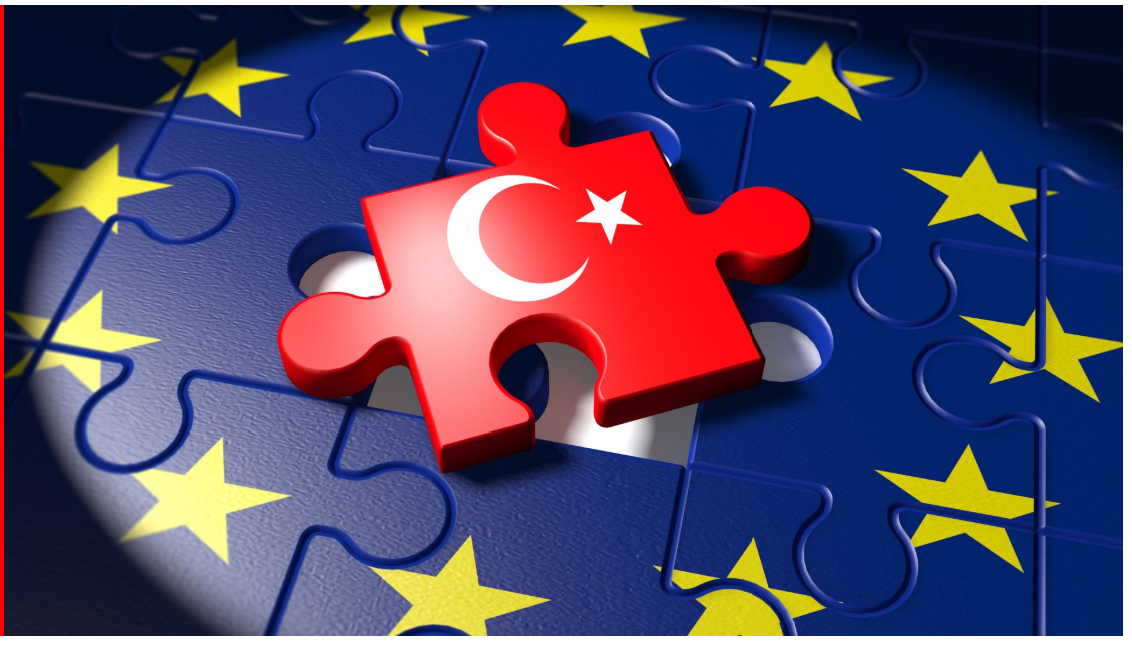
Turkey’s Carbon Market Revolution: From Policy to Profit
 energy
Turkey’s path toward a National Emission Trading System (ETS) marks a turning point in its journey toward sustainable economic transformation. Once confined to government reports and policy briefings, concepts such as the Carbon Border Adjustment Mechanism (CBAM) — a core element of the European Green Deal — and the international carbon cooperation frameworks outlined in Article 6 of the Paris Agreement are now embedded in the strategic plans of Turkish businesses and investment portfolios. This growing alignment between environmental responsibility and economic competitiveness signals that carbon markets are no longer just environmental tools, but key drivers of global trade and finance.
The visible consequences of the climate crisis are no longer remote. From overflowing urban rivers to disrupted agricultural cycles and strained energy infrastructures, climate-related disruptions are reshaping the realities of modern economies. In this new era, carbon pricing and emission trading systems are not simply compliance mechanisms—they represent a fundamental shift in how nations and corporations redefine value creation.
A New Era Under the Climate Law
At the Carbon Markets Congress, Turkey’s first and only event dedicated to carbon trading, CLA Partners Co-Founder Av. Çiğdem Dilek described the country’s newly enacted Climate Law as “a milestone for carbon markets” that establishes the foundation of the national ETS. “As you all know, the Climate Law adopted this year is a turning point for carbon markets in Turkey and forms the framework of the national emission trading system,” Dilek stated. “The law imposes emission reporting and reduction obligations on companies and officially announces that carbon pricing will now become a part of our economy.”
According to Dilek, this transformation extends beyond environmental policy, touching the very structure of trade and finance. “This is not just a change limited to environmental policy—it’s a development that can influence exports and open the door for new financial models,” she noted. The Climate Law, she explained, introduces mechanisms that could foster innovative financial instruments and stimulate new economic paradigms, allowing Turkey to position itself as a regional hub for carbon markets.
Private Sector Adapts to Carbon Pricing
CLA Partners, Dilek emphasized, sees it as their duty to guide clients through this complex transition: “We consider it our responsibility to help our clients foresee risks, manage obligations accurately, and seize the emerging opportunities.” She added that frameworks such as Article 6 of the Paris Agreement, CBAM, I-REC certificates, and Sustainable Aviation Fuels (SAF) are opening pathways not only for climate action but also for new investment opportunities.
“We believe this new period launched by the Climate Law represents a great opportunity for Turkey to become a regional center for carbon markets,” Dilek concluded. “This congress provides an excellent platform for discussions that will shed light on these developments.”
Building the Framework of a Greener Future
The Carbon Markets Congress hosted discussions on a wide range of topics that bridge science, business, and policy. Among them were Integrity and Growth in the Voluntary Carbon Market, Turkey’s ETS Journey and the Climate Law, Trade Impacts of the Carbon Border Adjustment Mechanism, Collaborative Approaches and Certification under Article 6 of the Paris Agreement, Corsia and the Role of Carbon Markets in Aviation, and The Future of Renewable Energy Certificates such as YEK-G and I-REC.
Experts from academia, government, and the private sector participated in panels designed to assess how these mechanisms can help Turkey align with global carbon markets and advance its green transformation goals. The event reflected a growing understanding that sustainability is not just a moral imperative but an economic strategy—one that can define competitiveness in a world moving rapidly toward decarbonization.
Beyond Compliance: Toward Economic Resilience
Turkey’s entry into carbon pricing mechanisms places it among nations adapting to the future of climate finance. By internalizing the cost of emissions, the ETS framework not only pushes industries toward cleaner technologies but also provides financial incentives for innovation and energy efficiency. As carbon credits evolve into valuable trade assets, Turkish companies will need to balance environmental responsibility with financial performance—a dual challenge that could redefine the nation’s industrial identity.
With the Climate Law officially introducing carbon pricing and compliance obligations, Turkey is taking a concrete step toward aligning its markets with European standards and international carbon frameworks. The road ahead promises challenges, but also unprecedented opportunities—for investors, policymakers, and entrepreneurs ready to embrace the green economy as the foundation of long-term prosperity.
Related articles

Türkiye Introduces First Climate Law to Parliament, Aiming for Net-Zero by 2053
Cyprus Talks Could Unlock EU–Turkey Customs Union Modernisation, Brussels Summit Signals
Dr. Hakan Çınar: What I Realized About the New Trade War We’re Not Ready For