Turkey’s Business Leaders Chart New Paths Amid Global Economic Turbulence
 tusiad
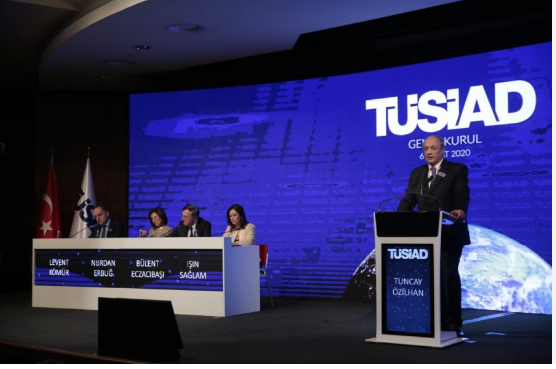
At the 17th Competition Congress, Turkey’s top business figures and economic policymakers gathered to assess how the country can maintain its competitive edge in a rapidly evolving global landscape. Organized by the Sectoral Associations Federation (SEDEFED) under the theme “New Routes for Our Global Competitiveness,” the event gathered leading voices from industry, government, and civil society to discuss how to navigate economic uncertainty while maintaining growth.
Economic Volatility and Resilience
TÜSİAD President Orhan Turan described the global economy as entering one of its most turbulent phases in decades. “The global economy is experiencing one of the most volatile periods in its history,” he noted. “Short-term fluctuations are occurring alongside long-term structural changes, creating uncertainty for every country and sector.” He emphasized that nations are now compelled to find new ways to preserve competitiveness amid these shifting tides.
According to Turan, Turkey’s industrial sector has begun to show signs of stabilization. “We believe the most intense period of pressure on industry is behind us. A recovery phase has begun, with strengthening investment trends,” he said. However, he cautioned that much of this rebound was driven by the defense industry, and that external conditions may soon shift. “Given global economic trends, we must be aware that the current favorable external environment could change — and prepare accordingly,” he added.
Turan also highlighted the euro’s potential strength as a factor that could benefit Turkish exporters. “As demand in the European region — our largest trade partner — rises, and with the euro likely to strengthen against the dollar due to U.S. policy uncertainty, this will provide breathing room for our industry,” he said.
Inflation: The Defining Challenge
Turan underscored that while Turkey has diversified its export markets and product range over the past 30 years, the majority of new products added to the export basket — around 60% — remain low-tech. He stressed that sustainable competitiveness depends on lowering inflation to stable, single-digit levels.
“Our top priority must be bringing inflation down permanently to low single digits. While the drop from 75% to 30% is a major achievement, the road ahead remains difficult,” he stated. Factors such as frost damage in agriculture, rising energy prices, and persistent service-sector cost pressures are slowing disinflation, he said, warning that maintaining downward momentum will be a challenging process.
Learning from Global Innovation
Referring to recent Nobel Prizes in Economics, Turan drew attention to their broader message: the importance of institutions, innovation, and fair competition. “Last year’s prize recognized the role of institutions; this year’s emphasizes the cultural climate and fair competition needed to drive innovation and technological progress,” he said.
He called for unity and investment in human capital: “We need to bring together young and old, women and men — to unite and amplify our talents. To sustain competitiveness, we must focus on an education system that builds the skills demanded by our era, and develop a qualified workforce.”
2026: A Year of Balance and Recovery
TÜRKONFED President Süleyman Sönmez forecasted that 2026 could mark a turning point for the Turkish economy. “We expect a gradual decline in inflation during 2026, which should bring some relief in financial stability,” he said. “Even if nominal growth continues, 2026 will likely be a year of balance in real terms.”
Sönmez emphasized that with the right policies, this balancing act could evolve into a leap forward. “Turning this into a ‘year of breakthrough’ rather than mere calm depends on us. Our true test lies in increasing productivity and distributing financial, technological, and human resources evenly across the production base,” he remarked.
He also pointed out the severe side effects of anti-inflation measures on small and medium-sized enterprises. “We’ve repeatedly underlined that the current inflation-fighting policy has had serious side effects on the real sector. SMEs have shelved their growth plans, struggling to survive,” he said. Access to finance has tightened, and the gap between large firms and SMEs has widened, particularly in areas such as technology and human capital.
Sönmez emphasized the importance of restoring credit access, extending financing terms, and maintaining a stable balance between interest rates and currency levels to prevent further deterioration in business conditions.
The Human Factor in Competition
In her remarks, SEDEFED President Emine Erdem highlighted the importance of accelerating digital transformation and investing in artificial intelligence infrastructure. “What we must do as Turkey is to accelerate our digital transformation, strengthen our AI infrastructure, and prepare a qualified workforce to manage this transformation,” she said.
Erdem noted that inflation, financing challenges, and rising costs have created difficulties in both production and investment decisions. “Long-term economic pressures and growing inequality have led to stagnation and a sense of hopelessness across society. Yet, our business community continues to demonstrate extraordinary effort to stay afloat, produce, export, and sustain employment,” she said.
She concluded with a message of resilience: “True competitiveness lies in the power to believe — in the will to keep producing with hope.”
Signals from Policymakers
Opening statements from government and institutional representatives painted a picture of a fragile global trade environment.
-
Deputy Minister of Trade Mahmut Gürcan warned that “the world has entered a period of uncertainty in global trade.”
-
Deputy Minister of Industry and Technology Zekeriya Coştu pointed to tariff conflicts among major economies that are “putting global commerce under stress.”
-
TSE Chairman Mahmut Sami Şahin stated that competition has evolved: “It’s no longer about who produces more, but who generates more value from data.”
-
Competition Authority Member Ayşe Ergezen emphasized the need to design policies that strengthen market efficiency and supply security.
-
TİM Vice President Adil Pelister added that “our exporters are learning to compete through production.”
The 17th Competition Congress thus reflected a broader truth: amid uncertainty and inflationary pressures, Turkey’s private sector is searching not only for stability, but also for new pathways to long-term, sustainable competitiveness.