Turkey Seizes Lead in Syria’s Reconstruction
 syria
syria
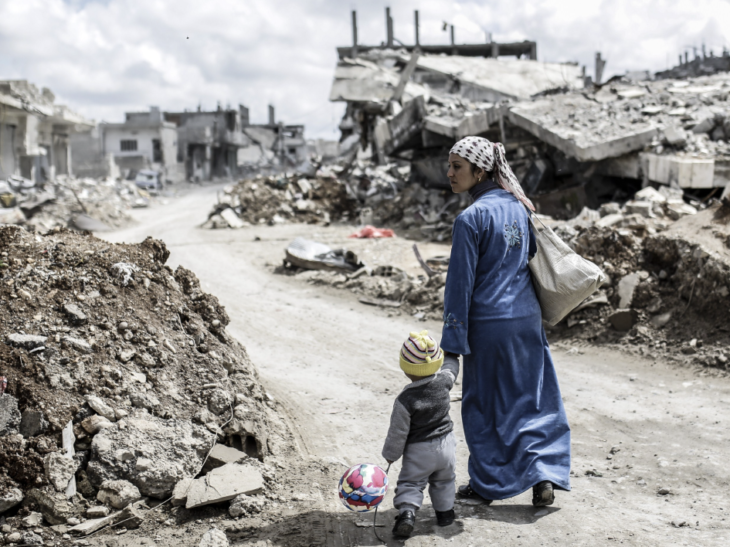
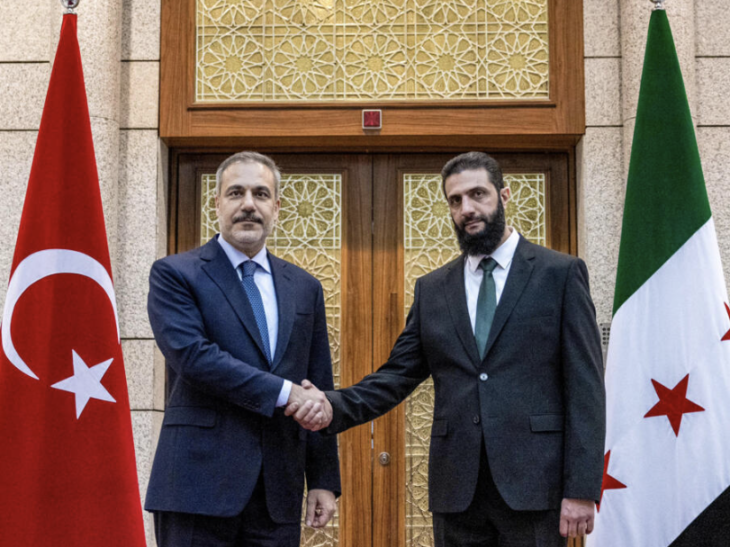
Turkey has rapidly become the most influential foreign player in Syria’s reconstruction landscape, securing more than $11 billion in large-scale energy and aviation contracts just one year after the fall of Bashar al-Assad’s government. As reported by Deutsche Welle’s Turkish edition, Turkish contractors and state institutions acted faster than their global competitors, positioning Turkey at the center of Syria’s post-war rebuild.
According to documents reviewed by DW, Turkish companies captured $7 billion in electricity-generation agreements and another $4 billion in airport infrastructure projects, awarded to a consortium featuring major Turkish firms—including Kalyon İnşaat, Cengiz İnşaat and TAV Airports—as well as Qatar’s UCC Holding and the U.S.-based Power International.
Mega-Projects Reconfigure Syria’s Post-War Economy
The $7 billion energy deal, formalized on May 29 in Damascus, outlines plans for constructing 4,000 MW of natural-gas power facilities and 1,000 MW of solar energy capacity across Homs, Hama, Deir ez-Zor, and southern districts. Syrian authorities forecast that the completed infrastructure will generate 35 billion kWh annually and create 50,000 jobs, forming the backbone of the country’s energy recovery.
A second landmark investment—the $4 billion expansion of Damascus International Airport—brings together the same Turkish contractors responsible for İstanbul Airport. Under a long-term build-operate-transfer model, the project aims to increase the airport’s annual passenger capacity to 31 million within ten years, a significant step toward reconnecting Syria with global aviation markets.
Energy cooperation has also deepened. The Kilis–Aleppo natural gas pipeline, which entered service on August 2, provides 6 million cubic meters of gas per day. Officials from both sides say the line has substantially reduced power shortages in Aleppo, extending electricity access far beyond the mere hours previously available.
Sanctions Relief Opens the Door for Rapid Turkish Expansion
This acceleration became possible only after sweeping sanctions relief by Western governments. U.S. President Donald Trump’s Executive Order 14312, issued in June, suspended most Caesar Act sanctions and removed numerous Syrian state institutions from the U.S. blacklist—while retaining penalties tied to Russian and Iranian operations. Europe followed one month earlier, easing restrictions on Syrian banking, transport, and energy.
The moves dramatically lowered the risk of U.S. secondary sanctions, allowing Turkish builders, banks, and exporters to re-enter Syria without the compliance fears that had stalled major projects for nearly a decade.
Trade Architecture Revived as Bilateral Commerce Surges
As barriers fell, trade surged. Turkish exports to Syria jumped 54% during the first seven months of 2025, while December 2024 marked the highest monthly trade volume in ten years at $233.7 million, DW reported.
To institutionalize this rebound, Ankara and Damascus formed the Joint Economic and Trade Committee (JETCO) in August 2025, tasked with aligning customs rules, tariffs, and investment procedures. Discussions are reportedly underway to modernize the dormant 2004 Free Trade Agreement.
Tariff tensions flared in early 2025, when Syrian customs authorities sharply raised import duties—some by several hundred percent. Yet after diplomatic intervention, Syria reduced tariffs on 269 Turkish products, including staples such as flour and eggs, as well as iron and steel.
Border mobility simultaneously improved. Turkey’s Interior Minister Ali Yerlikaya announced that daily border crossings rose from roughly 3,000 to as many as 20,000. In a symbolic milestone, the Yayladağı–Latakia corridor reopened in December 2024, restoring a vital connection between Hatay and Syria’s Mediterranean coastline.
Gulf Transit Routes Reopen After a Decade
One of the most consequential developments for regional trade has been the reopening of the Aleppo–Damascus–Nasib corridor, which reestablishes overland access from Turkey to Jordan and onward to Saudi Arabia. Exporters say journeys that took weeks via the Suez Canal now take only days.
A bilateral transit agreement signed in November 2025 will eliminate the costly requirement to unload cargo at the Syrian border. From now on, sealed Turkish trucks will be permitted to cross Syria directly into Jordan under a unified permit regime, unlocking new commercial efficiencies for logistics and manufacturing.
Banking Links Strengthen as Syrian Financial System Reconnects
As central banks in Syria regain SWIFT access, Turkish lenders have begun exploring new correspondent banking relationships to support revived trade flows. According to DW, banks such as DenizBank are positioning themselves to manage settlement processes as restrictions ease.
Syria’s central bank is also pushing ahead with monetary reforms, including a currency redenomination and new banknotes. Officials say the effort relies on input from international institutions and regional partners aiming to stabilize prices and restore confidence in the Syrian pound.
Turkish Private Sector Mobilizes Across Reconstruction Zones
Turkish business networks have moved quickly to capitalize on reopened markets. The Turkey–Syria Business Council has inked cooperation deals with chambers of commerce in major Syrian cities—including Damascus, Aleppo, Latakia and Hama—to support joint ventures and commercial exhibitions.
Momentum was visible at the 62nd Damascus International Fair, where Turkey hosted its largest pavilion in six years. Around 500 Turkish company representatives attended, spanning construction, textiles, food processing and consumer goods.
Syrian authorities say plans are advancing to create a special industrial free zone near the border designated for Turkish manufacturers. The initiative is envisioned as a cornerstone of job creation, investment attraction and the voluntary return of displaced Syrians who previously sought refuge in Turkey.