Reuters: Turkey Offers $100M Settlement to End Halkbank Case
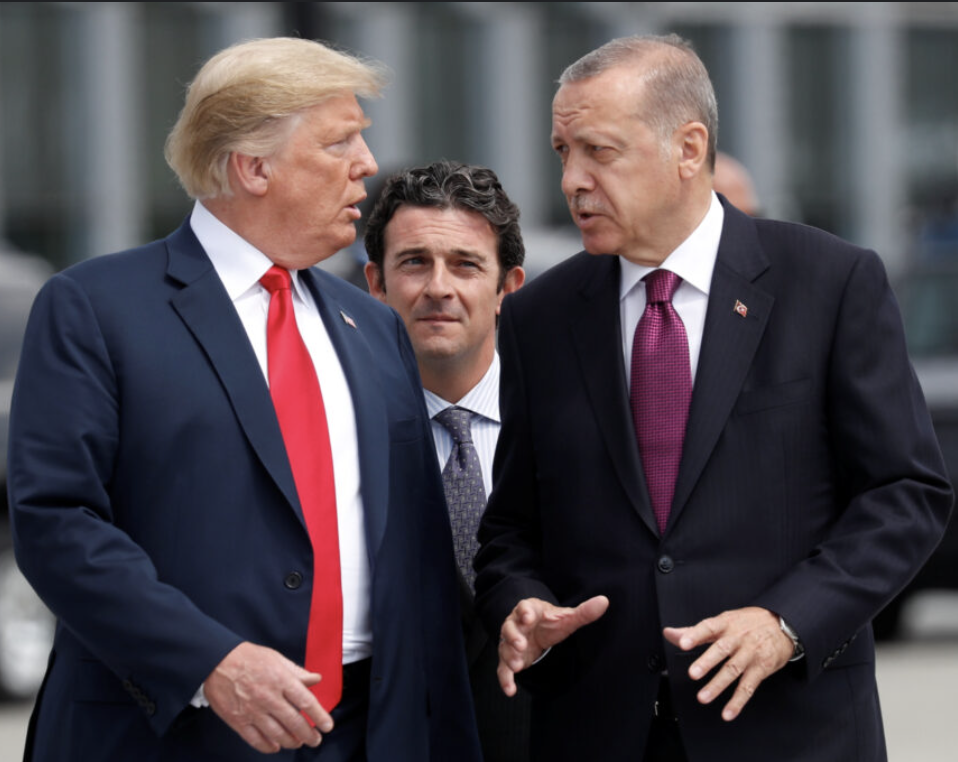 Trump & Erdoğan
The Turkish government has reportedly proposed a $100 million settlement to resolve the Halkbank case in the United States, according to two sources who spoke with Reuters. The offer was personally conveyed by President Recep Tayyip Erdoğan to U.S. President Donald Trump during a meeting at the White House last month, the sources said.
According to insiders, the proposed settlement included several conditions, the most critical being that Halkbank would not admit to any wrongdoing—a demand Ankara considers a non-negotiable priority.
Halkbank’s Legal Troubles
Halkbank, Turkey’s fourth-largest bank, has been accused of helping Iran evade U.S. sanctions related to its nuclear program. The bank faces charges of fraud, money laundering, and conspiracy, all of which it has consistently denied.
Both the Presidential Office in Ankara and the White House declined to comment on the alleged settlement talks, and Halkbank itself made no public statement.
Potential Turning Point in U.S.–Turkey Relations
Reuters reported that the potential deal could help mend strained relations between Ankara and Washington—ties that deteriorated sharply after Turkey’s 2019 purchase of the Russian S-400 missile defense system. That decision prompted the U.S. to remove Turkey from the F-35 fighter jet program and impose sanctions on the country’s defense industry.
The Halkbank case, launched shortly after those developments, has remained a major irritant in bilateral ties. However, the personal rapport between Erdoğan and Trump has helped rekindle dialogue in recent months, even if Turkey’s hopes of rejoining the F-35 program remain unfulfilled.
The sources told Reuters that it is unclear how U.S. officials responded to the proposal, but the meeting involved senior ministers and advisers from both sides.
Supreme Court Rejects Halkbank Appeal
In a major setback, the U.S. Supreme Court this week rejected Halkbank’s final appeal, allowing the criminal case to proceed. The decision led to an immediate 10% drop in Halkbank shares on the Istanbul Stock Exchange.
Following the ruling, the bank issued a brief statement confirming that “efforts to reach a mutual understanding between Turkey and the United States continue in a positive direction.”
During his visit to Washington—the first in six years—President Erdoğan also told reporters alongside Trump that the Halkbank issue was on their agenda, describing the case in previous comments as both “unlawful” and “disgraceful.”
Analysts See Settlement as Possible ‘Concrete Step’
Gönül Tol, Director of the Turkey Program at the Middle East Institute, posted on X (formerly Twitter) that the $100 million proposal could represent a “concrete step” toward resolution. She added that the Supreme Court’s decision did not necessarily eliminate the chance of a political or financial settlement between the two allies.
The Allegations Behind the Case
According to the U.S. Attorney’s Office for the Southern District of New York, Halkbank allegedly used money transfer services and front companies in Iran, Turkey, and the UAE to move restricted Iranian funds in violation of U.S. sanctions.
Prosecutors claim that Halkbank helped transfer $20 billion in restricted funds, converted Iranian oil revenues into gold and cash, and forged food-trade documents to disguise illicit transactions. The scheme, they say, effectively allowed Tehran to access frozen oil revenues under the guise of humanitarian trade.
In its appeal to the U.S. Supreme Court, Halkbank argued that as a state-owned bank, it should enjoy sovereign immunity and be exempt from prosecution in foreign courts. The Court’s rejection of that argument now clears the way for the case to proceed in lower courts.
Possible Precedents and Financial Context
Experts suggest that if a settlement is eventually reached, the final amount could exceed $100 million—especially when compared to previous sanctions-related cases. Between 2009 and 2015, eight European banks, including HSBC, BNP Paribas, Standard Chartered, and Credit Suisse, collectively paid more than $14 billion in penalties for violating U.S. sanctions.
The largest fine, nearly $9 billion, was paid by BNP Paribas, which admitted to breaching restrictions involving Sudan, Cuba, and Iran.
A Delicate Balancing Act
For Turkey, the Halkbank case represents more than a legal dispute—it is a litmus test of diplomatic and economic leverage in Washington. While the alleged $100 million settlement offer signals Ankara’s willingness to de-escalate tensions, the U.S. response will likely determine whether this long-running controversy can finally be resolved—or whether it remains a flashpoint in U.S.–Turkey relations.