



Turkey Earns Over $2.5 Billion From Hazelnut Exports
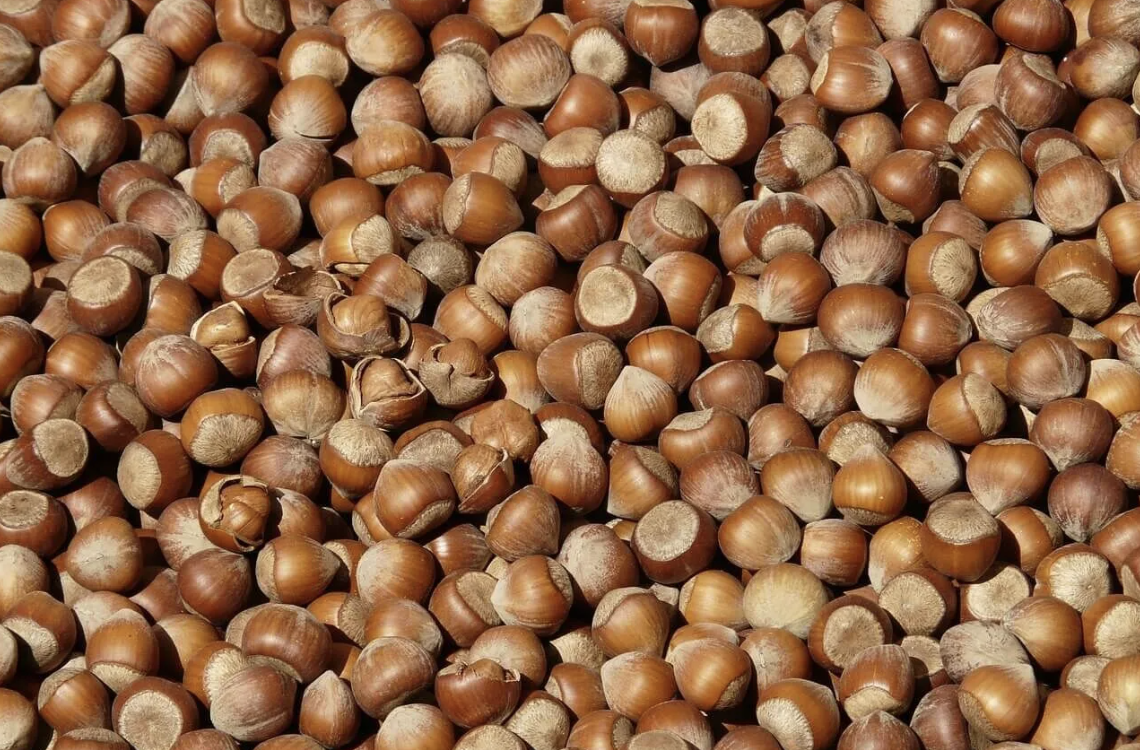 hazelnut
Turkey has once again confirmed its position as the world’s leading hazelnut exporter, generating more than $2.5 billion in revenue during the 2024–2025 export season.
According to the Black Sea Hazelnut and Products Exporters’ Association, between September 1, 2024, and August 31, 2025, Turkey exported 309,064 tons of hazelnuts to 124 countries, earning $2,558,540,904 in return.
Both export volume and income increased compared to the previous season, when Turkey shipped 303,458 tons of hazelnuts worth $2.35 billion.
Germany, Italy, France Remain Top Buyers
Europe continues to dominate as the primary destination for Turkish hazelnuts:
-
Germany: 79,723 tons, generating $646.8 million
-
Italy: 67,840 tons, generating $571 million
-
France: 16,757 tons, generating $137.6 million
Other significant buyers included Poland, the Netherlands, Switzerland, Spain, and Austria.
Meanwhile, China has emerged as a fast-growing market, importing 8,551 tons worth $79.4 million, placing it ninth overall.
Hazelnut Promotion “Vital for Growth”
Despite Europe’s continued demand, industry leaders emphasize the need to expand into new markets.
Hamza Bölük, President of the Giresun Chamber of Commerce, highlighted that Turkey has relied on the same buyers for years:
“Our export destinations remain the same countries. We need to find new markets for hazelnuts. We organize trade fairs, face-to-face meetings, and bring international buyers to Turkey to see how hazelnuts are produced and processed. Promotion is vital to secure new markets.”
Targeting the U.S., Latin America, and Asia
Bölük underlined that traditional European markets are close to saturation:
“Traditional hazelnut exports have reached or are approaching capacity. Europe has already maximized its potential consumption. Our priority must be to export to countries where people don’t yet know hazelnuts. The U.S. market remains largely untapped. In South America, countries like Brazil and Argentina need targeted promotion. The Far East is also a growing market. To China, Japan, and Korea, we must now add India. In these regions, hazelnut consumption can be expanded with promotion and new product development. Hazelnuts should not only be sold raw but also as value-added products.”
Why New Markets Matter
Europe has long been the backbone of Turkey’s hazelnut exports, thanks to the continent’s high consumption, particularly by the chocolate and confectionery industries. However, the industry now recognizes the need to diversify export destinations to maintain growth.
The U.S. market is particularly attractive due to its size and the growing trend toward healthy snacks. Similarly, Asia—especially China and India—offers enormous potential, given their population and rising demand for nut-based products.
Value-Added Products as Key Strategy
Industry representatives stress that Turkey must move beyond exporting raw hazelnuts and instead focus on processed, value-added products such as:
-
Hazelnut paste and spreads
-
Chocolate-coated hazelnuts
-
Hazelnut oils and flours
Such diversification not only increases profit margins but also makes the product more appealing to new consumer bases that are unfamiliar with hazelnuts in their raw form.
Tradition Meets Innovation
Turkey remains the world leader in hazelnut exports, with over $2.5 billion in revenue in the latest season and enduring demand from Europe. But as Europe reaches its consumption ceiling, exporters are now looking toward the United States, Latin America, and Asia to fuel the next stage of growth.