Turkey and U.S. in Talks on Rare Earth Deal as Ankara Shifts Away From China and Russia
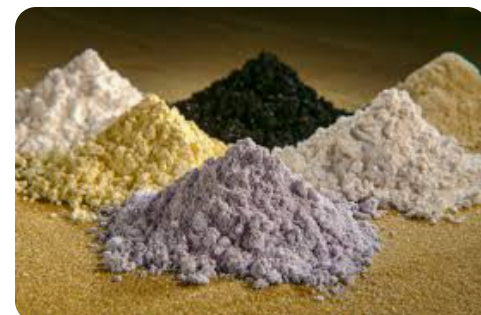 nadir mineraller
Summary:
Turkey has entered negotiations with the United States over the joint development of one of the world’s largest rare earth deposits in central Anatolia. The move signals a strategic shift toward its NATO ally after talks with China and Russia stalled. Ankara is insisting on technology transfer and local refining to build domestic capacity and reduce dependence on foreign partners.
Beylikova: The World’s Second-Largest Rare Earth Reserve
Turkey and the United States are holding talks to jointly develop rare earth deposits in Beylikova, Eskişehir province, according to Bloomberg.
The site is believed to be the world’s second-largest reserve after those in China. The discussions gained momentum following last month’s White House meeting between President Donald Trump and President Recep Tayyip Erdoğan, where both sides explored cooperation in mining, processing, and refining.
Ankara views the project as a key step in its effort to expand trade with Washington to $100 billion annually.
Ankara Distances Itself from China and Russia
Turkey’s previous attempts to develop the Beylikova field with China and Russia failed to deliver results.
A memorandum of understanding signed with Beijing in October 2024 faltered after China refused to transfer technology and insisted that refining take place on its own soil. Russian proposals also stalled without progress.
Turkish officials now stress that any future deal must guarantee domestic refining and full technology sharing — two conditions central to Ankara’s long-term industrial strategy.
Eti Maden’s Pilot Facility Shows Promise
State-run Eti Maden opened a pilot plant in 2023 to process 17 different rare earth elements discovered at the site, including lanthanum, cerium, and neodymium — all vital to renewable energy, electric vehicles, and defense systems.
Initial results suggest that the deposits are commercially viable. Ankara now plans to expand the facility and obtain international certification to attract foreign investment.
Turkey’s total rare earth reserves are estimated at around 700 million tons, positioning the country as a potential long-term supplier.
The West’s Quest to Break Free from China’s Monopoly
The U.S. and European Union have intensified efforts to reduce dependence on China, which currently controls about 70% of global rare earth production and 90% of processing capacity.
These minerals — often described as “industrial gold” — are critical for defense, satellite technology, renewable energy, and high-performance electronics.
Washington has signed similar cooperation agreements with partners such as Ukraine, though ongoing conflict has hampered progress. For the U.S., Turkey could become a strategic alternative hub closer to Europe and the Middle East.
Turkey Insists on Local Refining and Technology Transfer
Ankara’s main priority is ensuring that production, refining, and downstream manufacturing occur on Turkish soil.
Officials say that foreign partners must contribute know-how and invest in value-added production, rather than simply exporting raw materials.
The Turkish government is reportedly preparing investment incentives for joint refining facilities, with technology transfer as a non-negotiable condition.
Experts: “Owning the Technology Is the Real Goal”
According to Prof. Ceren Erüst Ünal, head of the Rare Earth Applications Center at Munzur University, the key to Turkey’s success will be mastering the technology itself:
“It’s not just about exporting raw materials. What matters is producing high value-added products and owning the technology behind them. That’s how Turkey can truly benefit.”
Altuğ Karataş, general manager of VAT Enerji, added that rare earths are essential to Turkey’s energy transition and defense industries:
“From wind turbines to solar panels, renewable energy infrastructure depends on these elements. The same goes for batteries, energy storage, and advanced weapons systems.”
Strategic Importance for Defense and Energy Security
Turkey’s expanding defense industry is a growing consumer of rare earths, used in guidance systems, radar, and precision components.
Experts warn that without developing local extraction and processing capacity, Turkey risks becoming dependent on imports at a time when demand is soaring across the technology and energy sectors.
To diversify supply, state-owned MTA International has also been exploring deposits abroad, operating in Niger, Uzbekistan, and Sudan since 2016.
From Raw Material to Industrial Powerhouse
For Ankara, the rare earth strategy fits into a broader effort to transform the country from a resource exporter into a technology-driven producer.
By combining extraction, refining, and advanced manufacturing, Turkey hopes to position itself as a regional leader in critical minerals — and a strategic partner for Western economies seeking supply chain diversification.
Sources: Bloomberg, AGBİ, Turkish Minute
IMPORTANT DISCLOSURE:
PA Turkey intends to inform Turkey watchers with diverse views and opinions. Articles in our website may not necessarily represent the view of our editorial board or count as endorsement.
Follow our English language YouTube videos @ REAL TURKEY:
👉 YouTube Channel
Twitter: @AtillaEng
Facebook: Real Turkey Channel