TL Deposit Wars Heat Up as Banks Battle to Hit 60% Target
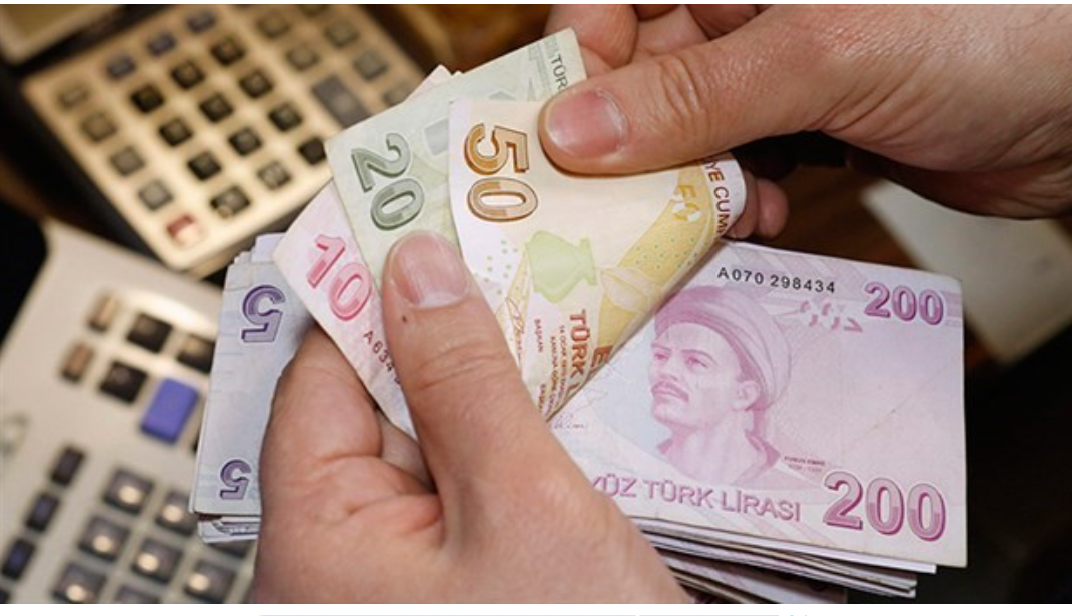 Turkish Lira
Despite recent Central Bank interest rate cuts in July and September, Turkish banks continue offering strikingly high rates for Turkish lira (TL) deposits. The current policy rate stands at 40.5%, yet some banks are luring savers with deposit rates as high as 46–48%.
This unusual divergence highlights the impact of macroprudential measures that pressure banks to raise the share of TL deposits to at least 60% of their total portfolios. Failure to meet the threshold results in hefty penalties, forcing banks into aggressive competition for retail deposits.
Race Against the Clock
Every month, on the last Friday, banks’ TL deposit ratios are calculated and reported to the Central Bank. Those falling short of the target face financial penalties. Sources from the banking sector confirm that as the deadline approaches, institutions scramble to attract funds—sometimes competing over as little as a 0.5 percentage point advantage.
“A single large deposit can move from one bank to another for just half a percentage point more,” a senior banker explained, underlining the fierce rivalry that has engulfed both state-owned and private banks.
New Rules, New Tactics
The regulatory push began on June 21, when the Central Bank introduced stricter requirements to encourage TL savings. Banks with less than 60% TL deposits were forced to increase their ratio more aggressively, while those between 60% and 65% were given a monthly 0.4-point improvement target.
At the same time, lenders were allowed to offer variable-rate TL deposits with maturities longer than one month—an attempt to diversify options for savers.
To meet the looming deadline, banks have resorted to creative, sometimes temporary solutions. Strategies include:
-
Granting loans that remain in deposit accounts until the reporting date.
-
Encouraging clients to convert foreign currency assets into lira.
-
Temporarily transferring funds to inflate ratios before returning them afterward.
A banking executive revealed that one institution with a TL deposit ratio of 56% faces a penalty exceeding ₺1 billion unless it boosts its figures before the cut-off date.
Rising “Welcome” Rates
Banks’ websites now feature significantly higher “welcome deposit rates.” Over the past week, short-term offers have climbed to between 44% and 48%, well above the policy rate of 40.5%.
These inflated rates are not driven by market conditions alone but are directly tied to the regulatory requirement of hitting the 60% TL threshold. Without this pressure, deposit yields would likely align more closely with the policy rate.
Industry-Wide Picture
According to Banking Regulation and Supervision Agency (BDDK) weekly data, the overall sector appears to have narrowly reached the 60% benchmark. As of the week ending September 12, standard TL deposits accounted for ₺14.73 trillion out of total deposits of ₺24.51 trillion, equivalent to 60.1%.
However, this figure includes both corporate and individual clients. On a bank-by-bank basis, many institutions—particularly those with weaker retail TL bases—are still struggling to comply.
Penalties and Pressure
For non-compliant banks, penalties are steep enough to push management teams into aggressive maneuvers. Executives confirm that branch managers are under direct instructions from top leadership to boost ratios before each reporting date, with every large client approached repeatedly in the final days.
Some institutions even restructure loans or offer exclusive deals to attract short-term deposits, knowing that once the calculations are completed, they can revert to standard practices.
Why Savers Are Winning—for Now
For depositors, the situation has created a rare window of opportunity. Households can lock in unusually high TL deposit rates—even if only for short durations—benefiting from the banks’ regulatory race.
But analysts warn the trend may not last. If more banks manage to stabilize their ratios above 60%, rates could normalize closer to the policy rate. Until then, depositors are effectively cashing in on a system-level competition.
The paradox is clear: while the Central Bank is cutting rates, Turkish banks are paying more to keep money in TL. The clash between monetary easing and macroprudential tightening has created a deposit battlefield.
With the next reporting deadline just days away, banks are pushing every button available to meet the target. Whether this strategy is sustainable remains uncertain, but for now, depositors are the unexpected winners in Turkey’s high-stakes banking chess game.