Tim Ash: Turkey at a Geopolitical Crossroads: Threats and Strategic Openings Collide
 tim ash
As global power shifts intensify—from Ukraine and NATO to the Gulf and the Indo-Pacific—Turkey finds itself at the epicenter of rising tensions and new strategic opportunities. Ankara’s evolving defense posture and diplomatic agility could define its regional role for decades to come.
Turkey is navigating one of its most complex geopolitical environments in recent memory. From its delicate balancing act in the Ukraine war to deepening rifts with Israel and questions over NATO’s credibility, the country is both exposed to growing threats and presented with rare strategic opportunities. What Ankara chooses in the coming months may shape not only its domestic stability but also the future security architecture of Europe and the Middle East.
NATO’s Credibility Under Pressure
The North Atlantic Treaty Organization (NATO), once considered the bedrock of European security, is under scrutiny. Russian drone incursions into Poland and Romania, as well as the unauthorized flight of Russian MiG-31 jets over Estonian airspace, have revealed cracks in NATO’s deterrence framework. The lukewarm response from Brussels and Washington has only heightened Ankara’s concerns.
As a NATO member, Turkey has long benefited from the alliance’s protection. But as the U.S. increasingly disengages from European defense affairs and the Trump administration questions the sanctity of Article V, Ankara may need to rely more heavily on its own military capabilities.
Ukraine War: Ankara’s Balancing Act
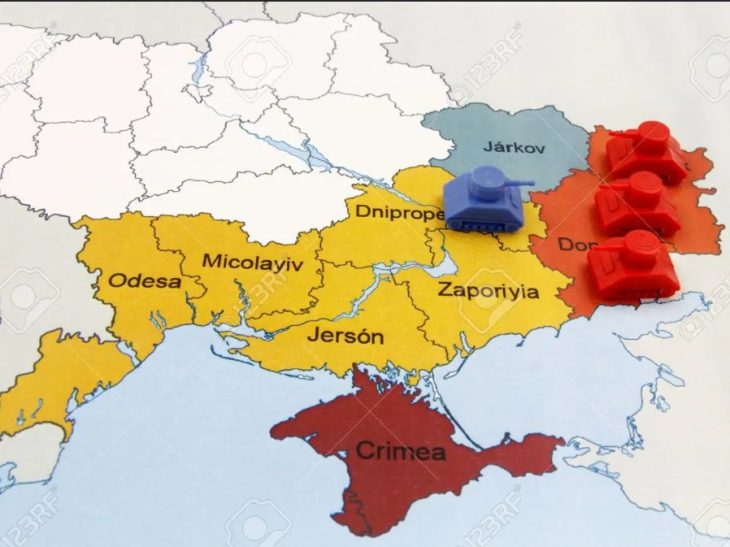
Turkey has adopted a unique position in the Ukraine conflict—providing drones and munitions to Kyiv, while continuing to trade extensively with Russia. This dual-track approach has enabled President Recep Tayyip Erdoğan to act as a credible mediator, hosting peace talks and facilitating prisoner exchanges.
While Ankara refrains from imposing Western sanctions on Moscow, it has openly rejected the annexation of Crimea and supports Ukraine’s territorial integrity and NATO membership. Turkish officials are acutely aware that a Russian victory would embolden Moscow to expand its influence in the Black Sea, Caucasus, and Syria—areas that directly affect Turkish interests.
Strategic Fallout with Israel
Rising tensions between Turkey and Israel are now one of the biggest flashpoints in the region. Israel’s aggressive military campaigns in Gaza, Syria, and even Qatar, coupled with its growing strategic autonomy, have raised alarms in Ankara. Israeli strikes on Hamas leaders abroad—particularly the recent attack in Qatar—have sparked fears of a possible escalation into Turkish territory.
A miscalculation could lead to direct conflict. Turkish military officials emphasize that Ankara’s army is well-equipped to counter such threats, and that any Israeli incursion would provoke an immediate response. The risk of a lose-lose-lose scenario involving Turkey, Israel, and the United States is increasingly plausible.
Europe’s Defense Gap: A Role for Turkey
With the U.S. pulling back and Europe ill-prepared for a long war, Turkey’s military and defense industry could fill the gap. Turkey possesses one of the largest and most battle-hardened armies in Europe—behind only Russia and Ukraine—and an advanced defense manufacturing sector capable of producing drones, tanks, and ammunition at scale.
European leaders are slowly awakening to the need for strategic autonomy but rebuilding defense infrastructure will take time—possibly 5 to 10 years. In the interim, Turkey could serve as the engine of Europe’s rearmament effort, provided Brussels is willing to offer financial support and shed old prejudices about Ankara’s role in Europe.
Alternative Alignments: Gulf, China, and Beyond
If Europe hesitates, Turkey has other options. Saudi Arabia’s recent security pact with Pakistan illustrates the Gulf’s desire for new defense partnerships. Ankara’s advanced military capabilities could make it a natural ally to regional powers seeking autonomy from Western protection.
The nuclear question looms large. After Israel’s strike on Qatar and continuing escalation with Iran, countries across the region—including Turkey—may reconsider their long-term security doctrines. Could Turkey pursue a nuclear umbrella from Pakistan or Europe? Or will it opt for full defense independence?
U.S.–Turkey Relations: Transactional but Tactically Aligned
Despite friction, Presidents Trump and Erdoğan appear to share a personal rapport. Both are transactional leaders, uninterested in ideology but focused on results. Both value their militaries, favor construction and real estate, and have defied their respective “deep states” to pursue unconventional foreign policies.
There’s room for cooperation—on Syria, energy, defense procurement (F-16/F-35), and economic ties. Ambassador Tom Barrack, a close Trump confidant, could play a critical backchannel role in resolving flashpoints like Syria, Nagorno-Karabakh, and the lingering S-400 dispute.
Yet the elephant in the room remains Israel. A future Israeli strike on Hamas leaders in Turkey could upend the relationship and force a recalibration across the entire triangle of Turkey–Israel–U.S. diplomacy.
The Long War in Ukraine and the Drone Factor
As the war in Ukraine shifts from attrition to innovation, drone production may define the outcome. Russia is reportedly ramping up to produce tens of thousands of Shahed drones daily. Ukraine and its Western allies are struggling to keep pace. This is where Turkey, again, could be decisive—its drone industry is one of the few in the region capable of matching Russia’s output.
Europe and Ukraine may increasingly rely on Turkish munitions, surveillance, and air defense platforms to close the gap in the short term. But it will require urgent coordination, financing, and political alignment.
Conclusion: Navigating the Tectonic Shift
Turkey stands at the convergence of multiple geopolitical fault lines. From NATO uncertainty to Middle East escalation and European defense gaps, the stakes have rarely been higher. But with robust military capabilities, advanced defense manufacturing, and diplomatic agility, Ankara could turn today’s risks into tomorrow’s strategic wins.
Whether Turkey integrates deeper with Europe, pivots to the Gulf, or plays all sides in a pragmatic multi-vector strategy will shape its next decade. In a fractured world order, Turkey is not a bystander—it’s a decisive player.
Reprinted with the permission of the author
Visit Tim Ash’ substack page for similar articles
IMPORTANT DISCLOSURE: PA Turkey intends to inform Turkey watchers with diverse views and opinions. Articles in our website may not necessarily represent the view of our editorial board or count as endorsement.
Follow our English language YouTube videos @ REAL TURKEY: https://www.youtube.com/channel/UCKpFJB4GFiNkhmpVZQ_d9Rg
And content at Twitter: @AtillaEng
Facebook: Real Turkey Channel: https://www.facebook.com/realturkeychannel/