The Tragedy of ‘Artificial Growth’: How North Cyprus Citizens Are Being Priced Out of Their Own Homeland
 kktc-ekonomi
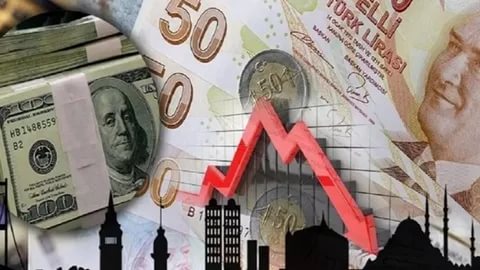
An economic model built on foreign currency inflows, where citizens earn in a rapidly depreciating local currency (Turkish Lira, TL) but must pay rent and essentials in hard currencies like the British Pound (Sterlin) or Euro, is creating a profound social and economic crisis in the Turkish Republic of Northern Cyprus (TRNC or KKTC).
Despite its international isolation, the TRNC has experienced what appears to be a dazzling period of paper growth since the early 2000s, transforming its major cities with high-rise buildings, luxury hotels, and sprawling university campuses. However, according to economic analysis, this prosperity is a facade—a precarious structure of “artificial growth” that has significantly widened the gap between a small, wealthy, dollar-earning elite and the vast majority of the local population.
The TRNC, unable to engage in global trade or industry due to ongoing international embargoes, shifted its economic strategy from reliance on a bloated public sector and state transfers from Turkey to exporting services. This plan was built on two primary pillars: higher education and offshore casino tourism.
The Engines of Foreign Currency
The education sector became the first and most powerful locomotive. Since the turn of the millennium, the number of universities has surged past 20, attracting over 100,000 foreign students, primarily from Turkey, Africa, and the Middle East. The logic was simple: these students would bring foreign currency by paying tuition fees and rent in stable currencies like the Euro or Sterling, thus injecting much-needed hard cash into the economy.
Simultaneously, the tourism sector found its niche in casino-based holidays. Capitalising on a legislative loophole (casinos are restricted in Turkey), massive five-star, all-inclusive resorts were erected, primarily catering to tourists from the mainland. This, coupled with the student boom, fueled a massive construction surge, creating the illusion of a vibrant, rapidly developing state.
The Sterling Trap: A Crisis of Survival
Yet, a closer look reveals severe structural flaws that are tearing at the social fabric. The most brutal consequence is the emergence of a domestic cost-of-living and housing crisis.
The massive influx of students and foreign investment—often including questionable capital from countries like Russia and Iran—created an insatiable demand for housing. Developers started building not for the local population, but for the guaranteed foreign currency income from student dorms and rental properties. Rent prices, particularly in key areas like Kyrenia (Girne) and Nicosia (Lefkoşa), were rapidly indexed to Sterling, making them entirely unaffordable for civil servants, teachers, and laborers whose salaries are paid in Turkish Lira (TL).
The result is a devastating income disparity. A small minority that earns in or deals with foreign exchange thrives, while the vast majority see their purchasing power erode daily. The analyst notes that this makes homeownership a distant dream and renting a “nightmare that grows with every currency spike,” forcing the local Turkish Cypriot population into the position of “refugees in their own homeland.”
The problem is compounded by a high degree of import dependence. While the country receives foreign exchange from tourism and education, almost everything consumed—from construction materials to food and technology—is imported. This means the incoming hard currency immediately leaves the island to finance these imports, offering minimal long-term support to local production, agriculture, or industry.
Importing Instability: The TL Dilemma
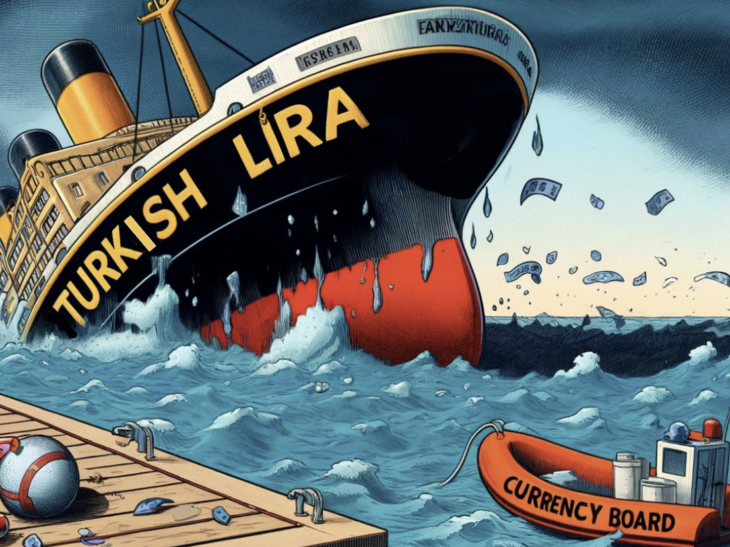
The single greatest source of the TRNC’s economic fragility remains its complete reliance on the Turkish Lira. Lacking its own central bank and monetary policy, the TRNC is forced to directly import Turkey’s economic instability. The moment Ankara announces an interest rate decision, the price of milk on a shelf in Nicosia is effectively determined. Turkey’s chronically high inflation and currency crises are transferred without any protective filters, often resulting in an inflation rate in the TRNC that is even higher than in Turkey itself.
This highlights the core dilemma: the post-2000 economic model did not create genuine, self-sustaining development. Instead, it created dependent capitalism—a model perpetually tied to external currency inflows and transfer payments from Turkey, which are now being conditioned on harsh, IMF-style neoliberal reforms like privatisation and the downsizing of the public sector.
The money enters the economy, but due to a critically low “local content” (the percentage of goods and services sourced domestically by the booming sectors), the funds do not circulate locally to create lasting wealth.
The video concludes that for the TRNC, the goal of “standing tall” has not been synonymous with “developing.” The current model ensures survival at the cost of its economic self-determination, trapping its citizens in a vicious cycle where a select few are enriched, while the majority struggle to afford to live in the land they call home. Structural solutions, such as implementing a local content rule for major sectors and creating Turkish Lira-anchored housing regulations, are suggested as necessary steps to mitigate the social and economic damage.
YouTube video by Ceyhun Elgin