The Bahçeli Model: A Fractured Peace Process Faces Internal Rift in Ankara
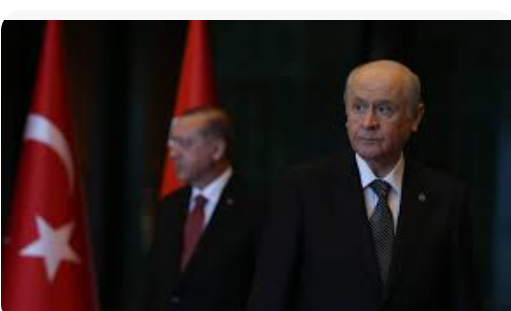 bahceli erdogan
As Turkey’s ruling bloc attempts to push forward a historic peace initiative with the PKK, political fractures are emerging over leadership, vision, and conflicting alliances. Despite MHP’s unwavering commitment, the broader coalition appears anything but unified.
A Voice of Reason in Ankara
Feti Yıldız, Deputy Chairman of Turkey’s Nationalist Movement Party (MHP), has become an increasingly important voice in Turkey’s political establishment. Known for his legal background and moderate tone during high-stakes political moments, Yıldız has emerged as a symbol of pragmatism within the ruling coalition.
His influence within the MHP and the broader government bloc is growing. One anecdote stands out: during a past meeting between former CHP leader Hikmet Çetin and MHP Chair Devlet Bahçeli, Bahçeli reportedly responded to a request by saying, “I’ll talk to Feti Bey—he’ll handle it.” The remark reflects the growing weight of Yıldız’s counsel within the alliance.
The “Bahçeli Model” for a Terror-Free Turkey
Yıldız recently made headlines with his endorsement of the so-called “Bahçeli Model” as the foundation for a sustainable peace process with Kurdish insurgent groups. His comment was striking:
“This process is called the Bahçeli Model. Once completed, it will serve as a global example and enter academic literature as the key to resolving conflicts.”
While the rhetoric may sound exaggerated to some, many within the MHP—and even outside it—agree that if the current peace initiative succeeds, it will largely be due to Devlet Bahçeli’s political will and strategic leadership.
Erdoğan’s Reluctant Embrace
The ruling alliance, however, is far from unified on the process. Minister of National Defense Yaşar Güler recently stated:
“This historic process, under the leadership of our President, strengthens national unity and is a clear sign of our commitment to a safe and prosperous future.”
But critics point out that President Erdoğan only fully embraced the peace initiative after Bahçeli’s clear endorsement gave it political cover—particularly in the eyes of the nationalist base. For months, Erdoğan kept a measured distance, while DEM Party representatives and even Abdullah Öcalan took cues directly from Bahçeli’s public statements.
Thus, attributing the initiative solely to Erdoğan, as Minister Güler suggests, appears to ignore the political sequencing and undercuts Bahçeli’s central role.
Discord Over Strategic Outcomes
Disagreements extend beyond authorship. Key institutions within the Turkish state also differ over what the endgame should look like—especially in relation to Kurdish autonomy in northern Syria.
Security and intelligence briefings delivered to Parliament revealed that while PKK could be eradicated domestically, a U.S.-backed autonomous Kurdish zone under the Syrian Democratic Forces (SDF) may persist in Syria. Turkish officials are reportedly exploring whether this entity could be reshaped into a Northern Iraq-style authority—engaged economically with Turkey and severed from hostile groups.
Yet these ideas clash directly with PKK leader Abdullah Öcalan’s reported insistence—relayed by DEM MP Pervin Buldan—that “Rojava is my red line.”
Güler’s Hardline Position Deepens Confusion
During a visit to war veterans, Minister Güler seemed to dismiss any accommodationist approach:
“We will never allow any terrorist organization—PKK, YPG, or SDG—to take root in the region or operate under any name.”
His uncompromising language adds to the mixed messaging, creating uncertainty both inside government and among international observers over Turkey’s ultimate intentions in Syria and the Kurdish issue more broadly.
The Hizbullah Controversy
Adding further fuel to the political fire, the AKP-led coalition extended an invitation to a controversial group affiliated with Turkish Hizbullah—a radical Islamist organization—to join a parliamentary commission on the peace process. The group, operating under the name Tebliğ Tedris İlim Hareketi Adamları Derneği, was formally invited as a “civil society organization.”
Its chairman Bekir Şimşek made a speech so incendiary that both the pro-Kurdish DEM Party and coalition members from the AKP and MHP expressed outrage. DEM MPs walked out of the session in protest. CHP had already voiced objections before the group even appeared.
This episode has undermined what little trust remains between the ruling bloc and opposition actors involved in the process, and cast further doubt on the credibility of Ankara’s intentions.
Can the Bahçeli Model Survive Internal Dissent?
While many, including journalist Deniz Zeyrek, genuinely hope the “Bahçeli Model” will succeed and enter the history books, the contradictions within the ruling coalition raise serious concerns.
From disagreements over authorship and political ownership, to fundamental disputes over the status of Kurdish groups in Syria, and the bizarre inclusion of Hizbullah-linked actors—Turkey’s roadmap to peace is riddled with potholes.
Without a unified message from the government—and consistent, credible mechanisms to engage both domestic and regional Kurdish actors—the initiative risks becoming another short-lived experiment in conflict management rather than a durable peace process.
Author: Mr Deniz Zeyrek, translated from Nefes Daily
IMPORTANT DISCLOSURE: PA Turkey intends to inform Turkey watchers with diverse views and opinions. Articles in our website may not necessarily represent the view of our editorial board or count as endorsement.
Follow our English language YouTube videos @ REAL TURKEY: https://www.youtube.com/channel/UCKpFJB4GFiNkhmpVZQ_d9Rg
And content at Twitter: @AtillaEng
Facebook: Real Turkey Channel: https://www.facebook.com/realturkeychannel/