Social Aid Spending in Türkiye Nears $150 Billion, Driven by Pensions and Aging Population
 sosyal yardım
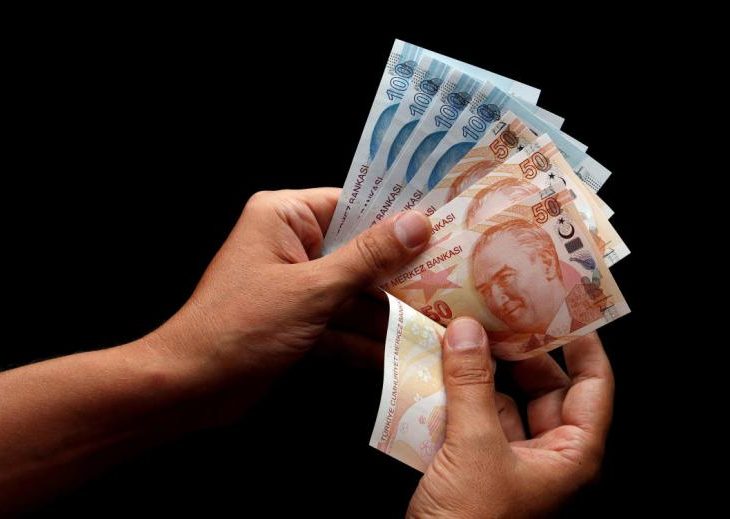
Türkiye’s social protection spending surged sharply in 2024, approaching 5 trillion lira, with retirees and the elderly accounting for nearly half of all benefits, according to official data. The figures highlight how social protection has become a central pillar of public finances, reflecting inflation, demographic pressures and rising benefit levels.
Türkiye’s social protection system expanded dramatically in 2024, with total spending rising 84.1% year-on-year to 4.96 trillion Turkish lira, according to data released by Turkish Statistical Institute (TurkStat).
Almost all of that amount — 98.2%, or 4.88 trillion lira — was paid out directly as social protection benefits, underscoring the benefit-heavy structure of Türkiye’s welfare system. Administrative and auxiliary expenditures accounted for only a marginal share.
Turkey’s 2026 Budget Passes Critical Milestone Amid “Fiscal Collapse” Warnings from Opposition
Pensions Dominate Social Protection Outlays
At the core of the system are retirees and the elderly, who absorbed the single largest share of spending. In 2024, pension and old-age benefits reached 2.28 trillion lira, making up close to half of all social protection expenditures.
The scale reflects both rapid inflation-driven benefit adjustments and Türkiye’s aging population, which continues to expand the number of pension recipients.
Health-related spending ranked second, with 1.53 trillion lira allocated to illness and health care services, highlighting rising treatment costs and sustained demand for public health coverage. Support for widows and orphans followed as the third-largest category.
Social Protection Reaches 11% of GDP
Measured against economic output, the expansion becomes even more striking. Social protection spending accounted for 11.1% of gross domestic product (GDP) in 2024, while direct social benefits alone equaled 10.9% of GDP.
By risk and need category:
-
Pensions and old-age support accounted for 5.1% of GDP,
-
Health and illness-related spending made up 3.4%,
-
Widow and orphan benefits reached 1.1%.
The structure indicates that Türkiye’s welfare model is increasingly shaped by demographic pressures rather than labor-market volatility.
Conditional Aid Remains Limited
Not all assistance is automatic. TurkStat data show that 11.3% of social protection benefits were conditional in 2024, linked to eligibility criteria such as education, health checkups or disability status.
Within conditional assistance:
-
Family and child benefits accounted for 51.2%,
-
Disability and invalidity support made up 19.3%,
-
Health-related conditional aid represented 12.3%.
Cash Transfers Still Define the System
Despite the range of programs, Türkiye’s welfare system remains overwhelmingly cash-based. 62.5% of all social protection benefits were delivered as cash payments in 2024.
Among cash transfers:
-
74.2% went to retirees and the elderly,
-
16.1% to widows and orphans,
-
4.1% to family and child assistance.
This distribution further reinforces the central role of pensions within the system.
Who Finances Türkiye’s Welfare State?
Funding such a large system relies on a hybrid financing model:
-
State contributions covered 41.8% of social protection income,
-
Employers provided 29.4% through social security contributions,
-
Individuals covered by the system contributed 21.6% themselves.
The mix places Türkiye between tax-funded welfare states and contribution-based social insurance systems, raising questions about long-term sustainability as benefit levels continue to rise.
Growing Coverage, Growing Pressure
The expansion in spending has been matched by broader coverage. The number of people receiving pensions or regular allowances under social protection schemes rose 3.5% to 17.48 million in 2024, up from 16.89 million a year earlier.
The total number of benefit payments — including cases where individuals receive multiple forms of support — climbed to 18.34 million, reflecting a system that is both growing in size and deepening in reach.
A Central Pillar of Public Finance
For foreign observers, the scale is significant. Social protection is no longer a peripheral policy area in Türkiye; it has become one of the largest components of public spending.
The data suggest that the key question facing policymakers is no longer whether social protection will continue to expand, but how long such rapid expansion can be sustained amid inflation, demographic change and fiscal constraints.
Source: TurkStat, BirGün, Turkish Minute
PA Turkey intends to inform Turkey watchers with diverse views and opinions. Articles on our website may not necessarily represent the view of our editorial board or count as endorsement.
Follow our English YouTube channel (REAL TURKEY):
https://www.youtube.com/channel/UCKpFJB4GFiNkhmpVZQ_d9Rg
Twitter: @AtillaEng
Facebook: Real Turkey Channel: https://www.facebook.com/realturkeychannel/***