



Şimşek: 2026 Will Be the Year Turkey Feels Relief as Inflation Falls
 mehmet-simsek
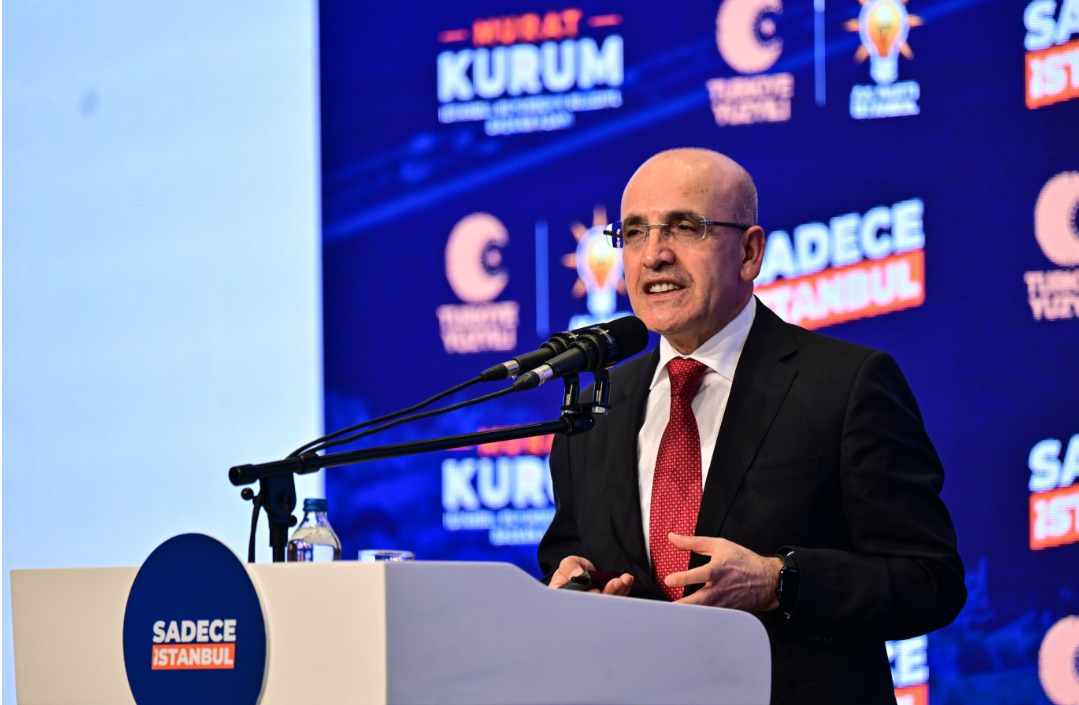
Turkey is entering a decisive phase in its economic program, according to Mehmet Şimşek, who has declared 2026 the year when declining inflation and rising prosperity will be felt tangibly by citizens. Speaking at a ceremony hosted by Batman University, where he was awarded an honorary doctorate, Şimşek outlined a roadmap that places price stability, social welfare, and regional development at the center of economic recovery.
The minister emphasized that the policies currently in force are designed not only to stabilize macroeconomic indicators but also to directly improve the purchasing power of low- and fixed-income groups. According to Şimşek, 2026 will mark the phase when the economic program begins to deliver visible, everyday benefits for society at large.

Inflation Target: Below 20 Percent and Toward Single Digits
One of the most critical messages delivered by Şimşek was the government’s inflation target. He reaffirmed that inflation is expected to fall below 20 percent in 2026, describing this threshold as a psychological and economic milestone. The minister noted that the perception of high prices—often referred to as the “cost-of-living pressure”—will significantly weaken as inflation slows.
In Şimşek’s assessment, inflation control is not an end in itself but a means to restore confidence, stabilize consumption patterns, and encourage long-term investment. He underlined that the program prioritizes the financial well-being of wage earners, retirees, and other fixed-income groups who have been most affected by recent price volatility.
Alongside disinflation, Şimşek expects stronger and more balanced growth, tighter fiscal discipline, and the completion of reconstruction efforts in earthquake-affected regions. These elements, he said, form a mutually reinforcing framework aimed at sustainable economic normalization.

“Terror-Free Turkey” Vision and a New Industrial Geography
A central pillar of Şimşek’s outlook is the economic dimension of the “Terror-Free Turkey” vision. According to reporting by Dünya Gazetesi, the minister framed the normalization of security conditions in Eastern and Southeastern Anatolia as a historic economic opportunity.
Şimşek stated that nearly $ 2 trillion has been spent over the past 47 years on counterterrorism efforts. With the easing of security risks, these resources can now be redirected toward productive investment, infrastructure, and social development. He described this shift as the emergence of a new growth engine for the Turkish economy.
The region, he noted, possesses a combination of advantages rarely found together: a young and dynamic population, fertile agricultural land, strategic logistics potential, and an improving investment climate driven by stability. As a result, Eastern and Southeastern Turkey are expected to evolve into new manufacturing and production hubs, attracting both domestic and international investors.
Regional Development as a Driver of National Prosperity
Şimşek stressed that economic integration following the end of terror will not be limited to Turkey alone. Improved security conditions are expected to facilitate stronger economic ties with neighboring countries, thereby expanding trade, logistics, and industrial cooperation across borders.
According to the minister, this integration will help lift the entire region, creating a cycle in which peace supports growth and growth reinforces stability. He described peace and security not as abstract concepts, but as the precondition for lasting prosperity.
In this framework, Eastern and Southeastern Anatolia are not positioned as peripheral regions but as central contributors to Turkey’s future industrial capacity. The transformation, Şimşek argued, will rebalance regional development disparities while strengthening national competitiveness.
Turkey’s Role as a Regional Economic Anchor
Şimşek also highlighted Turkey’s comparative advantage in industrial capacity and production capabilities relative to its surrounding geography. He stated that Turkey is “ahead in every sense” compared with neighboring countries in manufacturing depth, infrastructure, and human capital.
This advantage, he argued, enables Turkey to act as a stabilizing economic force in its region. A terror-free, economically resilient Turkey could serve as a gateway for investment, trade, and reconstruction efforts that extend beyond its borders, contributing to broader regional stability.
By leveraging its industrial strength and improving the security environment, Turkey aims to convert geopolitical challenges into economic opportunities, positioning itself as both a regional leader and a growth partner.
2026 as the Year Results Become Visible
Şimşek concluded by reiterating that 2026 will be the year when the outcomes of disciplined economic management become evident in daily life. Lower inflation, more vigorous growth, improved fiscal balance, and expanding industrial capacity—particularly in the East and Southeast—are expected to reshape economic expectations.
For households, this translates into easing cost-of-living pressures. For businesses, it signals a more predictable environment. And for the country as a whole, it represents a shift from crisis management toward long-term, inclusive development.