Sharaa’s Fragile Grip: Sectarian Violence Threatens to Tear Syria Apart
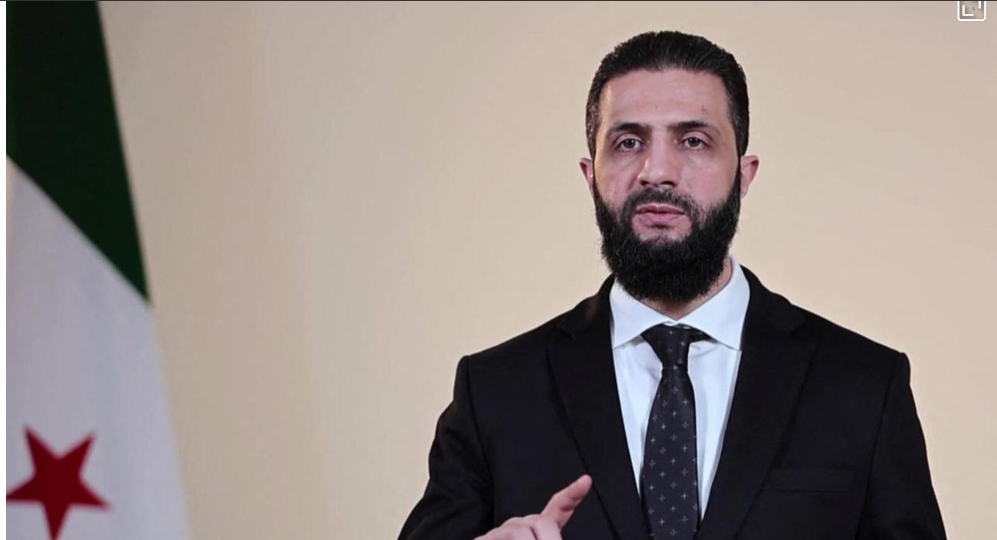 al sharaa
Summary:
Despite a string of diplomatic victories and international recognition, Syrian President Ahmed al-Sharaa now faces his greatest internal threat yet: rising sectarian tensions that risk fracturing Syria into ethnic enclaves. With growing unrest among Druze, Kurdish, and Alawite communities — and the shadow of Israeli involvement — the promise of a unified Syria under Sharaa’s rule is increasingly in doubt.
Diplomatic Success, Domestic Fragility
Nine months into his presidency, Ahmed al-Sharaa has transformed himself from former jihadist commander to internationally recognized statesman. After gaining U.S. support and lifting of major sanctions during a landmark summit in Riyadh with President Trump, Sharaa is expected to address the UN General Assembly in New York — the first Syrian leader to do so in nearly six decades.
But while he may be winning applause abroad, the battle at home is far from over. Sectarian and ethnic divisions that defined Syria’s brutal 14-year civil war are resurfacing with renewed intensity, raising fears that the country could splinter along communal lines.
Druze Rebellion in the South
In Sweida, a southern region home to the Druze minority, violent clashes in July between government forces and Druze militias have ignited calls for independence. The local spiritual leader, Sheikh Hikmat al-Hajari, accused pro-government Bedouin militias of attempting to “eliminate” the Druze and publicly thanked Israel for intervening militarily — including an airstrike on Syria’s Defence Ministry in Damascus.
Checkpoints, patrols, and local councils in Sweida are now under the control of Druze fighters. Protests in August saw demonstrators waving both Druze and Israeli flags, demanding autonomy or full independence. “They’re pushing us toward partition,” said Abu Bilal, a Druze father of three.
Sharaa’s government has denied any intent to divide the country. “If federalism or decentralization means partition, then they are unacceptable,” he told Arabic-language editors last month. However, the rising tensions suggest otherwise.
Kurds Demand Constitutional Recognition
Meanwhile, in northeast Syria, the Kurdish-led Syrian Democratic Forces (SDF) have stalled implementation of a March agreement that would see them hand over key energy assets in exchange for integration into the Syrian state.
Kurdish leaders argue that the interim constitution approved by Sharaa fails to guarantee minority rights. Abdelwahab Khalil, an SDF council member, told Reuters that without a framework of political equality, “military integration alone is not sufficient.”
The Kurds — long supported by the United States and accused by Turkey of links to the PKK — have indicated a willingness to remain part of Syria, but only with “genuine partnership and constitutional recognition.”
Turkish Pressure and U.S. Ambiguity
Turkey, which has emerged as a key ally of Sharaa, is growing increasingly impatient with the Kurdish holdout. Ankara, which views the northern Kurdish enclave as a national security threat, has reportedly offered training and munitions to Syria’s military in preparation for a potential offensive.
Damascus has asked for time to continue negotiations, but a senior official admitted the deadline expires at year’s end. “We believe President Trump has given Turkey a green light,” the official said.
The White House declined to comment, but a U.S. State Department spokesperson emphasized that “unity must come from the Syrian people” and the U.S. seeks “a stable, peaceful, and prosperous Syria.”
Alawite Alarm Bells Ring
In Syria’s northwest, the traditionally dominant Alawite minority — the sect of former President Bashar al-Assad — is also growing disillusioned. In March, hundreds of Alawite civilians were massacred by Sunni militants believed to be aligned with Sharaa’s administration. Community leaders now accuse the government of promoting an “extremist religious ideology.”
In the coastal village of Qardaha, Assad’s ancestral home, locals speak of fear and betrayal. “We want a proper state: a rule of law — not a gang ruling us,” said Abu Hassan, a shopkeeper in his 50s.
Young men and women avoid checkpoints manned by government forces, fearing harassment or worse. Some report kidnappings of Alawite girls — claims the government has denied. Amnesty International has urged Damascus to investigate these alleged abductions.
Many Alawites are now openly discussing partition or seeking international protection, a sentiment echoed by diaspora leaders in the U.S. The newly formed Alawites Association of America is lobbying Congress for safeguards and pushing for a decentralized governance model.
An Emerging Alliance of Minorities?
In late August, 400 representatives from Syria’s minority communities — including Druze, Alawites, and Kurds — met in Hassakeh to explore the creation of a decentralized Syrian state. The meeting, hosted by Kurdish leaders, concluded with a joint statement calling for a new constitution that guarantees minority rights.
Ghazal Ghazal, a senior Alawite cleric, warned at the summit that Sharaa’s regime “threatens the survival of minorities.” Reports also suggest growing behind-the-scenes coordination between Druze leaders and Israel.
One Syrian official acknowledged that reconciliation would take years. “The rifts are extremely deep. We must start with prisoner exchanges and repatriation of displaced people,” he said.
Christians: Tense but Tolerated
While spared the worst of the sectarian conflict, Syria’s Christian communities remain uneasy. In Wadi al-Nasara — the lush “Valley of the Christians” — life remains relatively normal under minimal government oversight. Yet many residents told Reuters that they fear being trapped in a country where minorities are systematically sidelined.
In Damascus, a suicide bombing in the Christian neighborhood of Dweileh in June left 25 dead, shaking the already-nervous community. “This is a mixed area — Christian, Alawite, Sunni — but no one feels safe anymore,” said shopkeeper Saeed Bassolo.
Israel’s Role: Protector or Provocateur?
The Israeli government, while officially silent, has become an active player in Syria’s internal affairs. Its military interventions in Sweida and southern Syria are viewed by Damascus as deliberate attempts to stir division.
Yet among the Druze and some Alawites, Israel is seen as a protector. “Without them, we’d have been overrun,” one Druze elder told Reuters anonymously.
The emerging cooperation between Israeli-backed groups and Syrian minorities presents a geopolitical challenge for Sharaa’s government and its allies, including Turkey and Russia.
From Warlord to Statesman — Or Just a Regional Strongman?
Ahmed al-Sharaa’s transformation from ex-jihadist warlord to president of a diplomatically engaged Syria was once seen as a success story in the making. But unless he can navigate the treacherous terrain of sectarian reconciliation, that story may yet end in fragmentation.
Andrew Tabler, a Syria expert at the Washington Institute, summed it up: “Sharaa can’t unify Syria through force alone. He must offer real political concessions — or accept ruling over a divided nation.”
Source: Reuters
IMPORTANT DISCLOSURE: PA Turkey intends to inform Turkey watchers with diverse views and opinions. Articles in our website may not necessarily represent the view of our editorial board or count as endorsement.
Follow our English language YouTube videos @ REAL TURKEY: https://www.youtube.com/channel/UCKpFJB4GFiNkhmpVZQ_d9Rg
And content at Twitter: @AtillaEng
Facebook: Real Turkey Channel: https://www.facebook.com/realturkeychannel/