Rivalry Inside AKP? Race Among Hakan Fidan, Bilal Erdoğan and Selçuk Bayraktar as Post-Erdoğan Era Looms
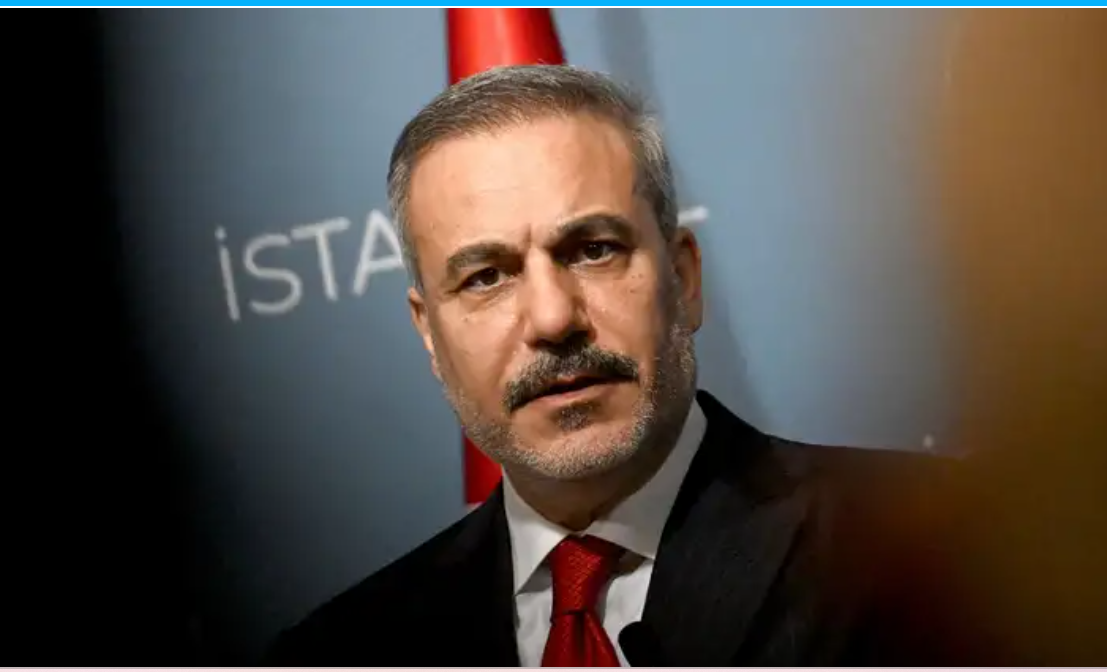 hakan fidan
As political pressure intensifies on the opposition and Türkiye reopens debates about a new peace process, signs are emerging of an internal power struggle in the ruling Justice and Development Party (AKP) over who might shape the post-Erdoğan era. Despite President Erdoğan’s term technically ending in 2028, developments involving Foreign Minister Hakan Fidan, Bilal Erdoğan and Selçuk Bayraktar are fueling speculation about a behind-the-scenes contest for influence.
Erdoğan’s Successor? Ankara Rumors Intensify
Türkiye’s political spotlight has focused on judicial probes targeting the CHP, municipal investigations, and discussions of a renewed Kurdish peace process. But another story is quietly unfolding: who runs Türkiye after Erdoğan?
Multiple political signals suggest an internal, unofficial rivalry within the AKP as Erdoğan approaches the constitutional end of his term in 2028. Even though pro-government circles are exploring ways to enable another candidacy, Ankara insiders increasingly talk about competing centers of power.
Three names appear repeatedly:
| Possible Post-Erdoğan Contenders | What Makes Them Important |
|---|---|
| Hakan Fidan – Foreign Minister, former intelligence chief | Controls state diplomacy and security networks |
| Bilal Erdoğan – President’s son, senior figure in TÜGVA | Expanding international network, full visibility on Erdoğan’s foreign trips |
| Selçuk Bayraktar – Erdoğan’s son-in-law, head of Baykar | Controls defence-industry capital and prestige |
The YÖK Controversy: A Trigger for Speculation
The latest trigger came from CHP Deputy Chair Namık Tan, a former ambassador. Tan revealed—using official documents—that Hakan Fidan allegedly began a master’s programme at Bilkent University without receiving formal equivalency approval from the Higher Education Council (YÖK).
Tan had submitted a parliamentary question about this three months earlier. YÖK only responded after prolonged silence.
Analysts in Ankara say the timing of the answer is telling:
“This was interpreted as a sign that power struggles inside AKP are spilling into bureaucracy.”
YÖK rarely responds promptly to parliamentary questions. In the current legislative session:
-
30,546 Written Questions submitted by MPs
-
Only 4,003 answered on time
-
8,792 received no response at all
That makes the sudden reply to Tan even more politically significant.
Is There a Post-Erdoğan Race?
Officially, Erdoğan is scheduled to complete his second (and final) term in 2028. For him to run again, either:
-
The Constitution must be changed (requires 360–400 parliamentary votes), or
-
Parliament must declare early elections (requires 360 votes).
Neither scenario is guaranteed.
With uncertainty rising, internal jockeying appears to be accelerating.
In September 2025, after Erdoğan met U.S. President Donald Trump, Hakan Fidan held a press conference in New York and publicly disclosed that the engine approvals for Türkiye’s new fighter jet KAAN were blocked in the U.S. Congress. Some pro-government commentators interpreted this as a direct hit on Selçuk Bayraktar, whose defence projects drive his growing political influence.
Political scientist Dr. Nurettin Kalkan argues that what looks like a succession battle is actually a deeper contest:
“This is not a leadership race. It is a struggle over who controls capital allocation and economic rents after Erdoğan.”
“Building Their Own Loyalty Regimes”
Dr. Kalkan describes the current system as “crony capitalism with bureaucratic autonomy.”
With weakened oversight and blurred accountability:
-
Bureaucrats aligned with Fidan, Bilal Erdoğan, or Bayraktar
-
Are building their own networks of influence, ahead of 2028
-
While continuing to recognize Erdoğan as the undisputed leader
“The preparations have already begun. Bureaucratic cliques around these figures aim to secure economic ammunition for the post-Erdoğan period.”
The MHP Factor: Bahçeli’s Parallel-Structure Warnings
MHP leader Devlet Bahçeli—Erdoğan’s nationalist coalition partner—has recently warned of “parallel structures” inside the state. In September he said:
“We must urgently investigate whether a new parallel structure has infiltrated the state.”
Analysts believe Bahçeli’s remarks are an indirect reference to competing bureaucratic factions within state institutions.
Bigger than Leadership: Control of Economic Power
According to Dr. Kalkan, the real race is not over a seat—but over control of indispensable economic sectors, especially defence:
“Bureaucratic clusters in sectors like defence are positioning themselves for the future, using financial resources to strengthen their networks.”
Selçuk Bayraktar’s Baykar, for instance, has become one of the most strategically valuable companies in the country—turning him into a political actor as much as a tech entrepreneur.
Outlook
There is no open succession contest inside AKP—yet.
But:
-
bureaucratic blocs are forming,
-
influence networks are being built, and
-
positions are being taken for an era without Erdoğan.
For now, Erdoğan remains the ultimate decision-maker. But for the first time in two decades, AKP insiders are preparing for a future in which he may not be at the top.
Turkish press sources, DW Turkish
PA Turkey intends to inform Turkey watchers with diverse views and opinions. Articles in our website may not necessarily represent the view of our editorial board or count as endorsement.
Follow our English language YouTube videos @ REAL TURKEY
Twitter: @AtillaEng
Facebook: Real Turkey Channel