Rising Tensions Put Turkey and Israel on Potential Collision Course in Syria
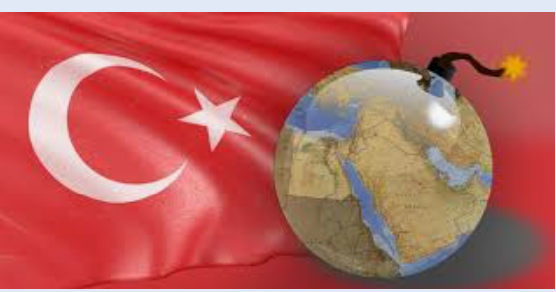 tr-gaza-israel
Security experts warn that escalating disputes over Syria could push Turkey and Israel toward direct confrontation, as competing agendas and overlapping military operations heighten the risk of conflict between the two regional powers.
Syria Emerges as a Flashpoint
Ankara and Jerusalem are increasingly at odds over developments in war-torn Syria. Turkish Foreign Minister Hakan Fidan warned this week that Turkey would “intervene” if it detects moves to fragment or destabilize the country, following Israeli airstrikes and incursions during deadly sectarian clashes.
Israel has maintained a self-declared “buffer zone” in southern Syria since the overthrow of Bashar al-Assad in December, pledging to enforce “demilitarisation” south of Damascus. Some Israeli ministers, including far-right Finance Minister Bezalel Smotrich, have openly called for Syria’s partition, backing autonomy for minorities such as Druze and Kurds.
Turkey, which has controlled swathes of northern Syria since 2016, opposes any Kurdish autonomy, having fought the PKK for decades. Ankara recently reached a disarmament deal with the group, while establishing close ties with Syria’s new government, dominated by former HTS rebels.
From Trade Freeze to Diplomatic Crisis
Relations between the two countries, already strained by Turkey’s suspension of trade with Israel over its Gaza campaign, have now hit what analysts call “crisis” levels. President Recep Tayyip Erdoğan has compared Israeli Prime Minister Benjamin Netanyahu to Hitler, while Turkish officials have floated the idea of military intervention against Israel.
Dr. Ali Bakir of Qatar University and the Atlantic Council warned that Israel’s “expansive and destabilising” approach in Syria increases the chances of both direct and proxy clashes with Ankara. These could range from “gray-zone” sabotage operations to open exchanges of fire, he said.
Mutual Suspicion and Military Buildup
An Israeli government report earlier this year flagged the “threat” of Turkish-Israeli clashes in Syria, suggesting Ankara aims to expand its influence as part of a broader neo-Ottoman vision. Israeli analysts have accused Turkey of hosting Hamas leaders and pursuing regional hegemony.
While Israel says it has no territorial ambitions in Syria, it remains in place until the government is “stable and reliable”—a stance that irritates Ankara. Both nations maintain significant forces inside Syria, increasing the risk of confrontation.
Israel’s military posture has grown bolder since the October 7 Hamas attacks, with expanded operations across Lebanon, Iran, and Syria. Former Israeli diplomat Itamar Rabinovich described this as a “mixture of paranoia and confidence” born from recent battlefield successes.
Arms Race in the Eastern Mediterranean
Turkey is rapidly modernising its armed forces, unveiling new hypersonic missiles and moving toward a deal for advanced fighter jets from the UK and European partners. Israeli officials warn this could challenge their military edge.
Dr. Bakir notes that Turkey, as NATO’s second-largest army, is already the most powerful conventional force in the region. While there are growing domestic calls in Turkey for nuclear capabilities, analysts see this as unlikely in the short term.
High Stakes, Delicate Diplomacy
Despite tensions, experts believe both governments will try to avoid open war, given their close ties to Washington and the risks of escalation. Professor Kobi Michael of Israel’s INSS think tank called the situation “very delicate,” requiring “wise statesmanship” to prevent a dangerous slide into conflict.
Source MSN
IMPORTANT DISCLOSURE: PA Turkey intends to inform Turkey watchers with diverse views and opinions. Articles in our website may not necessarily represent the view of our editorial board or count as endorsement.
Follow our English language YouTube videos @ REAL TURKEY: https://www.youtube.com/channel/UCKpFJB4GFiNkhmpVZQ_d9Rg
And content at Twitter: @AtillaEng
Facebook: Real Turkey Channel: https://www.facebook.com/realturkeychannel/