



Report Shows Emerging Markets Can Withstand U.S. Tariff Pressure
 trump
trump
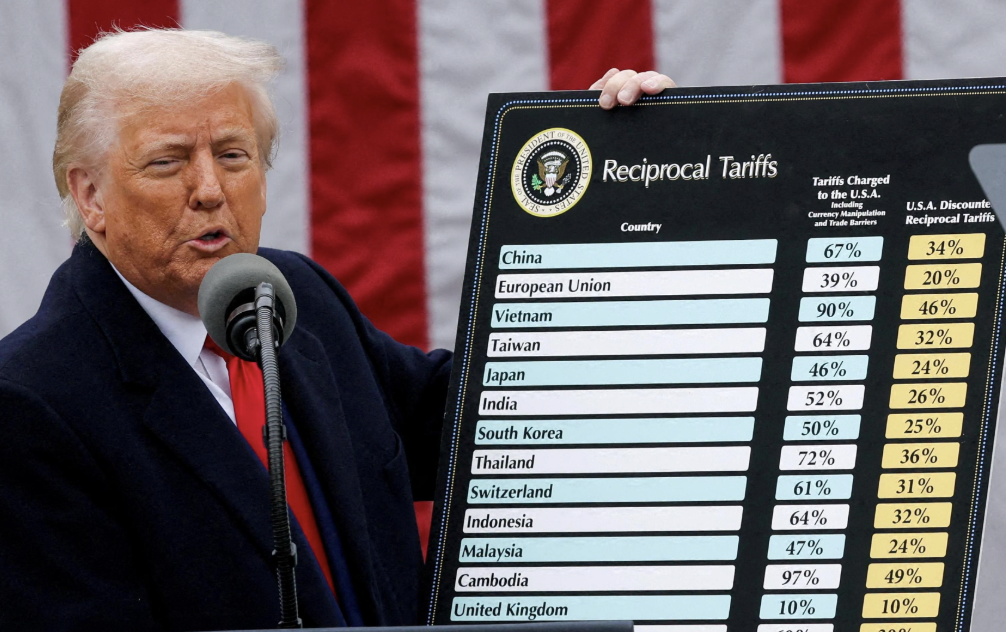
A new report by the risk consultancy firm Verisk Maplecroft suggests that major emerging economies, such as China, Brazil, and India, are significantly more resilient to U.S. tariff pressure than is commonly assumed. The findings raise doubts about the effectiveness of former President Donald Trump’s preferred trade tools if applied aggressively in the current global environment. The firm examined the top twenty emerging markets using metrics that included external debt burdens, reliance on export revenues and the ability to adapt to rapidly shifting geopolitical alignments. The research indicates that many developing economies have established structural safeguards that enable them to manage trade volatility more effectively than outdated assumptions suggest.
Global Manufacturing Centers Display Stronger Stability
Reema Bhattacharya, Head of Asia Research at Verisk Maplecroft and one of the report’s authors, emphasized that global production hubs are in a stronger and more durable position than many observers realize. She explained that most major manufacturing centers are better equipped to withstand a wave of tariffs from the United States, even at full intensity. Her assessment highlights that many emerging economies now benefit from diversified industrial bases, improved infrastructure, and expanded networks of trade partners. These advantages reduce the threat of sudden tariff shocks and help stabilize production and export activity.
Mexico and Vietnam Show Resilience Despite High Exposure
The study highlights Mexico and Vietnam as the two countries most directly exposed to U.S. trade dependence. Both nations maintain substantial export flows to the United States, which theoretically places them at greater risk in a scenario of heightened tariffs. However, the report concludes that they remain among the most resilient economies in the developing world. Their capacity to weather potential tariff pressure is supported by continuing infrastructure modernization, increasingly open economic policies, and improvements in political and regulatory stability. Mexico’s deep integration into North American supply chains and Vietnam’s rapid rise as a manufacturing center in electronics, textiles and consumer goods reinforce their ability to adapt to external pressures.
Brazil and South Africa Benefit From Broader Partnerships
Brazil and South Africa are also singled out for their increasing ability to navigate economic uncertainty. Both countries have strengthened ties with a range of international partners, reducing reliance on any single economic power and creating additional buffers against future disruptions. By building new trade connections and diversifying commercial links, these countries have improved their resilience to shifts in global tariff policies. This pattern mirrors a broader trend among emerging markets that have become more cautious about placing excessive dependence on either the United States or China as their primary economic anchor.
BRICS Trade Momentum Reduces Vulnerability
Bhattacharya noted that trade within the BRICS group has been expanding rapidly. She explained that nearly every emerging economy understands that doing business with both the United States and China is essential, yet depending heavily on either one is increasingly risky. For this reason, countries are actively looking for an additional market to serve as a third pillar of trade stability. This strategy is reshaping global commerce as emerging markets pursue more balanced and diversified partnerships. The expansion of trade within the BRICS framework demonstrates a growing commitment to establishing alternative supply chains and mitigating exposure to geopolitical rivalry.
China Remains Deeply Embedded in Global Supply Chains
Although China faces some of the highest geopolitical tensions with the United States, the report indicates that it remains one of the most resilient economies in global manufacturing. Bhattacharya stated that China is so deeply established that recreating its industrial scale elsewhere is extremely difficult. She pointed to China’s wide-ranging export base, abundant human capital, and sophisticated logistics systems as core reasons for its continued dominance. Despite efforts by multinational companies to diversify production, China’s manufacturing ecosystem remains too extensive to be replicated in the short term.
A Shift Toward a More Balanced Global Trade System
Overall, the Verisk Maplecroft study suggests that the global trade landscape is becoming more multipolar and less vulnerable to unilateral pressure from U.S. tariff policy. Emerging economies are strengthening internal foundations, building new regional ties, and creating more flexible supply routes. These developments reduce their dependence on traditional power centers, allowing them to absorb external shocks more effectively. The report’s conclusion is clear: the world’s largest emerging markets are better positioned than many expect, and U.S. tariff measures may no longer hold the same leverage they once did.