Poll Shows Erdoğan–Bahçeli’s DEM Outreach May Backfire Despite Öcalan Factor
 rte-dem
Summary:
President Recep Tayyip Erdoğan and MHP leader Devlet Bahçeli’s political outreach to the pro-Kurdish DEM Party — symbolized by recent gestures in parliament and Öcalan’s renewed calls for dialogue — appears unlikely to yield the electoral support the ruling alliance expected. A new BUPAR poll finds that nearly 70% of DEM voters would still refuse to back the Cumhur (People’s) Alliance, even if Abdullah Öcalan himself urged them to do so.
The ‘New Period’ Strategy Faces an Early Test
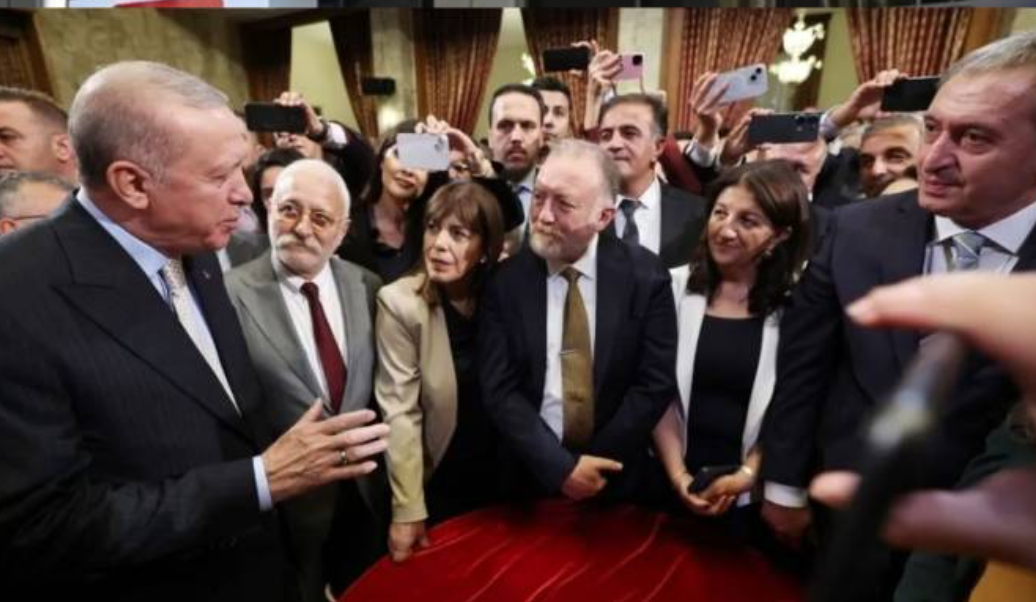
The latest phase of rapprochement between the ruling bloc and the DEM Party began last year, when MHP leader Devlet Bahçeli made headlines by shaking hands with DEM deputies on the opening day of the new legislative year.
That symbolic gesture, followed by remarks referencing Öcalan’s February message, signaled the start of a broader “process” — one meant to ease tensions and explore limited cooperation in parliament. With a new legislative term underway and a special commission now in place, the initiative has become one of Ankara’s most closely watched political developments.
However, new survey data suggest that the political dividends may fall short of expectations.
Poll: 70% of DEM Voters Reject Supporting Ruling Bloc
According to a September 2025 survey by BUPAR Research, even if imprisoned PKK leader Abdullah Öcalan publicly called on the DEM Party to support the Cumhur Alliance, 69.8% of DEM voters said they would refuse.
The same poll found that only 31.2% would consider backing Erdoğan’s ruling bloc under such circumstances.
The survey — conducted face-to-face with 2,512 respondents across 26 provinces, with a margin of error of ±3.6% — indicates that the ruling parties’ outreach to Kurdish voters has failed to translate into meaningful support.
DEM Voters Oppose Erdoğan’s Third-Term Bid and Constitutional Changes
One of the poll’s most striking findings concerns President Erdoğan’s eligibility for a third term.
When asked about potential constitutional amendments to lift the two-term limit, 71.2% of respondents opposed any such change, while only 25.2% expressed support.
Even among the ruling alliance’s own base, skepticism was high:
-
About one-third of AKP voters said they opposed altering the constitution,
-
Roughly two-thirds of MHP voters shared that view.
According to BUPAR, these results suggest a loss of legitimacy within the government’s own constituency, as support for extending Erdoğan’s tenure weakens even among loyalists.
The Limits of Symbolic Politics
Political observers note that while gestures like Bahçeli’s handshake and parliamentary engagement may have opened limited dialogue, they are unlikely to shift deep-rooted voting patterns.
Many Kurdish voters remain distrustful of the ruling bloc’s intentions, particularly amid continuing military operations in the southeast and persistent crackdowns on Kurdish political figures and municipalities.
In that context, analysts say, Öcalan’s symbolic influence may not be enough to overcome resentment toward the state or skepticism about the sincerity of reconciliation efforts.
Analysis: Risks of Overplaying the ‘Reconciliation Card’
The ruling alliance’s new outreach strategy reflects both political necessity and electoral calculation. With local elections behind and national polls expected in 2027, Erdoğan and Bahçeli appear to be seeking to expand their vote base amid signs of discontent within their own ranks.
But the latest survey suggests that the DEM Party’s voter base remains largely immovable, even under hypothetical scenarios involving Öcalan’s endorsement.
If anything, overemphasizing the Kurdish outreach narrative could risk alienating nationalist segments of the ruling coalition — a delicate balance Erdoğan and Bahçeli have managed only with difficulty in past election cycles.
For now, the numbers show that while dialogue may have opened, political realignment remains out of reach.