Opposition Slams Türkiye’s 2026 Budget, Warns of Deepening Tax Inequality
 budget
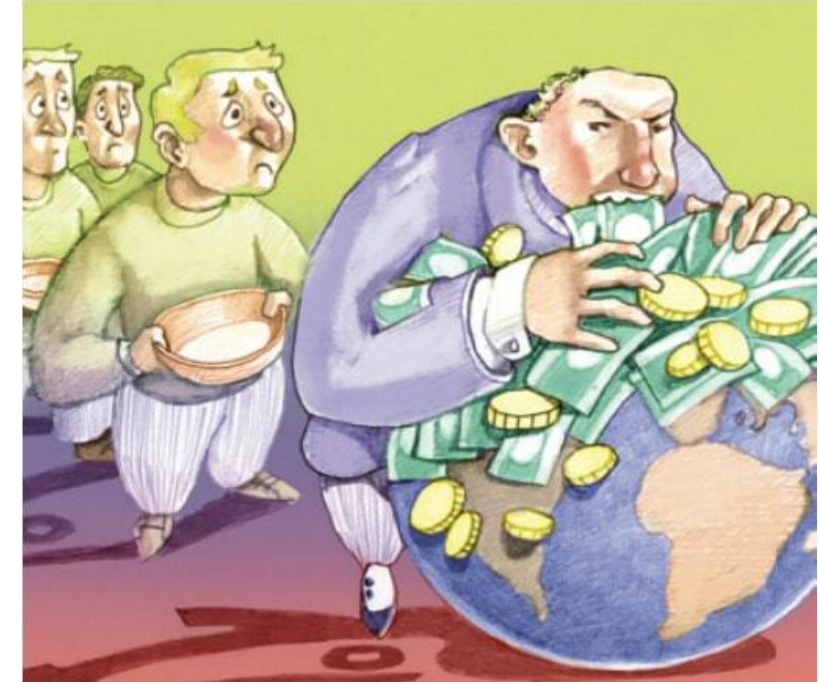
Türkiye’s main opposition party has sharply criticized the government-approved 2026 budget, warning that it will deepen tax injustice, burden workers and low-income households, and prioritize debt servicing and elite spending over social welfare. CHP lawmaker Mustafa Erdem described the budget as a “document of injustice,” arguing that it protects capital and creditors while shifting the fiscal burden onto ordinary citizens.
The 2026 budget adopted by the Turkish parliament has sparked strong criticism from the opposition Republican People’s Party (CHP). Mustafa Erdem, a CHP deputy from Antalya and a member of the parliament’s Planning and Budget Commission, said the budget clearly shows “who will make sacrifices, who will be protected, and who will grow richer.”
Speaking after the vote in the Grand National Assembly of Türkiye, Erdem said the budget does not represent workers, pensioners, young people, or the poor. “This is not the people’s budget,” he said. “It is the budget of the Palace, big capital, and interest groups.”
“The Entire Burden Falls on the Public”
According to Erdem, the 2026 budget projects expenditures of 18.93 trillion lira against revenues of 16.22 trillion lira, implying a planned budget deficit of 2.71 trillion lira at the very start of the year. He argued that this gap reflects both the government’s failure in economic management and its intention to extract more taxes from the public.
Of the projected revenues, 15.63 trillion lira are expected to come from taxes. “This means that roughly 87 lira out of every 100 lira entering the state’s coffers will be collected directly from the public through taxes,” Erdem said.
He added that the budget institutionalizes tax injustice. While the targeted increase in income tax revenues stands at 39.5%, the projected rise in corporate tax revenues paid by employers is just 1.9%. “This is clear proof that the government has its eyes on workers’ wages and labor,” Erdem said.
More than 75% of total tax revenues, he noted, are expected to come from items directly paid by households, including income tax on wages, value-added tax (VAT), special consumption tax (SCT), fees, and fines. By contrast, the share of taxes collected from large corporate profits continues to decline year after year.
A “Debt-First” Budget
Erdem also highlighted interest payments as one of the fastest-growing spending items in the 2026 budget. Interest expenditures are projected to approach 2.7 trillion lira, accounting for around 14.5% of total budget spending.
“Resources allocated to education, healthcare, and social policies remain below interest payments,” he said. “This budget was not designed to generate prosperity, but to guarantee the claims of those who lend money to Türkiye.”
“Plenty for the Palace, None for the People”
The CHP lawmaker pointed to what he described as excessive allocations to the presidency and affiliated institutions. The budget earmarks 21.3 billion lira for the Presidency in 2026, translating into daily spending of roughly 58 million lira.
Of this amount, 11.7 billion lira is allocated to goods and services procurement. The Communications Directorate is set to receive 7.5 billion lira, while the Directorate of Religious Affairs (Diyanet) has been allocated 174.3 billion lira. Combined, the budgets of the Presidency, Diyanet, and Communications Directorate exceed 195.6 billion lira.
“At the same time,” Erdem said, “there is no strong social policy in this budget to ease the hardship of millions of pensioners or to address the despair of young people.”
“A Choice in Favor of Capital, Not Labor”
Erdem argued that funding to combat youth unemployment is insufficient and stressed that education spending again trails behind interest expenditures. He noted that pensioners continue to live on incomes below the hunger threshold, with no permanent measures in the budget to improve their purchasing power.
According to Erdem, more than 18 million people in Türkiye rely on social assistance to survive, while around 43 million citizens are indebted to banks. Despite this, the government plans to limit wage increases in 2026 to its inflation target of 16%.
“This budget is a document of choice,” Erdem said. “The choice is not the people, but the Palace. Not labor, but capital. The 2026 budget does not belong to the public. We will continue our struggle against this unjust order, both in parliament and in the streets.”
PA Turkey intends to inform Turkey watchers with diverse views and opinions. Articles in our website may not necessarily represent the view of our editorial board or count as endorsement.
Follow our English YouTube channel (REAL TURKEY):
https://www.youtube.com/channel/UCKpFJB4GFiNkhmpVZQ_d9Rg
Twitter: @AtillaEng
Facebook: Real Turkey Channel: https://www.facebook.com/realturkeychannel/***