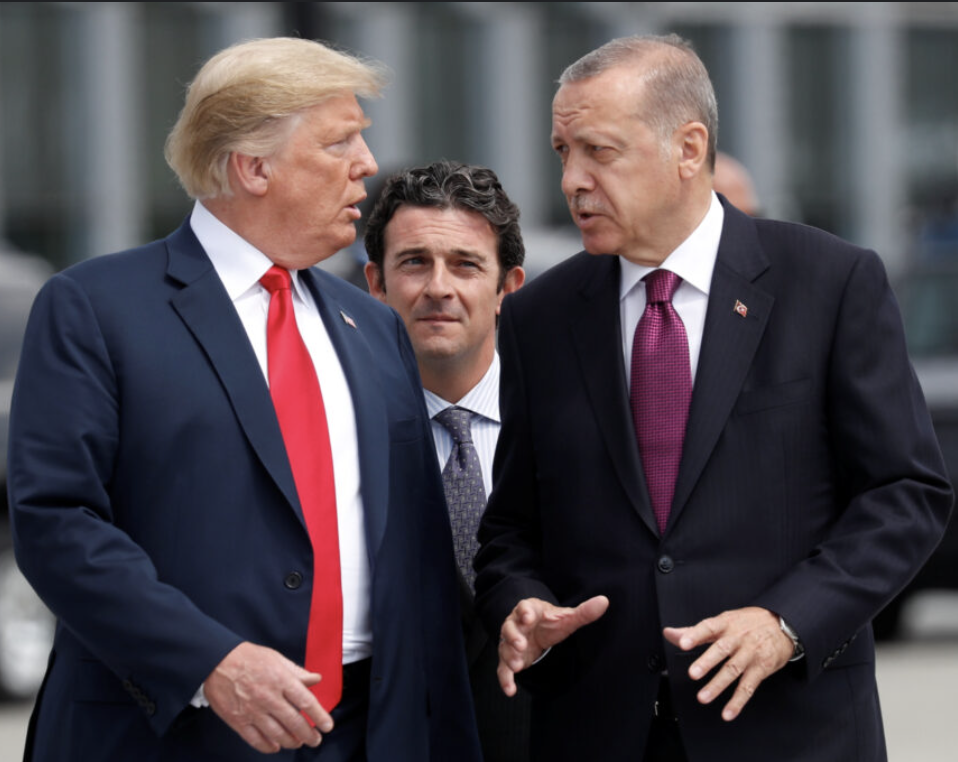
OPINION: Trump’s Praise for Erdoğan: What Lies Behind the Flattery?
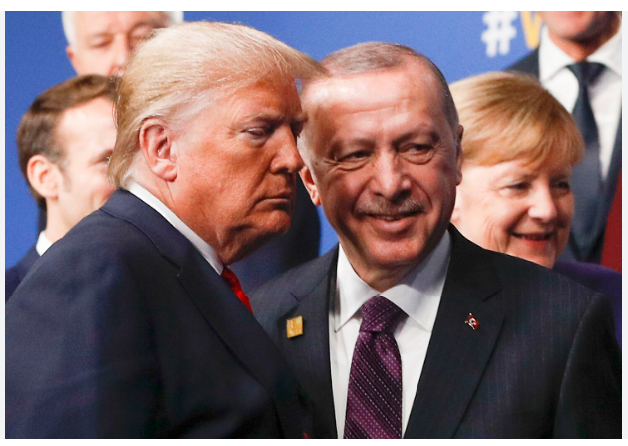 rte trump
By Orhan Bursalı
Former U.S. President Donald Trump’s repeated public praise of President Recep Tayyip Erdoğan has been widely highlighted by Türkiye’s pro-government media as proof of international prestige. Yet a closer look at past interactions—from the Brunson crisis to ongoing sanctions, defense disputes, and Syria—raises a central question: what, if anything, has Türkiye actually gained from this personal rapport?
A crucial question for the region is who has deliberately weakened the Syrian state and left it permanently exposed to foreign intervention. But before addressing that, it is worth examining another issue: what lies behind Donald Trump’s repeated expressions of admiration for President Recep Tayyip Erdoğan?
“I Really Like Erdoğan”
In an interview with Politico on December 9, Trump was asked whether there were countries that should not belong to NATO, with Sweden mentioned as an example. His response quickly turned into an extended endorsement of Türkiye and its president.
“I think there are countries that are difficult for NATO,” Trump said. “But I think it’s good that they’re in. Türkiye is an example. Erdoğan is my friend. Whenever they have a problem with Erdoğan, they want me to call him because they can’t talk to him. Erdoğan is tough. I really like Erdoğan. He built a strong country, a strong army. But they have trouble dealing with him, and they ask me to call. And I do—and we always solve it very quickly. He’s very different from other leaders.”
These remarks were widely circulated in Türkiye’s pro-government media, which emphasized Trump’s admiration for Erdoğan’s strong leadership and personal authority.
The Brunson Episode: Praise After Pressure
Trump went on to cite a specific example of cooperation, saying that Erdoğan had released “some people who went through years of trials and other things” after Trump asked him to do so.
The individual in question was Pastor Andrew Brunson, who had been detained in 2016 and later tried on charges of aiding the FETÖ network and the PKK. In 2018, Trump demanded Brunson’s release and sought to frame it as a personal diplomatic victory.
Initially, Erdoğan had firmly rejected U.S. pressure, declaring: “As long as this soul is in this body and this poor man remains in office, you will not get that terrorist.”
Yet the outcome shifted rapidly.
Trump’s Threats and Economic Pressure
Trump escalated the dispute through a series of public threats, delivered via social media:
-
He accused Türkiye of exploiting the United States while detaining what he described as an “innocent man.”
-
He warned that sanctions would follow if Brunson was not released.
-
He announced the doubling of U.S. tariffs on Turkish steel and aluminum, pushing the Turkish lira sharply lower.
“I have just authorized a doubling of tariffs on steel and aluminum with respect to Türkiye,” Trump said at the time. “Our relations with Türkiye are not good at this time.”
Soon afterward, Brunson was released and flown out of İzmir on a private aircraft arranged by the U.S. government.
From that point on, Erdoğan was consistently treated with personal deference by Trump.
What Did Türkiye Gain?
Erdoğan continued to place great importance on his meetings with Trump. His visits to the White House were presented domestically as major diplomatic triumphs—evidence of global stature and personal respect.
But the central question remains: what concrete benefits did Türkiye gain from this relationship? Which longstanding disputes with the United States were resolved through Trump’s intervention?
There are few clear answers.
Ahead of Erdoğan’s most recent White House visit, Trump’s son-in-law was reportedly briefed in Ankara that Türkiye would remove tariffs on certain U.S. goods and purchase approximately 225 Boeing passenger aircraft—moves aligning closely with Trump’s well-known preference for boosting U.S. exports.
Unresolved Disputes Remain
Despite the rhetoric of friendship, Türkiye’s core problems with Washington remain unresolved:
-
CAATSA sanctions are still in force.
-
The Halkbank case, involving potential multi-billion-dollar penalties, continues to hang over Türkiye like a sword of Damocles.
-
Türkiye has been excluded from the F-35 fighter jet program, with U.S. officials insisting that Ankara must fully dismantle or destroy its Russian-made S-400 air defense systems as a precondition—despite the fact that the $1.2 billion Türkiye invested in the program has not been refunded.
-
In northern Syria, U.S. policy continues to block Ankara’s demands regarding the Syrian Democratic Forces (SDF), a dispute that remains one of the most contentious issues in bilateral relations.
A Transactional Relationship
The broader pattern suggests that Trump’s admiration was highly conditional. As long as Türkiye aligned with Trump’s immediate demands—particularly in economic or symbolic terms—the rhetoric remained warm. When it did not, threats quickly followed.
In this sense, Trump’s professed affection appears largely hollow. Türkiye’s position under Trump depended not on strategic partnership, but on compliance—followed, when necessary, by pressure.
Source: Cumhuriyet
PA Turkey intends to inform Turkey watchers with diverse views and opinions. Articles in our website may not necessarily represent the view of our editorial board or count as endorsement.
Follow our English YouTube channel (REAL TURKEY):
https://www.youtube.com/channel/UCKpFJB4GFiNkhmpVZQ_d9Rg
Twitter: @AtillaEng
Facebook: Real Turkey Channel: https://www.facebook.com/realturkeychannel/***
Related articles
Atilla Yeşilada Warns: “The Gold Rally Is a Bubble — TL Investors Will Regret Fleeing”
US Envoy Barrack Says Washington–Ankara Disputes Could Be Resolved Within Months
Halkbank decision announced in the US: Immunity request rejected